The Port Authority of the Bay of Algeciras (APBA) has put out to tender the technical assistance to conduct an advanced atmospheric dispersion study associated with the supply of methanol as fuel to ships in the Bay of Algeciras Port. The contract has an estimated value of 44,030 euros, and the deadline for submitting bids will end on September 17 at 14:00 hours.
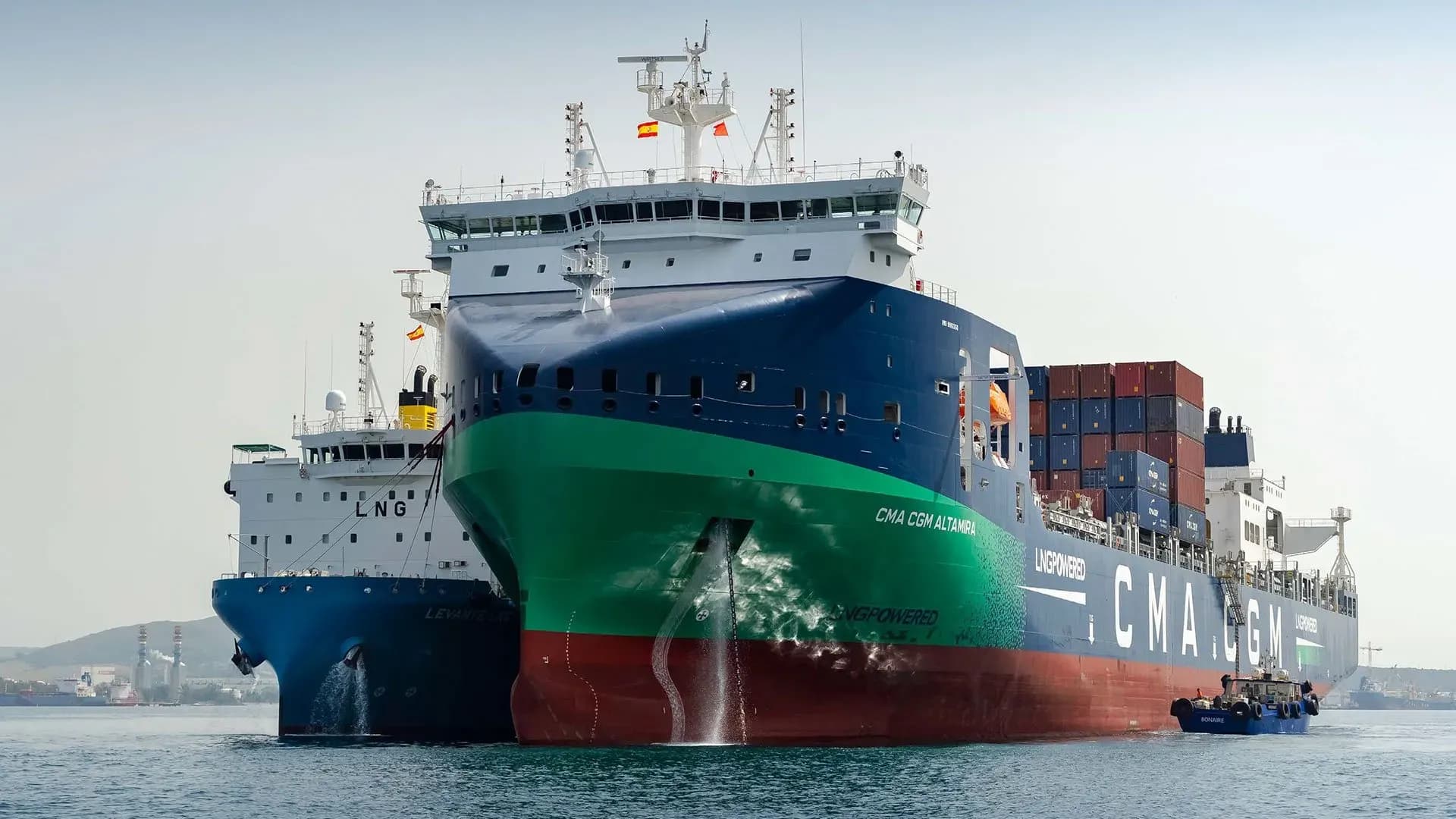
The purpose of the work is to analyze the risks associated with possible methanol leaks during operations of bunkering carried out from floating means under the ship to ship (STS) modality, that is, with the fuel transferred between two ships. The APBA points out in the justification report that several shipping companies have shown interest in supplying methanol to their vessels in the port and considers it necessary to define a regulatory and safety framework based on specific risk studies before authorizing this activity.
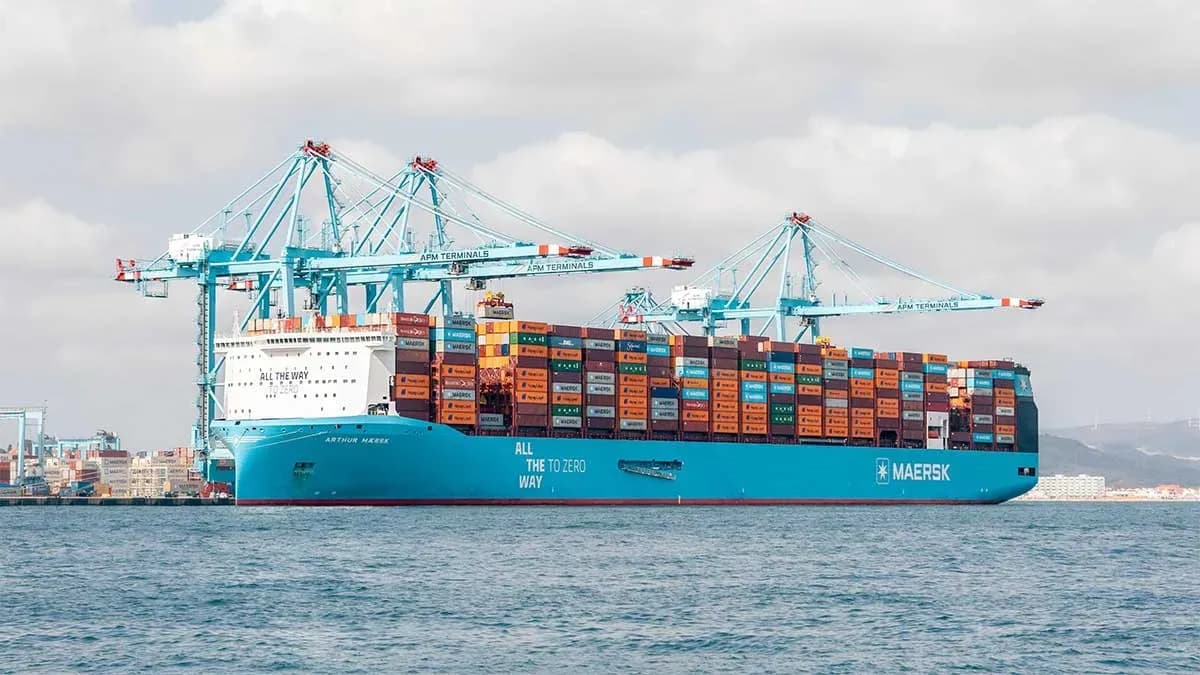
The tender arises in a context of incorporating alternative fuels into maritime transport. The documentation from the Port Authority estimates that there are 428 ships prepared to use methanol as fuel if the operational units and the orders currently under construction are counted together. The APBA also indicates that during 2025, 134,000 tons of LNG were supplied at the Bay of Algeciras Port.
The study will use computational fluid dynamics (CFD) techniques to reproduce in three dimensions the possible formation and dispersion of flammable or toxic vapor clouds arising from a methanol leak, or from a mixture of methanol and ethanol. The simulations will take into account the physical-chemical properties of the fuel, local weather conditions, and the geometry of the vessels and port facilities.
The results should provide a technical basis for establishing safety distances, operational limitations, mitigation measures, and risk acceptance criteria applicable to methanol supply operations in the port.
For this, the awarded contractor must employ recognized and validated simulation tools in the field of industrial safety. The specifications reference programs such as KFX, OpenFOAM, or ANSYS Fluent and require that the system used can reproduce spills of flammable liquids, formation of puddles, evaporation, and generation and dispersion of vapors.
The model must also represent elements such as docks, ships, buildings, and infrastructures, as well as different wind speeds and directions and atmospheric stability conditions. Among the parameters to be studied are the lower flammability limit (LFL) and the toxic exposure thresholds (AEGL).
The APBA initially proposes at least two simulation scenarios, although the contract allows the incorporation of up to three additional ones depending on the initial results. The two reference assumptions consider the failure of an eight-inch hose that is 25 meters long, a working pressure of seven atmospheres, and an automatic emergency shutdown system with action within 30 seconds.
The difference between both scenarios will be in the weather conditions. One will reproduce east wind and the other southwest wind, in both cases with a representative speed of 1.5 meters per second and atmospheric stability F. Additional analyses, if requested, will use the same base model by modifying the weather, operational conditions, or failure mode.
The simulations must determine the extent and duration of possible vapor clouds and locate the areas where concentrations exceed established thresholds. Three-dimensional and temporal fields of methanol concentration and air velocity, flammability and toxicity maps, as well as the maximum envelope of the clouds will also be obtained.
The contract also stipulates that the results must undergo an independent review. The contractor will have to provide a Statement of Compliance, an Independent Review Letter, or an equivalent document issued by an internationally recognized classification society, confirming the methodology, the model used, the hypotheses, and the results.
The maximum period planned for developing the entire contract is 22 weeks. The award will be made through a simplified open procedure. The automatically evaluable qualitative criteria will account for 55 points out of 100, and the economic offer will represent the remaining 45.
The technical documentation also establishes experience requirements for the team in charge of the study. The director must demonstrate prior work on atmospheric dispersion of hazardous products in maritime-port environments, while the gas dispersion specialist must have experience in advanced CFD models and at least one study related to methanol or ammonia in STS operations.
Once the work is completed, the APBA will have a model that can be used as a reference for future studies. The documentation of the tender establishes that the rights to the work and deliverables will belong to the Port Authority.