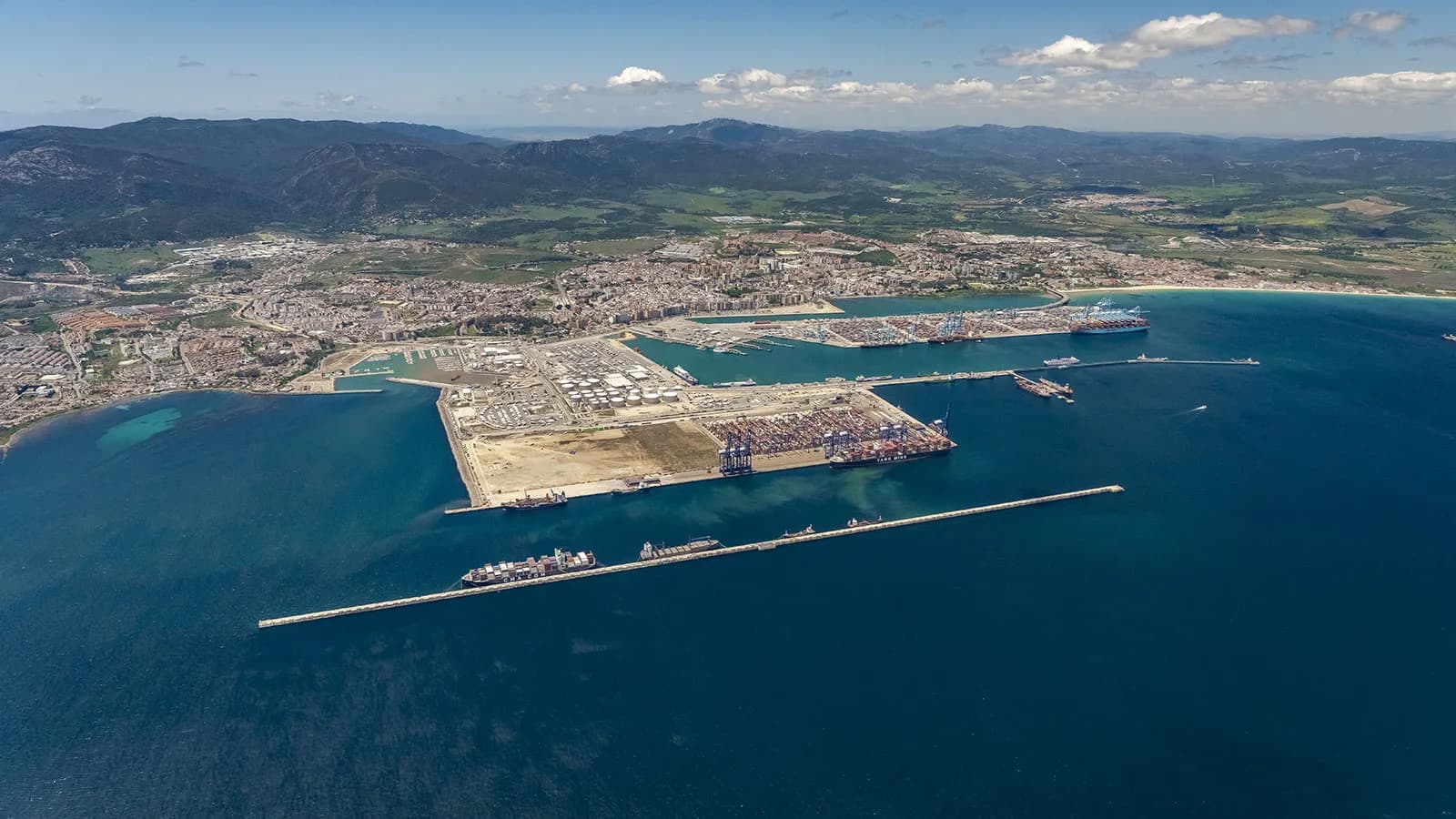
The Port of Algeciras closed July with 9,030,567 tons moved, 5.2% more than in the same month of 2025, according to data published by the Port Authority of the Bay of Algeciras (APBA). The monthly increase is mainly explained by the liquid bulk segment, which added more than 3 million tons with an increase of over 19% and discharges that grew by 32.5%. This behavior reverses the trend of the segment so far this year and explains why the accumulated total from January to July ends positively after several months in the negative.
With this closure, the total traffic accumulated in the first seven months of the year stands at 59 million tons, 0.6% below the same period last year. The figure confirms the trend of stability with slight declines that the facility has faced since the start of the year, although there have been partial recoveries in various categories and with two clear engines (liquid bulk and international container transshipment) sustaining the overall total.
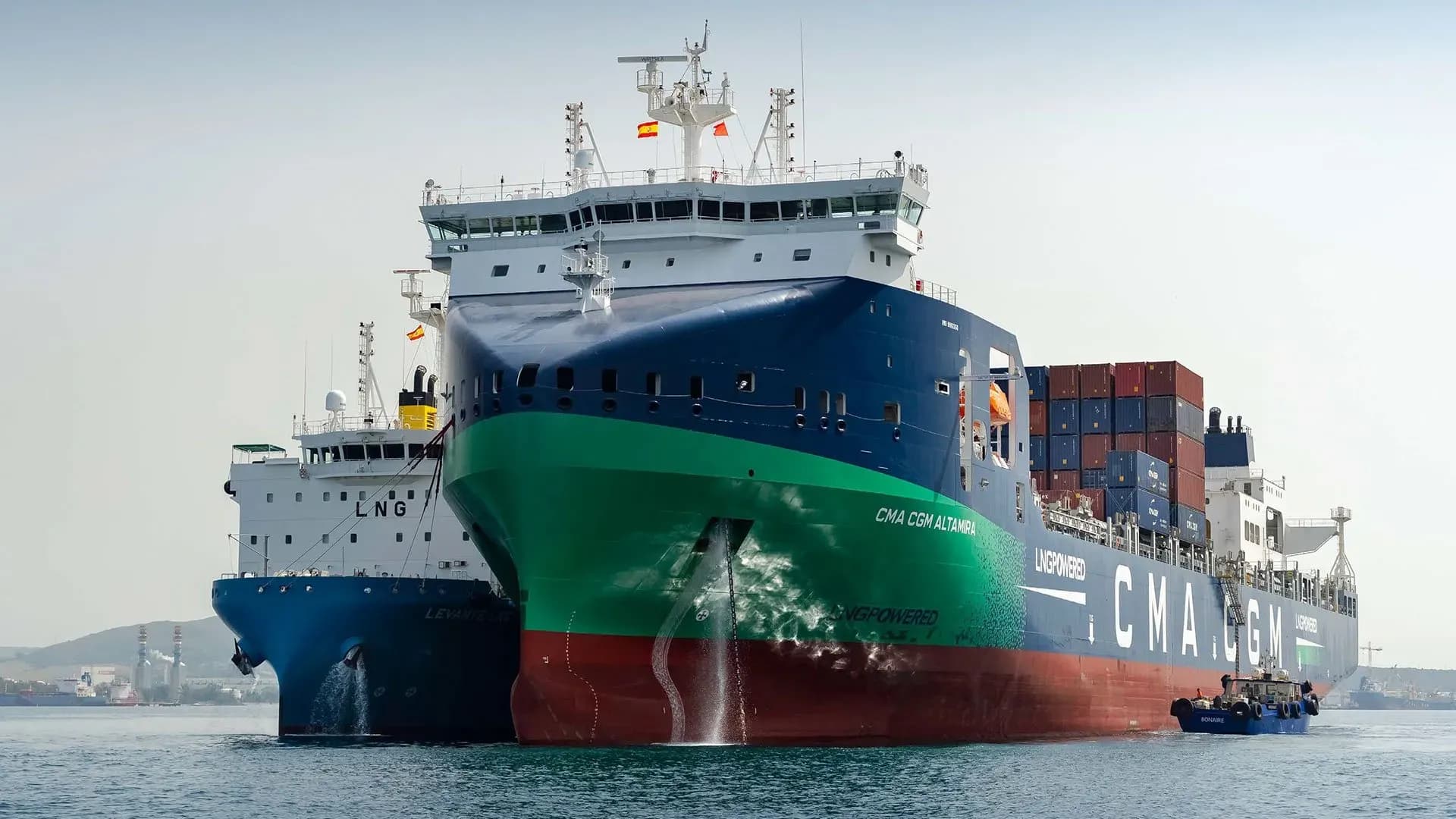
The accumulated liquid bulk sums 16.6 million tons, 1.1% more than between January and July 2025. The figure reverses the negative trend that this segment had been closing out in previous months, conditioned by the storms at the start of the year. In the vessel refueling segment, or bunkering, the volume supplied so far this year is 1.7 million tons, practically identical to the same period in 2025 (-0.1%). The rebound in July was supported by anchorage activity, the usual supply channel in the bay.
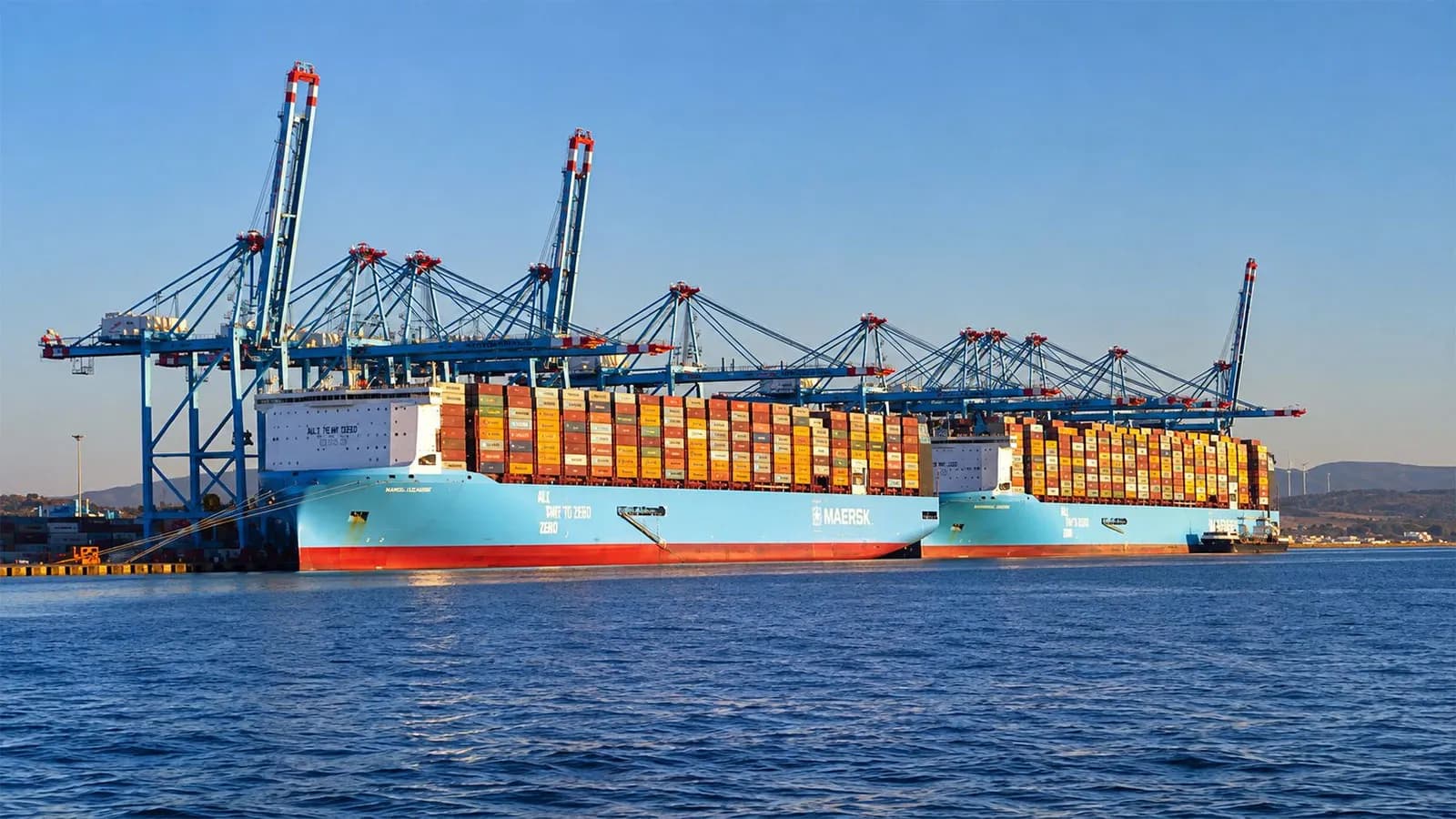
General cargo accumulates 38.2 million tons until July, 2.2% less than in 2025, and it is the category that detracts the most from the total. Among them, container traffic maintains a positive sign: the terminal closed the first seven months with 2,760,325 TEUs, 1.1% more year-on-year. This boost comes entirely from international transshipment, the dominant segment of containers in Algeciras, which grows by 4.4% and exceeds 2.14 million TEUs. National feeder traffic (traffic between Spanish ports) falls sharply, down 21.3% to 239,230 TEUs, while landed imports grow by 4.8% and embarked exports decrease by 2.4%.
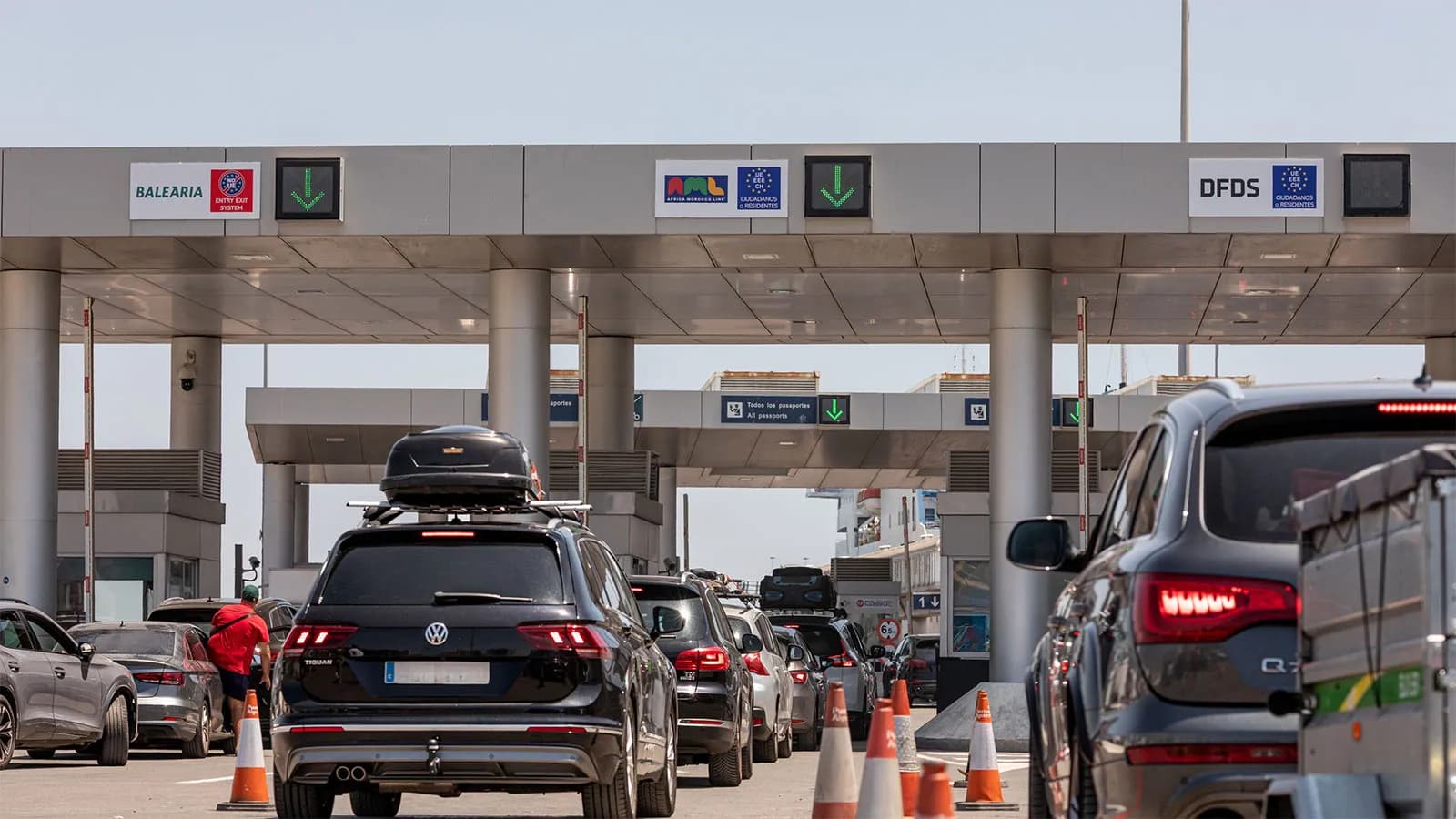
In the passenger traffic between the two shores of the Strait, the ports of Algeciras and Tarifa have recorded 3,186,538 passengers so far this year, 2.7% less, and 698,893 vehicles in passenger service, 2.9% less. The line with Ceuta is the one that loses the most weight in the total, with decreases of 10.2% in passengers and 15% in light vehicles. The Algeciras-Tanger Med route remains stable in passenger traffic (-2.7%) and grows slightly in vehicles (+1.2%). Against this overall picture, the ro-ro cargo between the European Union and North Africa grows to 329,132 trucks, 1% more, with the Algeciras-Tanger Med line being the main driver of that growth (+1.04%).
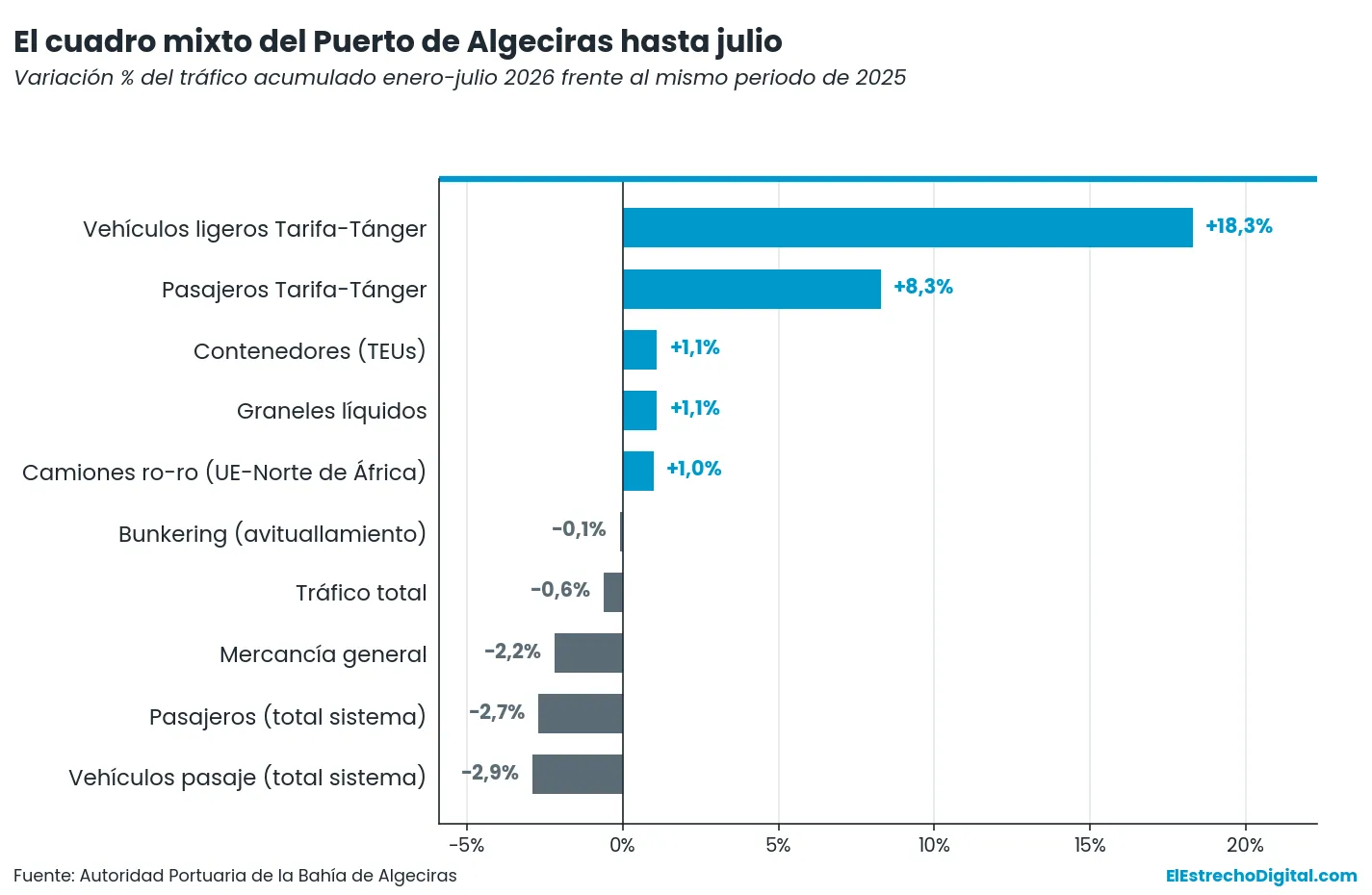
The Port of Tarifa maintains a differentiated growth rate within the port system of the bay. In the total for the year, it sums up 8% more passengers and 18% more vehicles embarked on the line with Tanger Ville, the only one connecting the Moroccan city with Europe. This behavior has been replicated this summer in both the outbound and inbound phases of the Operation Crossing of the Strait (OPE), where Tarifa stands out as the location with the most absolute growth and has become the second option for passengers to cross the Strait, behind the Algeciras-Tanger Med line. Just in July, the Tarifa facility moved 257,920 passengers (+6.5%) and 44,433 light vehicles (+10.3%), in a month when the overall traffic of the lines in the Strait decreased.
The president of the APBA, Gerardo Landaluce, links this behavior to the need to complete as soon as possible the pending works to access the Tarifa facility. He urges the competent administration to "execute the project to dual the N340 between Algeciras and Tarifa as soon as possible, as well as the direct access to the Port of Tarifa, thus ensuring road accessibility to a port that is the third on the Peninsula in passenger traffic after Algeciras and Barcelona, and the fourth in vehicle embarkation," based on data from the first semester of 2026.
Landaluce also points out that this continuous flow of passengers and vehicles throughout the year will be completed in 2027 with the entry into service, with Baleària, of what will be the first green intercontinental maritime line. The Spanish shipping company has committed to an investment close to 200 million euros on the Tarifa-Tanger Ville route, which will operate with two electric fast ferries currently under construction at the Armón shipyards in Gijón. The president of the APBA adds that improving the accessibility of the area is also necessary ahead of the 2030 World Cup, an event that Morocco will organize together with Spain and Portugal and which will result in an unprecedented demand for cross-border mobility in the Strait.
In the chapter of calls, the total number of ships entered into the Algeciras port system until July decreases by 2.9%, to 16,961 arrivals, with a gross tonnage also on the decline (-4.5%). The detail by segments shows a slight increase in tanker ships (+2.4%) and decreases in container ships (-3.9%) and passenger ships (-5.5%). Fewer calls, however, move a volume of goods just four tenths below last year, suggesting an increase in the average size of ships and cargo per call.