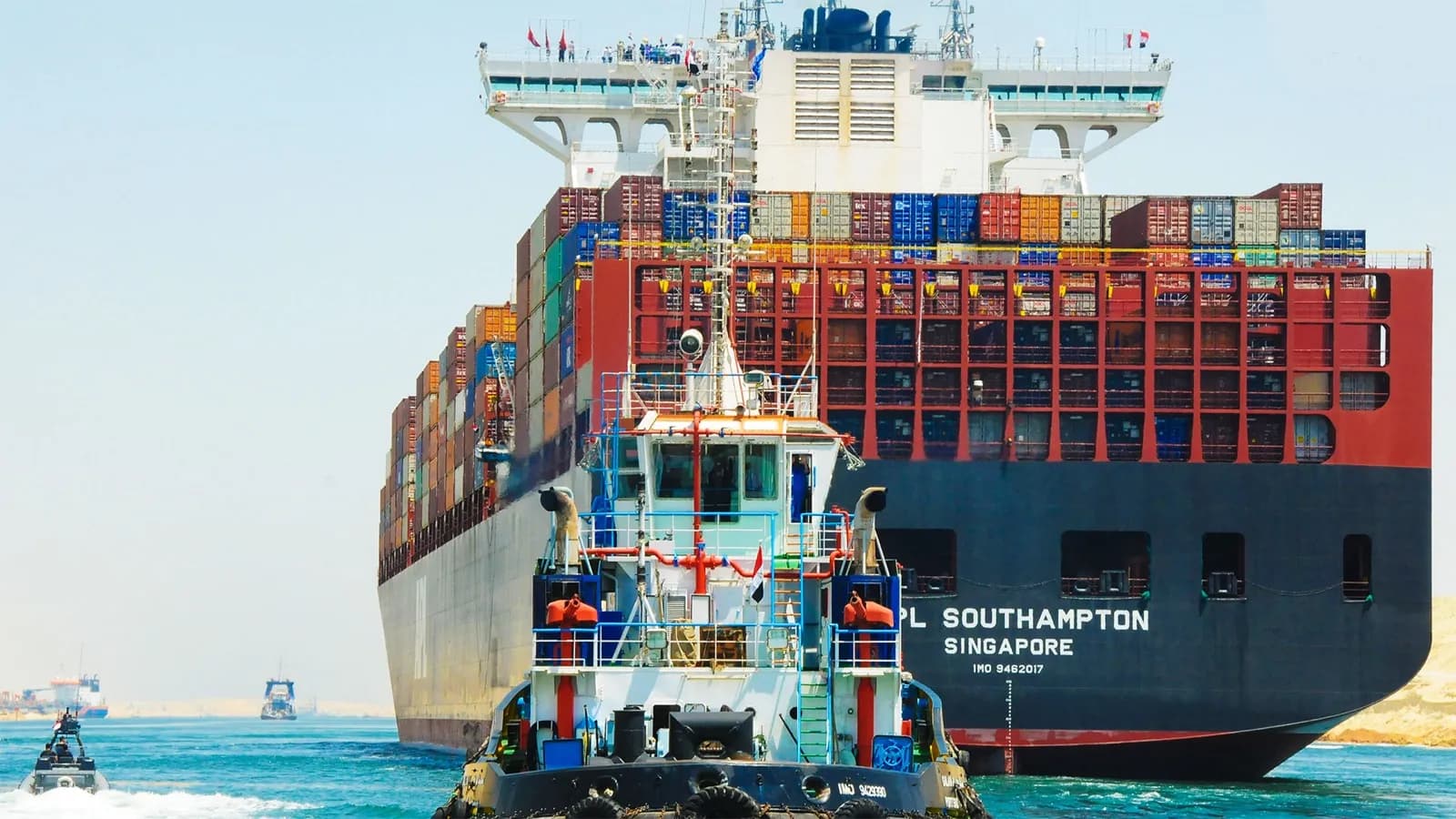
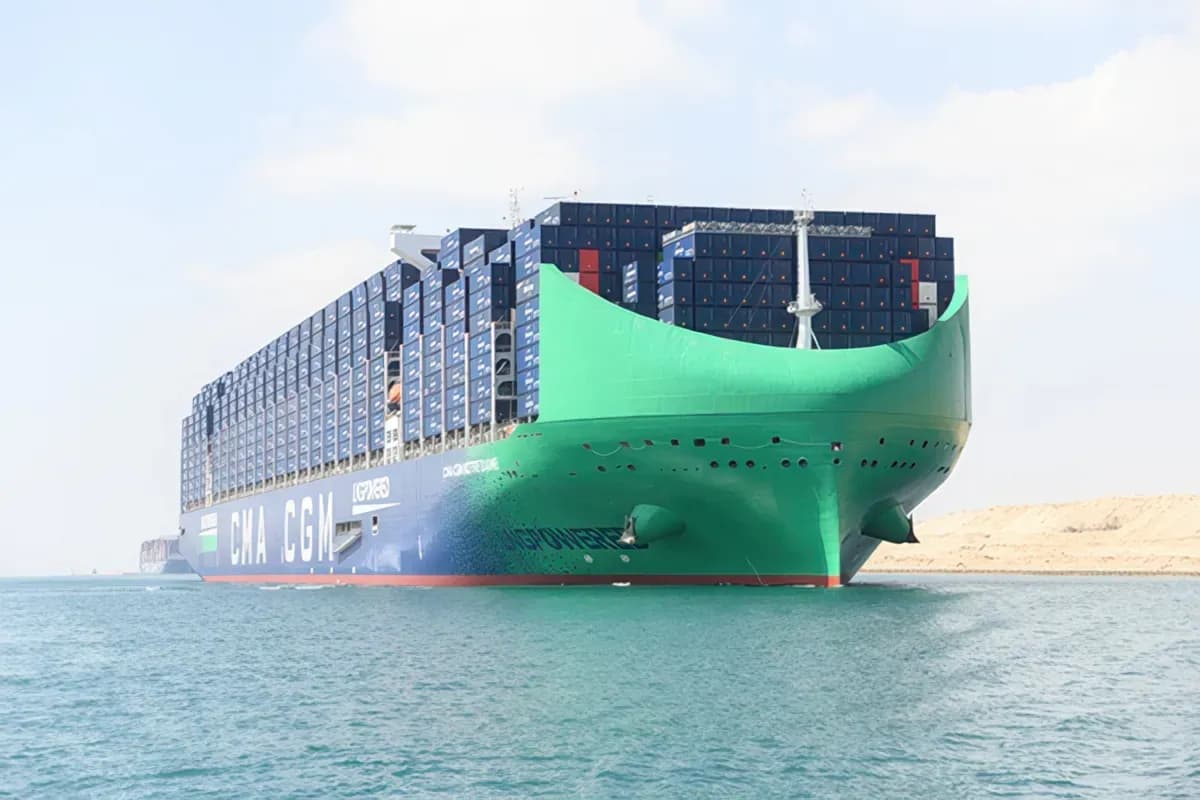
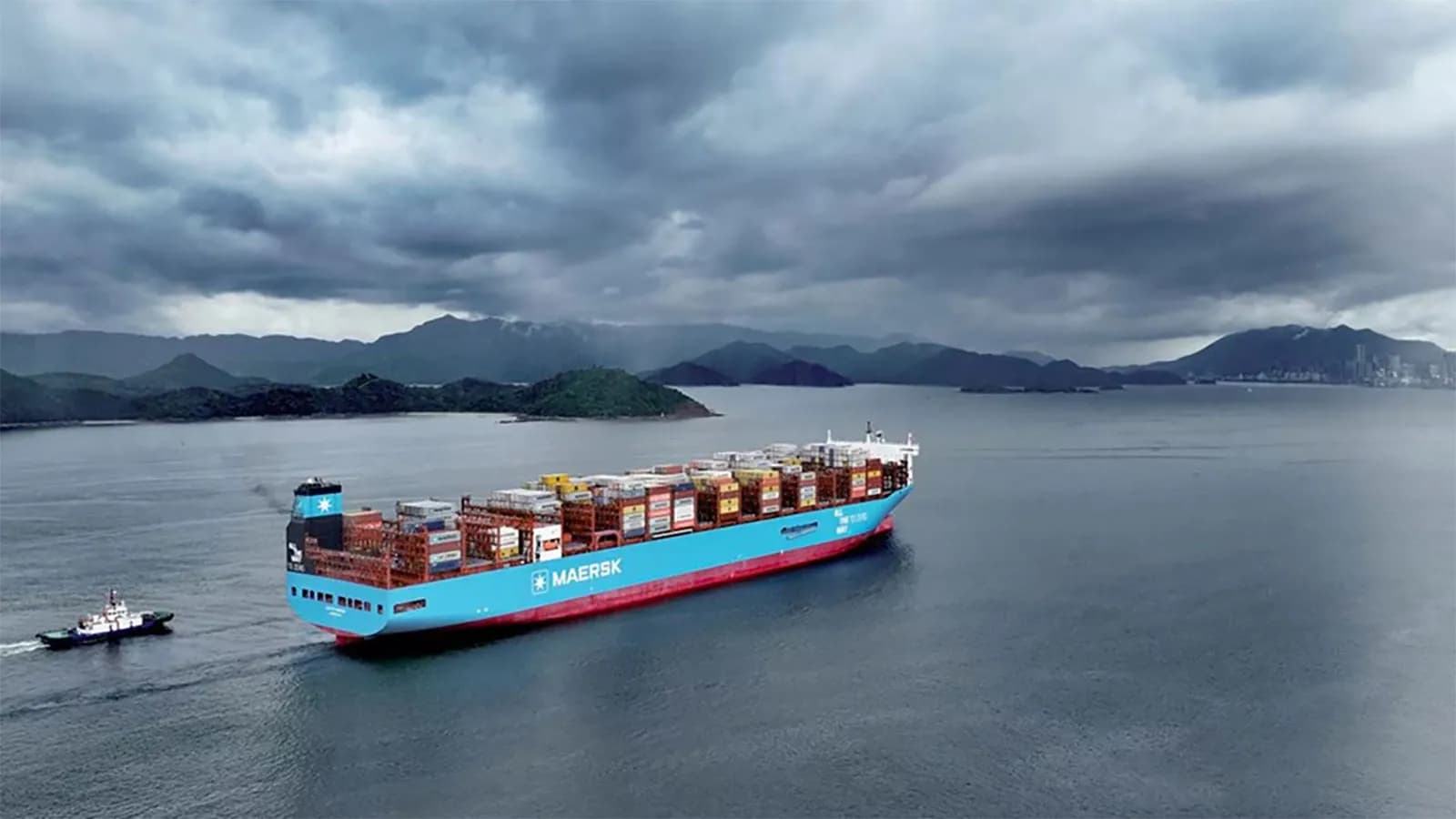
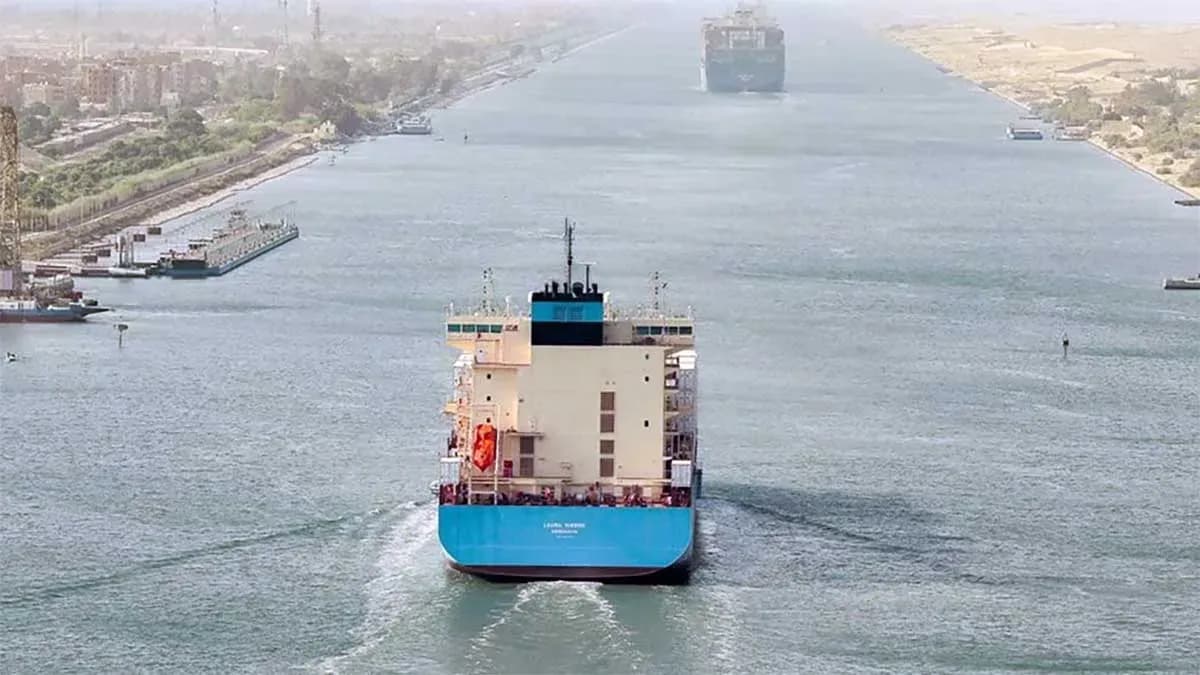
Container shipping through the Suez Canal has regained more than half of the capacity recorded before the onset of attacks on merchant vessels in the Red Sea. According to an analysis published on October 14 by the international maritime organization BIMCO, based on data from Clarksons Research, during the first two weeks of the month, the average weekly capacity of the container ships that used this route reached 753,000 TEU, compared to the 1,457,000 TEU recorded in the same period of 2023. This is the first time since the beginning of the crisis that this indicator exceeds 50% of the levels prior to the traffic disruptions.
The analysis, prepared by Niels Rasmussen, chief shipping analyst at BIMCO, details the evolution of trade routes since the end of 2023, when attacks by Houthi forces on merchant shipping led major container shipping companies to divert their vessels around the Cape of Good Hope. During the last week of that year, the weekly capacity passing through Suez was reduced to 330,000 TEU, compared to an accumulated average of 1.29 million TEU per week.
The reduction in traffic continued for much of the following two years. Between February 2024 and mid-2026, the capacity of the container ships crossing the canal recorded an average of 141,000 TEU per week, equivalent to 11% of the capacity observed during the corresponding weeks of 2023.
The recovery of routes through the Red Sea began to take on greater scope during the summer of 2026. On July 6, Maersk and Hapag-Lloyd announced the return to the Suez Canal of the AE15/SE3 service of the Gemini cooperation, which connects Asia with the Mediterranean. Subsequently, both companies announced changes to five other shipping lines, including the three remaining connections between Asia and the Mediterranean.
These changes are complemented by decisions made by other companies and maritime alliances. BIMCO counts 16 services with modifications to their itineraries since early July, corresponding to the Gemini cooperation, the Ocean Alliance and Premier Alliance, and the shipping company MSC. The latter confirmed in September the partial recovery of transits through Suez in its Indusa service, initially for westbound trips, while maintaining the route around the Cape of Good Hope for eastbound departures.
The reorganization of routes also affects maritime connections of the port of Algeciras. In September, Maersk and Hapag-Lloyd announced the use of the Suez Canal in services AE5, AE11, AE12, and ME2, of which AE5, AE12, and ME2 include stops in Algeciras. The routes announced connect the port enclave with various ports in Asia, northern Europe, and the Mediterranean.
In the case of the AE12/SE1 service, which links Asia with the Mediterranean and includes stops in Algeciras, Hapag-Lloyd has scheduled the first westbound trip of the vessel Umm Qarn departing from Tanjung Pelepas on October 27. For the eastbound route, the company has set its departure from Algeciras on December 5. The shipping company has specified that transits will be subject to security assessments and will take place under naval protection, in coordination with the relevant authorities.
According to BIMCO's calculations, during the first two weeks of October, 36% of the total capacity of container ships using the routes of Suez or the Cape of Good Hope passed through the canal, compared to an average of 8% recorded between 2024 and mid-2026. Before the attacks, this proportion was around 80%.
The evolution also shows differences between navigation directions. During the third quarter of 2026, the capacity of the container ships crossing Suez northbound was equivalent to 75% of that recorded southbound. In the first weeks of October, that proportion increased to 81%, according to statistics gathered by the maritime organization.
BIMCO estimates that the diversions via the Cape of Good Hope had increased global demand for container shipping capacity by approximately 10%, due to the greater distances traveled by vessels. Rasmussen notes that this effect is diminishing as companies recover their itineraries through Suez, although the coincidence of these changes with the increase in port congestion in Asia makes it difficult to determine all their consequences on the balance between supply and demand.