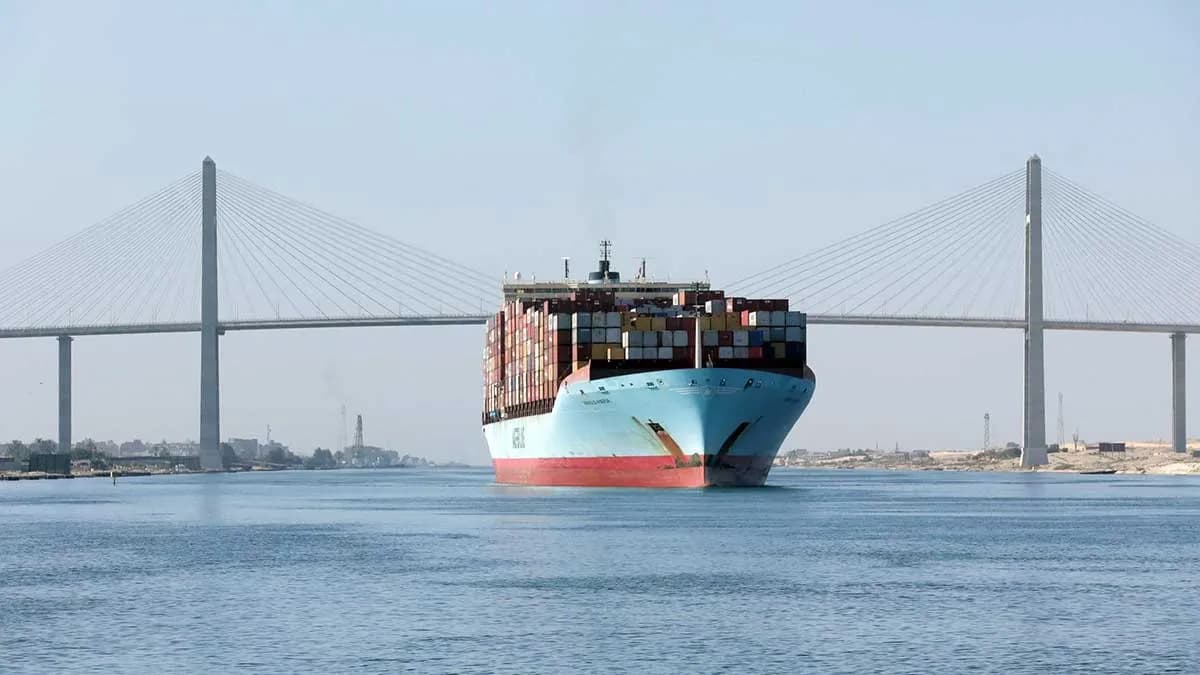
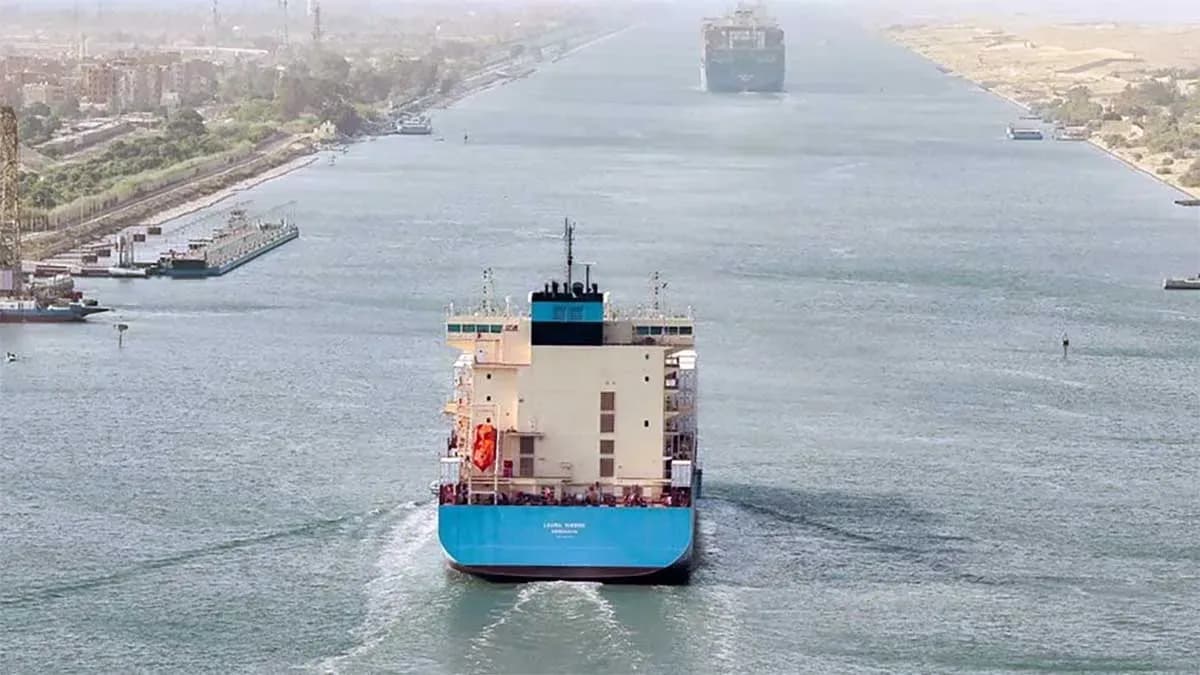
The Danish shipping company Maersk expects all its maritime services to resume using the Suez Canal by March 2027, according to forecasts conveyed by its Chief Operating Officer, Rabab Boulos, to the Suez Canal Authority (SCA). The company continues to reorganize its international connections to progressively restore this route, following disruptions caused by the security situation in the Red Sea and vessel diversions around the Cape of Good Hope.
The forecast became known on Tuesday, October 20, following a videoconference between Ossama Rabiee, chairman and managing director of the Suez Canal Authority, and representatives of A.P. Moller-Maersk. In addition to Boulos, who is also a member of the company's executive committee, participants included Ahmed Hassan, the group's vice president of Operations, and Hani El-Nady, Maersk's representative for the Middle East and North Africa.
During the meeting, both parties discussed sailing plans and the scheduling of maritime services that use the Egyptian canal. Boulos conveyed her expectation that all the group's services will have resumed transit through Suez by March 2027, although this forecast does not constitute a definitive timetable for all routes, whose scheduling remains subject to the shipping company's operational decisions.
The recovery of Maersk traffic through the Suez Canal is already reflected in official statistics. According to data provided by Rabiee, vessels associated with the group made 276 transits between January and September 2026, compared with 146 recorded during the same period the previous year, an increase of 89%.
The net tonnage associated with these operations also increased, rising from 7 million tons in the first nine months of 2025 to 23.3 million tons in the same period of 2026. These figures come from the Egyptian authority's traffic records and reflect the increase in the group's operations along this maritime route.
The chairman of the Suez Canal Authority linked traffic trends to changes in the international geopolitical situation and their impact on fuel prices and maritime freight rates. Rabiee pointed to the cost differences between using the canal and sailing around the Cape of Good Hope, especially for large container ships operating on routes between Asia and Europe.
For his part, Ahmed Hassan explained that Maersk continues to update its schedules to add new services transiting the canal over the coming months. In the same vein, Hani El-Nady confirmed that the group is working to accelerate the restoration of connections that still use alternative routes.
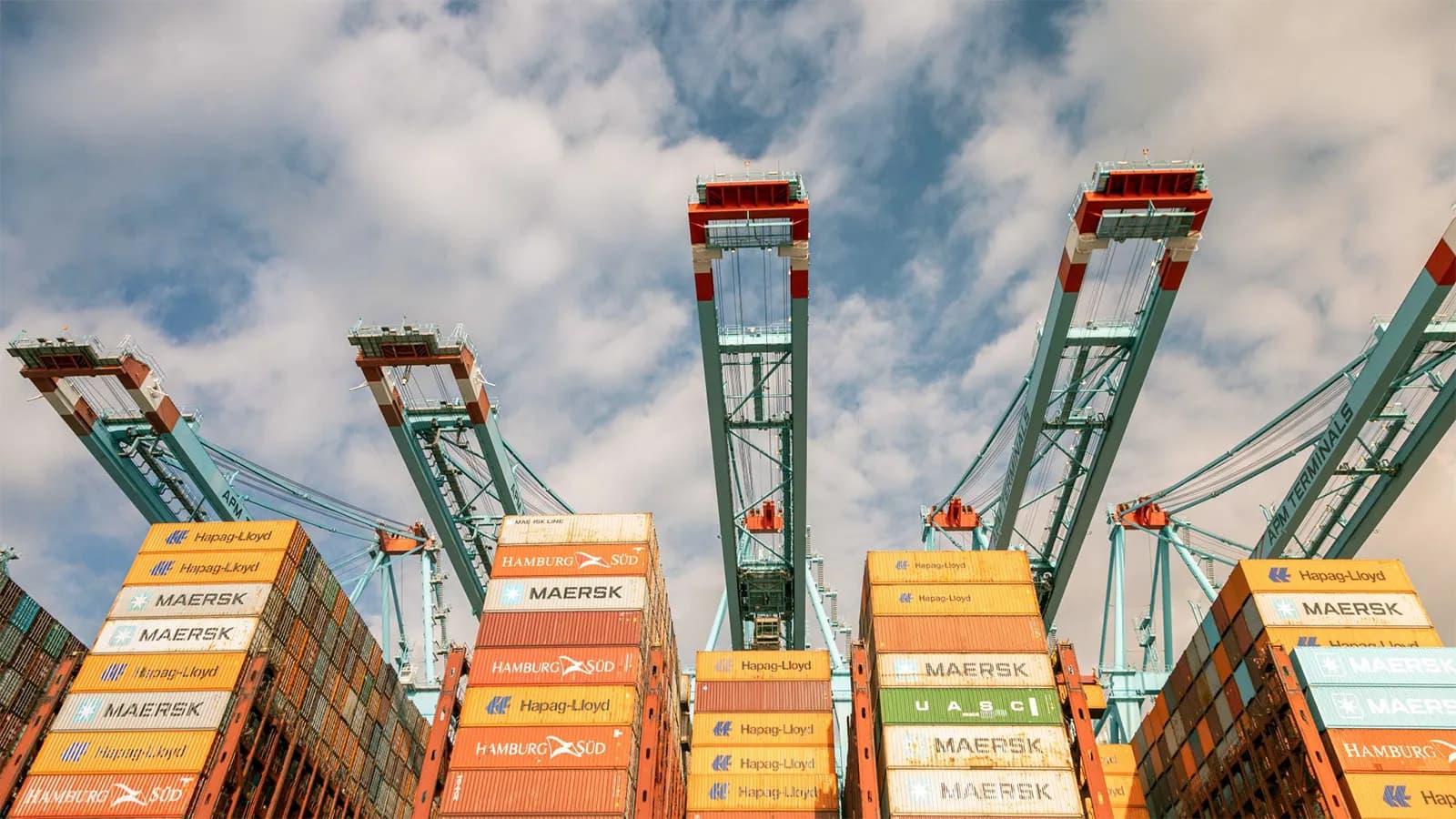
The reorganization of maritime services also affects connections to the port of Algeciras. On September 14, Maersk and Hapag-Lloyd announced changes to four services in their Gemini cooperation—AE5, AE11, AE12, and ME2—to use the Suez route instead of routes around the African continent.
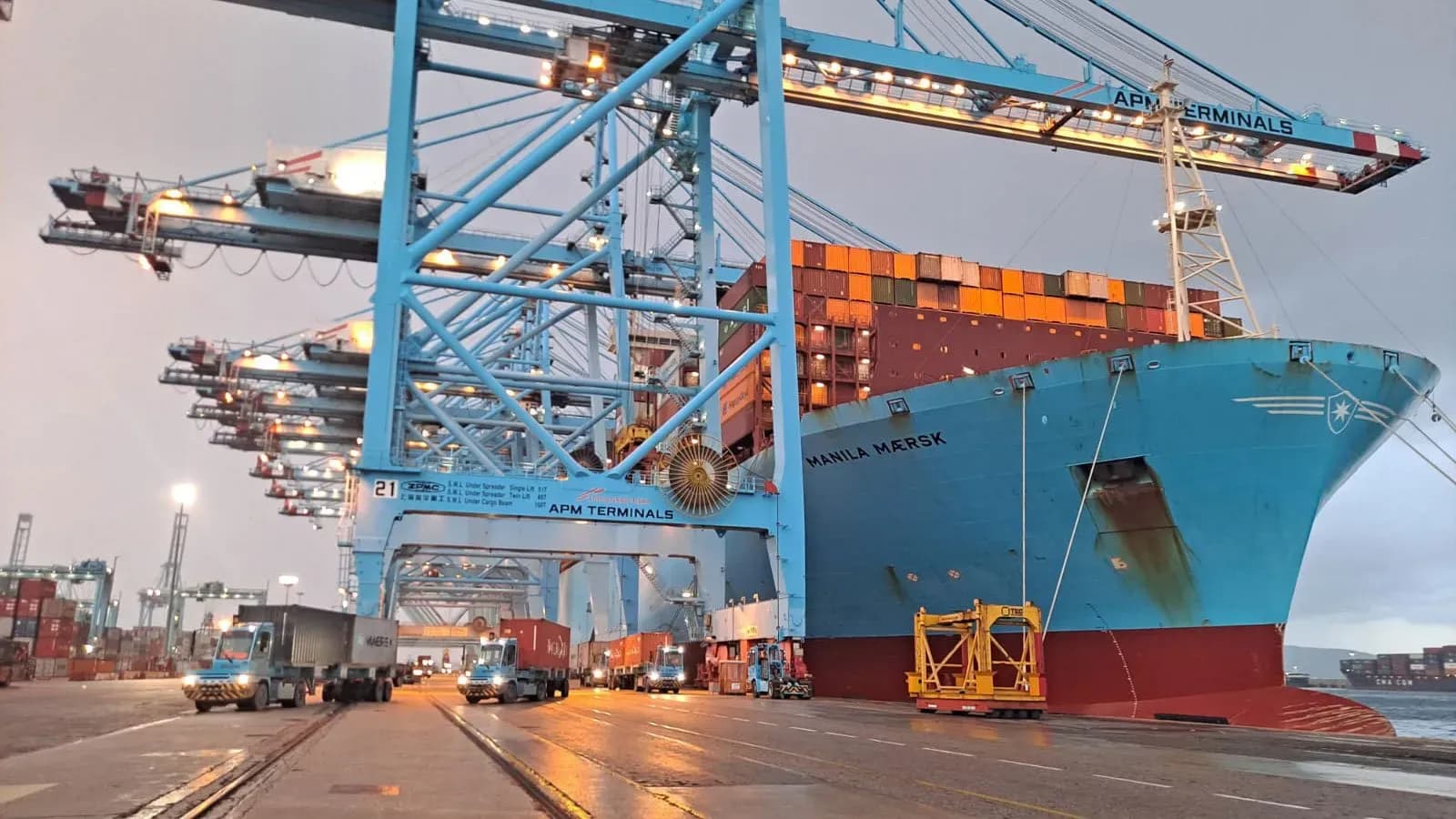
These connections include the ME2 service, which links India and Europe via the Suez Canal and includes a call at Algeciras in its rotation. On October 19, the shipping company announced a further change to this route, adding a call at Jeddah while maintaining the connection to the port of Algeciras and several ports in northern Europe.
On October 19, the company also announced the launch of the AE18 service, a new connection between the Far East and the Strait of Gibraltar that will include two calls at Algeciras and one at Tanger Med. The first sailing is scheduled to depart Shanghai on November 22, aboard the container ship Maersk Edirne. This line is part of the changes introduced to the Gemini network to reorganize its connections between Asia and the western Mediterranean.
The resumption of transits through Suez remains conditional on the security situation in the Red Sea. In communications to customers, Maersk and Hapag-Lloyd have said that any changes to the Gemini cooperation's routes will depend on stability in the region and the absence of any new escalations in conflicts that could affect navigation.
The meeting between Maersk and the Suez Canal Authority concluded with an agreement to maintain further bilateral contact to review service schedules and cooperation between the two entities over the coming months.