Maritime traffic through the Suez Canal recorded an increase in August 2026 compared to the same month of the previous year, in a context where the main container shipping companies are progressively increasing the use of the Red Sea route for certain connections between Asia and Europe.
The Suez Canal Authority (SCA) recorded 1,358 vessels during August, with a combined net tonnage of 68.3 million tons and revenues of 567.1 million dollars. In August 2025, 1,070 vessels had transited the Egyptian route, with 45.2 million tons net and revenues of 326 million dollars. The figures represent year-on-year increases of 27% in the number of vessels, 51.1% in net tonnage, and 56.7% in revenue.
The president of the SCA, Osama Rabie, presented this data during the celebration in Egypt of World Maritime Day 2026. Rabie noted that geopolitical tensions and disruptions experienced by international trade and supply chains in recent years have had a direct effect on canal traffic. The authority claims that navigation remains operational and continues to develop complementary services for the companies that use this maritime route.
The evolution recorded by Suez coincides with an increase in the number of container ships returning to use the Red Sea corridor. Sea-Intelligence estimates that, considering both directions between Asia and Europe together, 27% of the capacity projected for September is again circulating through Suez and the Red Sea, as opposed to the alternative route around the Cape of Good Hope that has been widely used since December 2023.
The behavior varies depending on the direction of the traffic. In the main services from Asia to Europe, the percentage of capacity routed through the Red Sea remains between 13% and 25%. In return trips from Europe to Asia, however, the proportion has increased from 18%-26% in August to 25%-47% during September.
The difference is even greater when analyzing the European origin of the vessels. Services connecting the Mediterranean with Asia show in September a share of 57% capacity through the Red Sea, compared to 27% from the northern Europe. Sea-Intelligence links this evolution to the repositioning of capacity towards Asia due to the operational problems stemming from congestion and delays recently recorded at Asian ports.
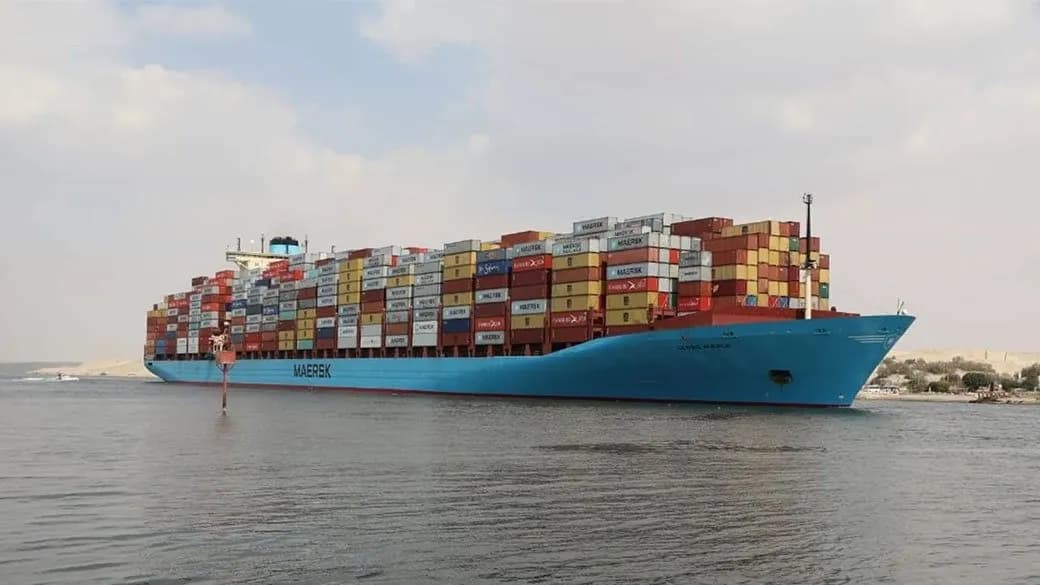
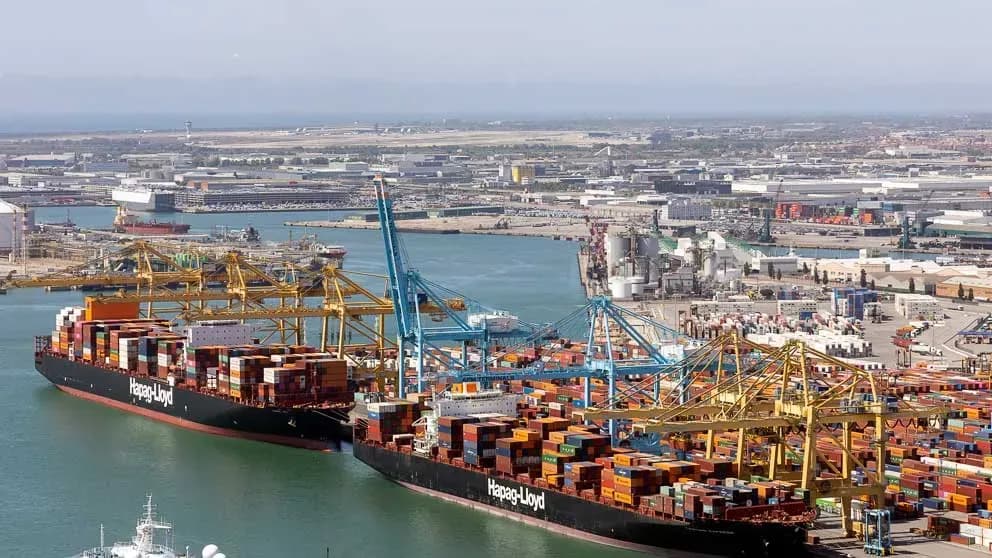
The changes announced by Maersk and Hapag-Lloyd for the Gemini network also increase the number of connections using the trans-Suez corridor. The companies announced on September 14 that the AE5, AE11, AE12, and ME2 services will now navigate through the Suez Canal instead of circumnavigating Africa via the Cape of Good Hope. These routes add to the AE15 and AE19 services, which were already using this itinerary.
Three of these four connections include the Port of Algeciras. The AE5, between Asia and northern Europe, calls at Algeciras during the return trip to Asia; the AE12, between Asia and the Mediterranean, includes two calls at the Algeciras port; and the ME2, which connects India and Europe, also incorporates Algeciras into its rotation.
The new configuration begins to have effects on September 22 at the Algeciras port. Maersk set the departure of the Maastricht Maersk, voyage 637E, from Algeciras as the first eastbound sailing of the AE5 under the new trans-Suez itinerary. Westbound modifications began on September 19 for the AE11 and ME2 and on September 21 for the AE5. The first departure of the AE12 will be communicated later by the company.
Maersk and Hapag-Lloyd are keeping these changes conditioned on the evolution of security in the region. The companies have indicated that they will continue to monitor the situation in the Middle East and that any additional modifications to the Gemini network will depend on stability in the Red Sea area and whether there is no escalation that affects maritime operations.