Maersk will resume transit through the Suez Canal in July in its WAF6 service, the rotation that connects the Omani port of Salalah with the West African coast and makes a stop in Algeciras. The Danish shipping company had been covering the entire loop by the Cape of Good Hope, and the new route will allow for a significant reduction in transit times, according to data published by the consulting firm Linerlytica.
The WAF6 starts in its current configuration in Salalah and links Tangier Med, Algeciras, Tema, Lagos, and returns to Salalah, with a complete rotation of 70 days. The service requires the deployment of ten ships with capacities ranging from 4,400 to 5,000 TEUs, all of which pass by the Cape both westward and in the opposite direction. With the operational adjustment that Maersk will apply this month, the westward section of the loop will shift to navigate through the Red Sea and the Suez Canal, the natural route between the Indian Ocean and the Mediterranean before Houthi attacks on merchant shipping forced its widespread abandonment in late 2023.
The full rotation will be reduced to 56 days with the new route, two weeks less than the current scheme. Maersk will withdraw two ships from the deployment without compromising the weekly frequency of the service, according to Linerlytica's figures. The freed ships will be available for reassignment to other traffics at a time when, according to the firm itself, the summer peak season drives demand and requires additional capacity on some routes between Asia and the Western Hemisphere.
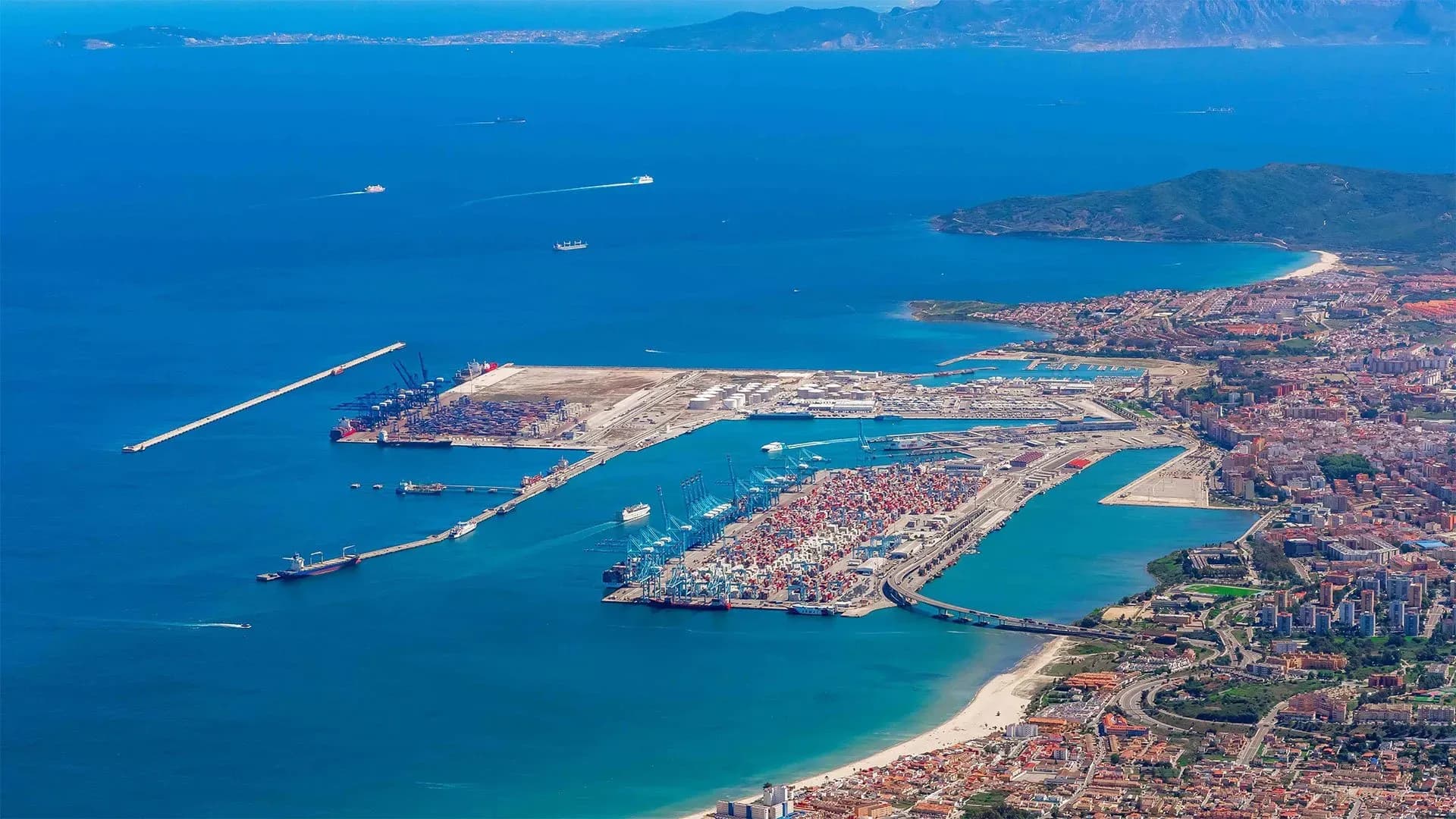
Algeciras maintains its position within the new scheme as a connection platform between the Mediterranean and the African Atlantic. The bay continues to pair with Tangier Med in the Strait corridor before the WAF6 ships continue towards the Gulf of Guinea, and operates in the service structure as a transshipment port prior to the Atlantic crossing. The operational adjustment does not alter that function, although the reduction of the rotation brings the links with Salalah and with Tema and Lagos closer together in the schedule, the two stops of the service on the African continent.