CMA CGM leads capacity growth among large shipping companies during the first half of 2026
The French company adds 235,500 TEUs between January and July, a 5.7% increase in capacity, and shortens the gap with Maersk in the race for second place worldwide
CMA CGM has been the company that has incorporated the most capacity into its fleet during the first half of 2026 among the ten leading regular shipping companies, according to the latest data from Alphaliner. The French company added 235,500 TEUs between January and July, representing a growth of 5.7%, surpassing the increase recorded by MSC, which added 205,000 TEUs (+2.9%).
This result represents a change compared to recent years, during which Mediterranean Shipping Company (MSC) had clearly led capacity growth among the main companies in the sector. Although the Swiss carrier continues to be the largest global operator by capacity, the pace of new ship incorporation by CMA CGM has allowed the French company to narrow the gap with Maersk in the global ranking.
Currently, CMA CGM has a capacity of 4.39 million TEUs, compared to Maersk's 4.73 million TEUs. In addition, the order book favors the company based in Marseille, which maintains approximately 1.8 million TEUs under construction, while the Danish carrier has about 1.2 million TEUs contracted. In this context, the president and CEO of CMA CGM, Rodolphe Saadé, has reiterated to French media his goal of making the company the second largest global operator of container shipping before the end of 2027.
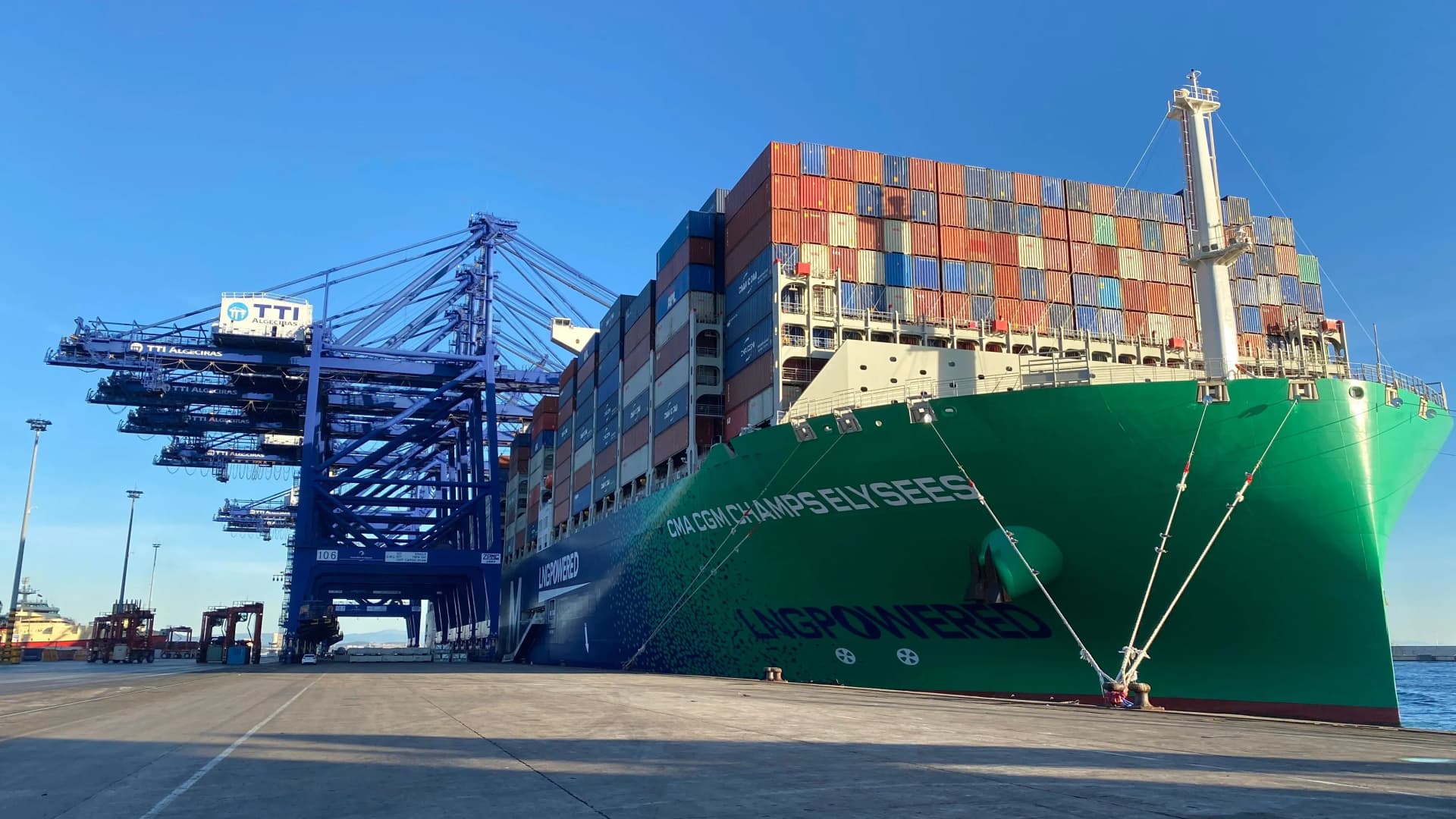
The growth of CMA CGM during the semester has been mainly linked to the addition of twelve new ships. Among them is the CMA CGM Notre Dame, with a capacity of 24,212 TEUs and powered by liquefied natural gas (LNG), which has become the largest ship in the French fleet. The CMA CGM Grand Palais, of 23,872 TEUs and also powered by LNG, has also been added. These deliveries are complemented by ten methanol-powered container ships, with capacities ranging from 13,130 to 16,180 TEUs, as part of the fleet renewal strategy using alternative fuels.
In the case of MSC, the increase in capacity during the first half of the year is due to the delivery of eight new ships. Among them, the MSC Claire stands out, with a capacity of 16,169 TEUs, in addition to seven other units between 10,300 and 11,480 TEUs. Although the increase of 205,000 TEUs keeps the company above the average growth of the ten leading shipping companies, it represents a more moderate evolution compared to 2025, when MSC increased its capacity by 831,400 TEUs over twelve months, equivalent to a growth of 11.7%.
Alphaliner's data shows that the global container shipping fleet increased by 2% during the first half of 2026. Among the ten largest companies, average growth reached 2.7%, with significant differences between operators.
After CMA CGM and MSC, Evergreen recorded an increase of 2.5%, while Maersk raised its capacity by 2.5%. ONE achieved a growth of 4.1%, the second highest percentage among the main shipping companies, although with a lower capacity addition in absolute terms.
Yang Ming was the company with the highest percentage growth in the group, increasing its capacity by 5.8%, although it started from a considerably lower base than the top three operators. For its part, COSCO increased its capacity by 1.3% and HMM recorded a growth of 0.6%.
At the opposite end of the ranking, Hapag-Lloyd slightly reduced its capacity by 0.2%, while ZIM experienced the largest relative decline in the group, with a decrease of 1.6%.
The global ranking remains unchanged compared to the beginning of the year: MSC retains the top position with the largest global fleet, Maersk remains second, and CMA CGM solidifies as third. The gap between the top two has widened in the first half, while the one separating the second and third places has narrowed again. The movement over the next eighteen months will depend largely on the pace at which both companies deliver the nearly three million TEUs they have in their joint order books.
Newsletter
The maritime briefing, every morning at 8:00
Ports, logistics and shipping essentials in your inbox, Monday to Friday, before the day starts.