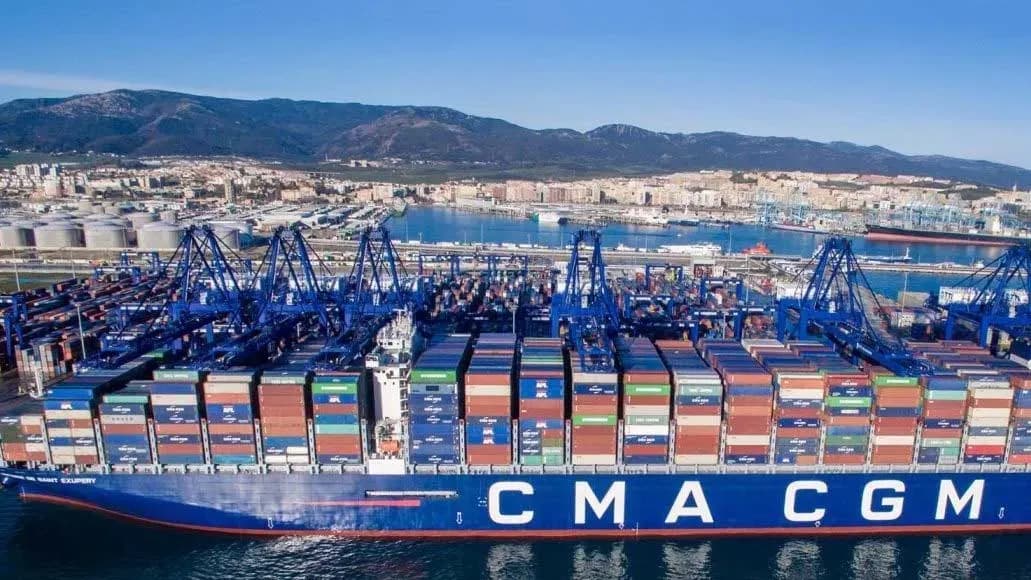
CMA CGM expects to surpass A.P. Moller-Maersk in fleet capacity before the end of 2027 and thus occupy the second position in the global ranking of container shipping companies, behind MSC. This expectation was conveyed by the president and CEO of the French group, Rodolphe Saadé, who places the surpass in the next eighteen months. Calculations by the consulting firm Linerlytica even advance that horizon to July 2027.
The current picture of the sector, according to the Top 100 of Alphaliner, places MSC in a very comfortable first position with around 7.3 million TEUs, Maersk in second position with approximately 4.7 million, and CMA CGM in third with about 4.4 million. The distance between the Danish and the French has been reduced to a few hundred thousand slots, a margin that the French company's order book of new constructions can absorb within the timeframe indicated by Saadé.
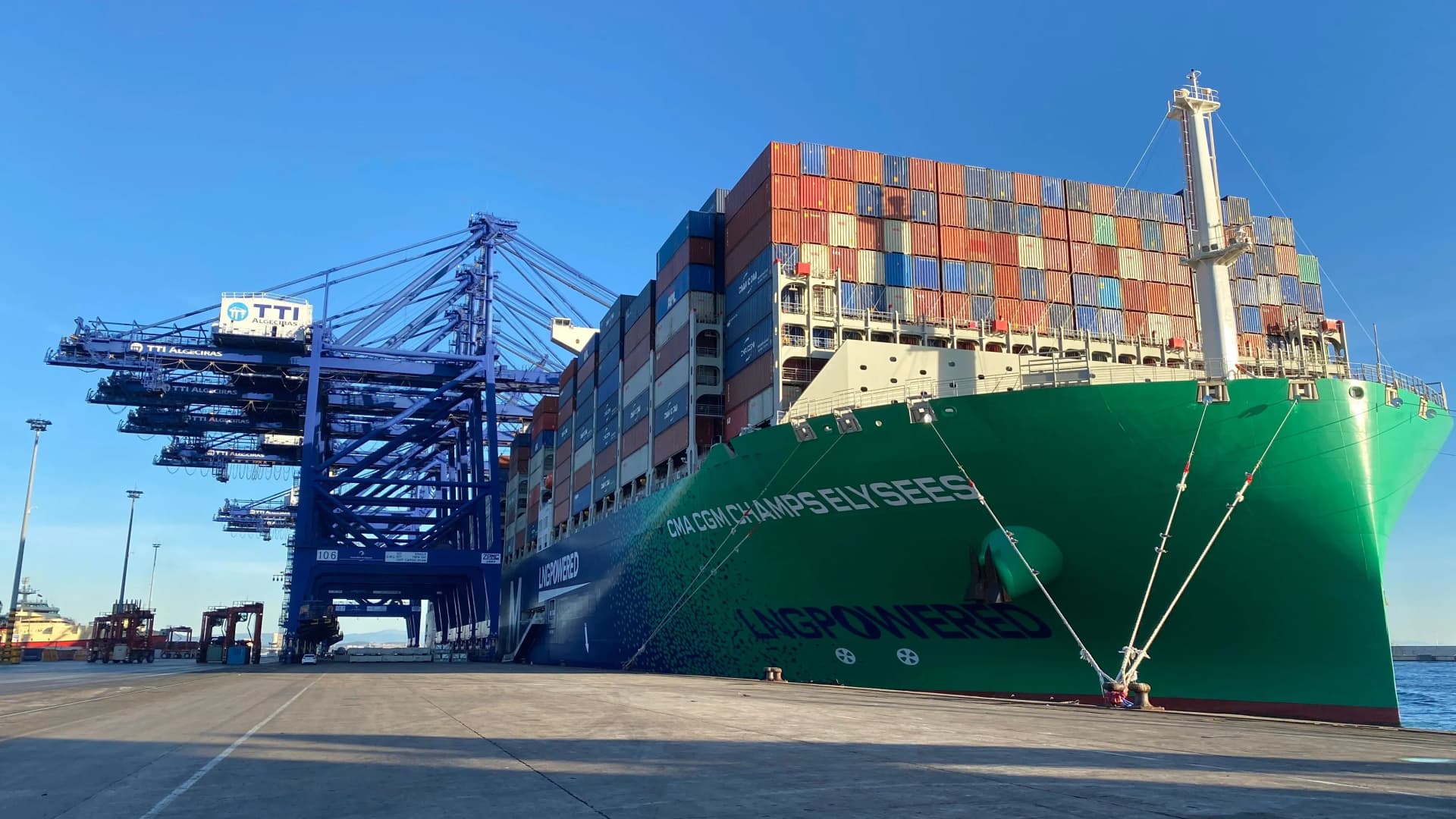
The commercial strategy underpinning this projection relies on a sustained expansion of its own tonnage. Data released by Alphaliner estimates CMA CGM's order book at 95 container ships with a combined capacity close to 1.5 million TEUs. Among these orders are twelve megaships of 24,000 TEUs and more than thirty units around 19,000 TEUs, all powered by liquefied natural gas. Additionally, the company added, in June of this year, eight new orders for ships of 6,000 TEUs at the Chinese shipyard Hengli Heavy Industries, with deliveries expected for 2028, in addition to other units that could operate under charter for the group.
The French bet is primarily focused on securing its own tonnage on the high-volume East-West routes, where the size of the vessel is crucial for cost competitiveness per slot. In parallel, CMA CGM has continued to expand its perimeter in terminals, land logistics, air cargo, and media with the cash generated during the pandemic years.
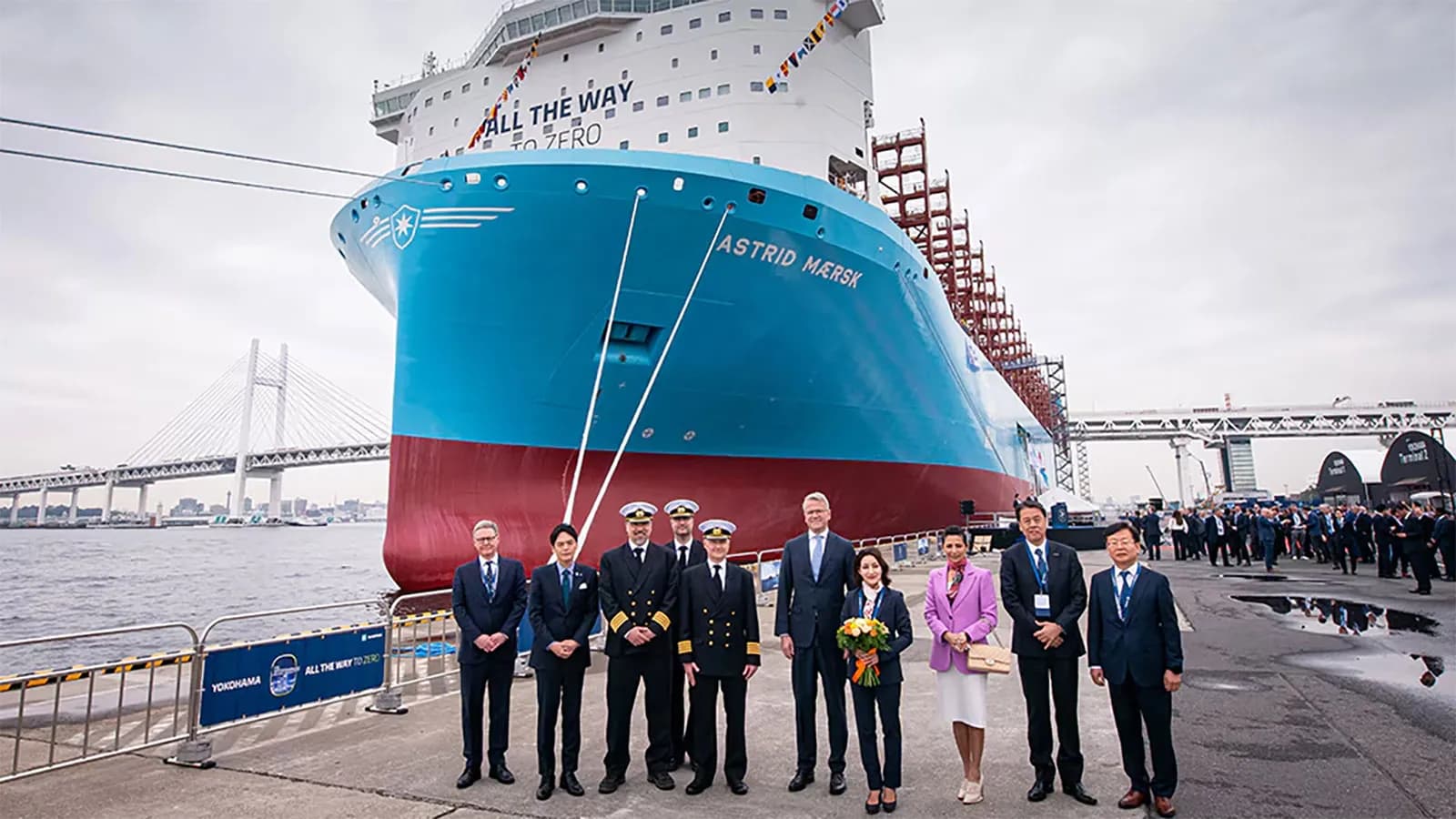
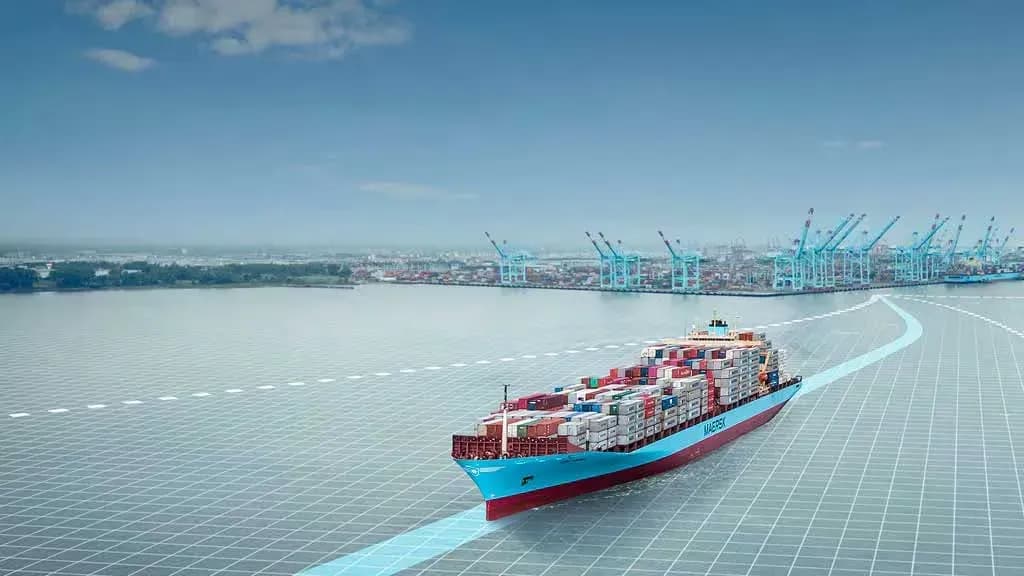
Maersk has taken the opposite path. The Danish company completed in 2024 a program of twenty dual-fuel ships for around 300,000 TEUs, presented as fleet renewal and as part of its transition to fuels with a lower footprint, rather than as an aggressive capacity expansion. The company has prioritized vertical integration among shipping, terminals, land logistics, storage, and door-to-door distribution, in line with its repositioning as a global logistics integrator.
Sector readings point out that losing the second position is not an accident in Maersk's trajectory, but rather a consequence of this strategic decision. Hua Joo Tan, founder of Linerlytica, attributes the decline of the Danish company to its own roadmap: "Maersk's fall in the ranking is entirely self-inflicted, by not having pivoted from its logistics integrator strategy despite the significantly superior results of the ocean business that its rivals continue to capitalize on." Alan Murphy, CEO of the consulting firm Sea-Intelligence, agrees with this reading: "Maersk made a very clear conscious decision not to hold onto number one at any cost, and now is willing to fall to number three, so it evidently does not believe that the cost of maintaining second place outweighs the benefits."
The third position also does not seem guaranteed for long. Peter Sand, chief analyst of the freight rate platform Xeneta, points to the Chinese shipping company as the next contender: "For Maersk, it will probably be more painful to leave the podium completely, as COSCO will someday take that third spot." The progression of the Chinese state group, with a highly relevant order book, positions the realignment of the top three positions as a cascading dynamic rather than an isolated move.
The battle for the second spot comes, however, at a time in the cycle that is not conducive to bets on scale. The industry enters a new phase of massive deliveries, with a still very high global order book pending incorporation. The ranking by nominal capacity does not measure profitability, capital discipline, or reliability of schedules, and in an oversupply environment, shipping companies with tighter fleets can better defend their margins. "As we likely head into a cyclical slowdown with abundant capacity, digging in and focusing on profitable markets seems a sensible choice," warns Murphy.
Thus, the two bets are clearly defined. Maersk believes that a tighter fleet, articulated with logistics and network control, will offer better returns than the search for growth in slots. CMA CGM maintains that scale, asset control, and reach over the supply chain will weigh more in the next decade. The outcome will depend on whether shipyards meet their delivery deadlines, whether the French company maintains its orders, the decisions regarding the purchase and sale of tonnage, and how the Danish company reacts to its rival's expansion. The next major shipping battle is already on the table.