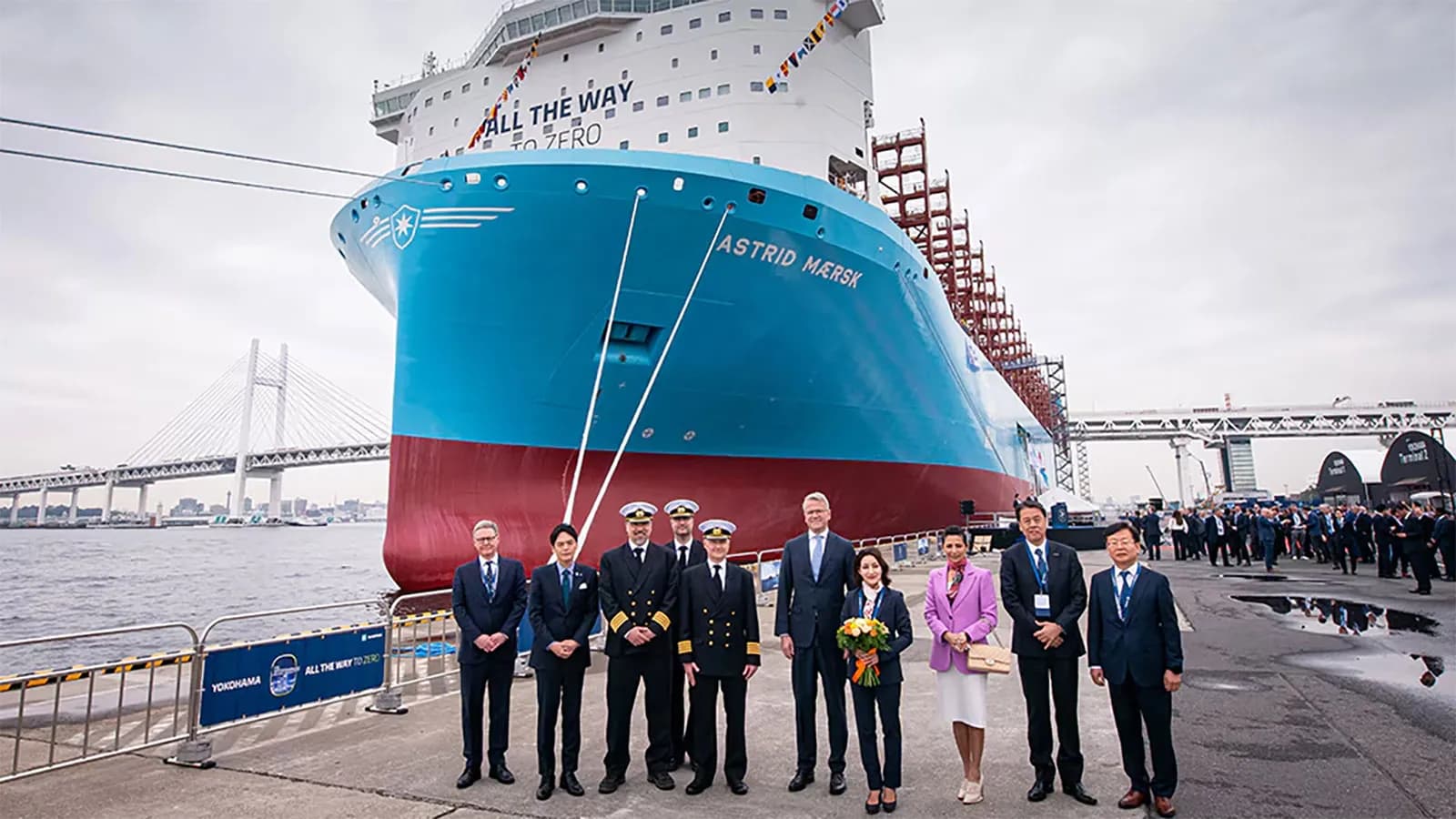
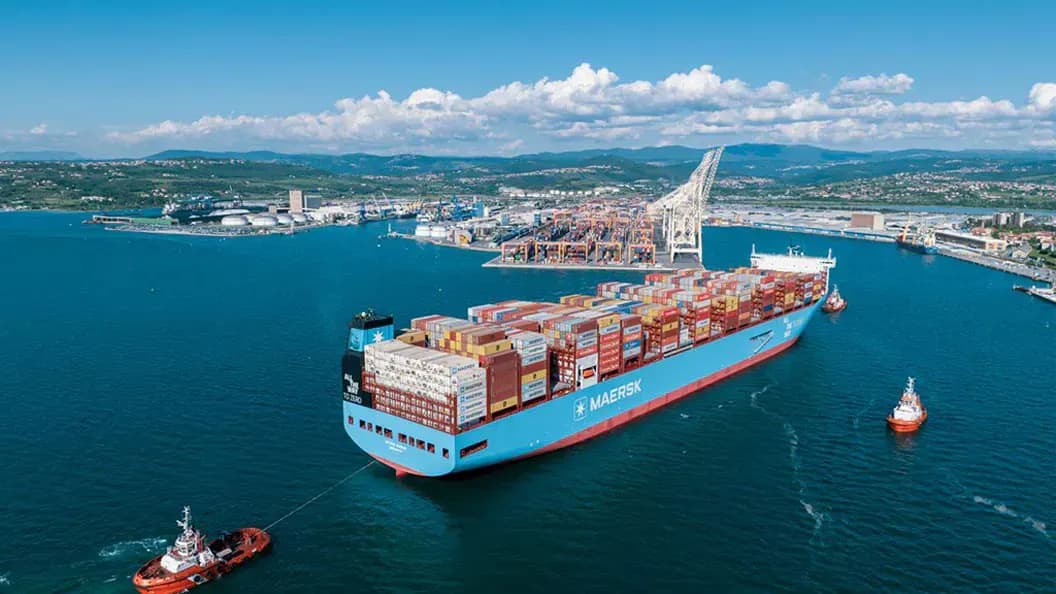
The order of 26 container ships of 18,600 TEUs confirmed by Maersk and brought forward by El Estrecho Digital, significantly increases the capacity contracted by the Danish shipping company for the coming years, although it does not currently modify the projections that contemplate CMA CGM being ahead of the company in the global ranking of container shipping during 2027.
The key lies in the schedule for incorporating the new ships. The 26 units will jointly add a nominal capacity of 483,600 TEUs, but their deliveries are scheduled for 2029 and 2030. Therefore, this additional capacity will not be available during the period in which current sector forecasts suggest a possible change in the second global position.
Analyst Lars Jensen, CEO of Vespucci Maritime, estimates that the new order will elevate the relationship between Maersk's portfolio of new constructions and its current fleet from approximately 25% to around 35%. This percentage brings the Danish company closer to the order levels maintained by MSC and CMA CGM, although the construction schedule limits its impact on the expected evolution for 2027.
Data from Alphaliner shows that Maersk currently maintains an advantage over CMA CGM in operated capacity. The Danish company is positioned around 4.7 million TEUs, while the French shipping company hovers around 4.4 million, with a difference of several hundred thousand TEUs between them.
The gap, however, has been narrowing as CMA CGM incorporates new units. During the first half of 2026, the French company added about 235,500 TEUs of capacity, a growth of 5.7%, according to data published by Alphaliner.
The order book constitutes another of the elements explaining the expected evolution. CMA CGM had around 1.8 million TEUs pending incorporation, while Maersk stood at approximately 1.2 million before the announcement of the new contract for 26 ships.
The sum of the new units theoretically increases Maersk's portfolio by another 483,600 TEUs, bringing it to around 1.7 million TEUs. This figure cannot be directly translated to the future growth of the fleet, as part of the new constructions may be intended to replace existing ships, while there may also be returns of chartered units, sales, or decommissioning of vessels.
The possibility of CMA CGM reaching the second global position had already been raised in July by the president and CEO of the French company, Rodolphe Saadé, who positioned that scenario before the end of 2027.
The estimates made then by Linerlytica placed the possible change in positions during 2027, considering existing capacity and known delivery schedules for new constructions. MSC would remain at a considerable distance from both companies in the first global position by capacity.
Maersk had already contracted eight container ships of 18,600 TEUs from New Times Shipbuilding in February. These units, equipped with dual-fuel propulsion systems, are also scheduled to be incorporated during 2029 and 2030.
The new order thus expands the future contracted capacity by Maersk, but focuses a significant part of the incorporations after 2027, while CMA CGM maintains a high volume of ships pending delivery during the next fiscal years.