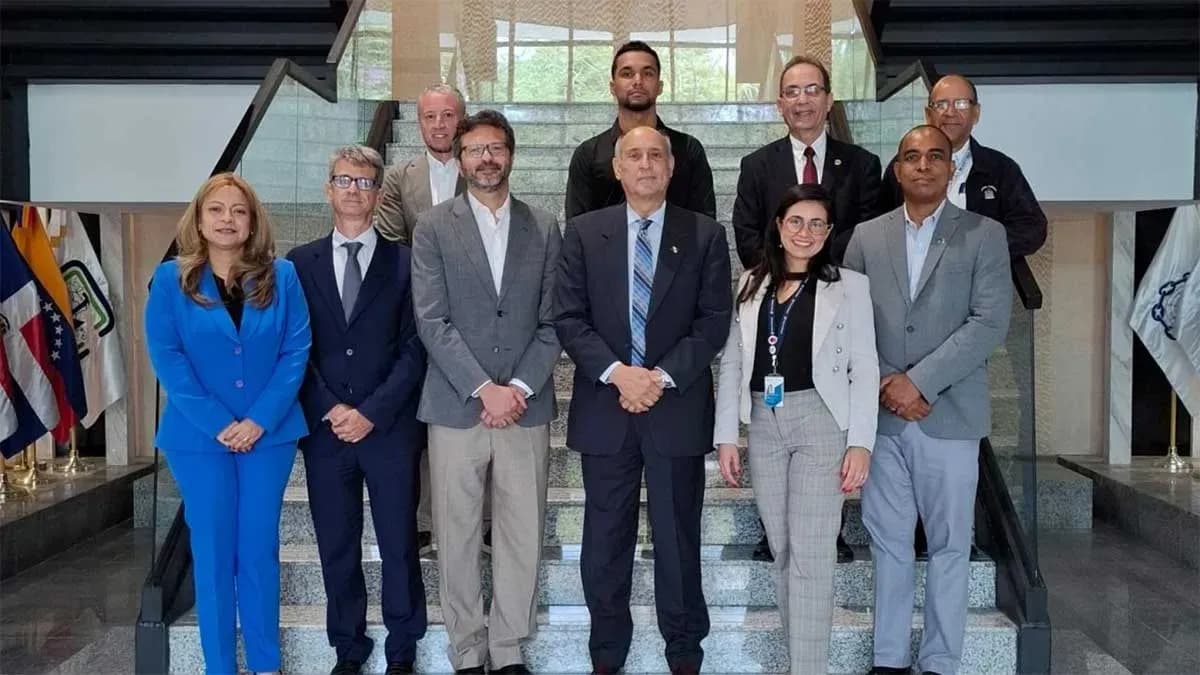
The Panama Maritime Authority and the Port Authority of Algeciras Bay held a working meeting, with participation from the Panama Canal Authority, the Economic and Commercial Office of the Spanish Embassy in Panama, and the European Union Delegation in Panama, to address the development of the Algeciras–Panama Green Maritime Corridor, an initiative integrated into the EU's Global Gateway strategy. The meeting, held this week, focused on the transition to alternative fuels on a highly strategic maritime route for international trade. Among the solutions analyzed were methanol, ammonia, liquefied natural gas, and bioLNG, fuels expected to play a role in the energy transformation of maritime transport in the coming years, depending on their availability, cost, technological maturity, and regulatory fit.
The meeting was attended by Luis Roquebert, administrator of the Panama Maritime Authority; Khadyn Mollick, legal director of the AMP; Juan Pablo Pérez, head of the Port Planning Department of the APBA; Aike Escobar Apañez, program manager of Green Corridors & Energy Hub at the APBA; Beatriz González, decarbonization specialist at the Panama Canal Authority’s Sustainability Unit; and Arthur James, Energy and Carbon Sequestration Consultant and Global Gateway Energy Transition Consultant.
The initiative aims to create the technical, regulatory, and operational conditions for the maritime connection between the Panama Canal and the Port of Algeciras to accommodate traffic with lower carbon intensity. The project is framed within Global Gateway, the European strategy aimed at mobilizing investments in sustainable, secure, and connected infrastructure in areas such as transport, energy, and digitalization. In this case, the initiative combines the port and logistical dimension with the energy transition of international maritime transport.
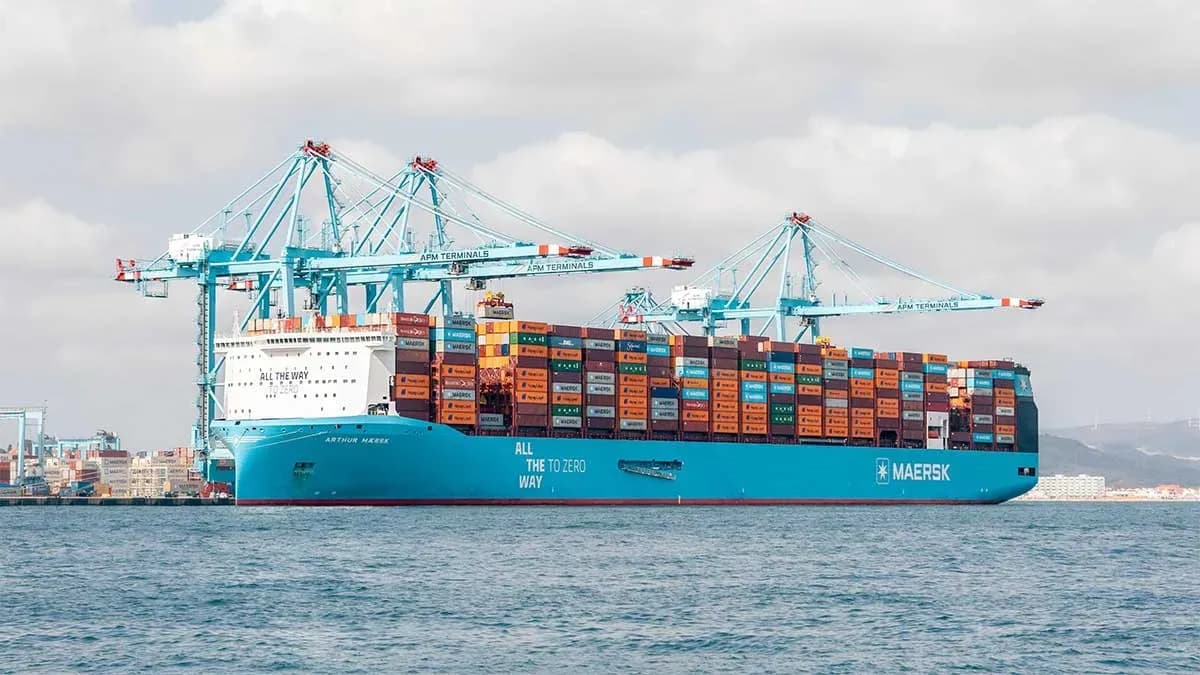
The Algeciras–Panama corridor connects two reference points for global logistics chains. On one hand, the Panama Canal is one of the world’s main interoceanic crossings and an essential hub for routes between Asia, America, and Europe. On the other hand, the Port of Algeciras is located in the Strait of Gibraltar, at the confluence of East-West and North-South routes, with a consolidated position in container traffic, bunkering, transshipment, and maritime connectivity.
The involvement of the Panama Canal Authority adds a relevant operational component, given the interoceanic route's role in managing international transits and applying measures related to energy efficiency and emissions reduction. The Canal has incorporated instruments such as the NetZero Slot into its sustainability strategy, a weekly reservation quota aimed at Neopanamax vessels with efficiency criteria and capability to operate with lower carbon footprint fuels.
Meanwhile, Panama has initiated a roadmap for decarbonization of its maritime sector, in line with the International Maritime Organization's objectives to achieve net-zero emissions in international maritime transport by around 2050. Its position as a flag state, regional logistics center, and canal country makes Panama an actor capable of influencing the adoption of technical and regulatory standards related to alternative fuels.
From the Algeciras side, the project is related to the port's strategy to establish itself as an energy and logistical hub in southern Europe. The APBA is working on solutions associated with the supply of alternative fuels, berth electrification, operational efficiency, and process digitalization. The port has been increasing its activity in supplying LNG and bioLNG to vessels, providing an operational basis for analyzing the evolution toward other energy vectors, such as e-methanol or ammonia.
The feasibility study for the corridor, awarded to the consulting firm Ricardo and funded by the European Union Delegation in Panama and Costa Rica, includes analyzing the necessary conditions to make the route viable from a technical, economic, and regulatory perspective. Elements that are part of the study include the availability of fuels, infrastructure needs, the cost of vessels prepared for alternative fuels, the price difference relative to fossil fuels, and the impact of regulatory frameworks such as the EU ETS, FuelEU Maritime, and the future net-zero emissions framework of the IMO.
The selection of fuels is one of the main technical aspects of the project. LNG and bioLNG already have a greater operational presence in certain segments of the fleet, although their role in decarbonization will depend on the fuel's origin and the effective reduction of emissions throughout the lifecycle. Methanol, particularly in its renewable version, is emerging as an increasingly interesting alternative for next-generation container ships. Ammonia, for its part, is considered a potential option for ocean routes, although it requires addressing issues related to safety, handling, certification, and commercial availability.
The meeting between the Panamanian authorities, the APBA, and European representatives allows for institutional continuity of a project that requires coordination among administrations, port operators, shipping companies, energy providers, and regulatory bodies. The creation of green corridors depends not only on incorporating new fuels but also on supply contracts, certification standards, storage infrastructures, safety procedures, and mechanisms to reduce the cost gap during the initial phase.
Thus, the Algeciras–Panama Green Maritime Corridor is proposed as a cooperation platform between Europe and America to adapt a transoceanic route to the environmental requirements of international maritime transport. Its development will allow an evaluation, under real market conditions, of how ports, canals, maritime authorities, and the energy industry can coordinate to facilitate a gradual transition to operations with a lower carbon footprint.