The Port Authority of the Bay of Algeciras (APBA) has taken a decisive step in its digital transformation strategy with the publication of a tender to deploy a private telecommunications 5G network in its port facilities. The project, with a budget exceeding 6.13 million euros including VAT, involves the complete replacement of the current 4G LTE communications infrastructure operating in the port's facilities with a fifth generation network in Standalone (SA) architecture, the most advanced configuration of this technology that operates completely independently without relying on previous 4G networks.
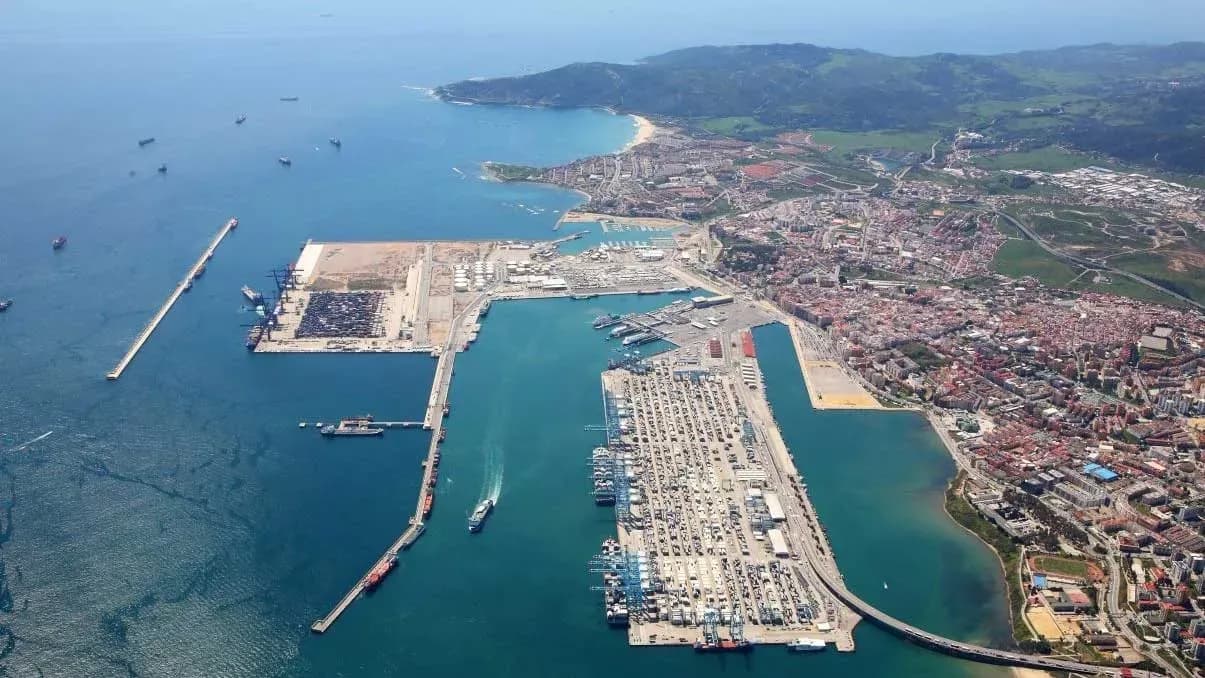
The port of Algeciras, the busiest cargo port in Spain and one of the main ports in the Mediterranean, is thus betting on equipping itself with state-of-the-art technological infrastructure that will allow it to face current and future operational challenges. The new network will provide a qualitative leap in three fundamental aspects for port operations: greater data transmission capacity, shorter response times in communications — known as low latency — and a level of security and reliability superior to that offered by current 4G technology.
Among the functionalities that the new 5G network will enable are the so-called MCX services (Mission Critical Services), a set of communication tools designed for environments where reliability is essential, such as coordinating port police, managing emergencies, or supervising operations at terminals. These critical communications require practically total availability and minimal response times, requirements that 5G Standalone technology is designed to meet.
But the project goes beyond immediate improvements in communications. The justifying memorandum of the contract indicates that the new infrastructure will prepare the port for future scenarios of automation and the Internet of Things (IoT), two areas that are set to transform port operations in the coming years. Connected sensors, autonomous vehicles, intelligent surveillance systems, or real-time monitoring of equipment and goods are some of the applications that a private 5G network can support and that would be unfeasible with current technology.
The base budget for the tender amounts to 5,073,224.35 euros excluding taxes. The bulk of the investment, 3,497,864.42 euros, corresponds to the supply and installation of systems, which include the private 5G network (2.62 million euros), the MCX critical communications platform (423,919 euros), and a comprehensive cybersecurity solution valued at 450,500 euros. This last component is especially relevant in a context where port infrastructures are considered critical infrastructures and, therefore, potential targets for cyberattacks.
The contract also includes the maintenance and operation of the entire network for two years, with a cost of 710,700 euros per year covering corrective, preventive, and evolutionary work, as well as ongoing remote monitoring and alarm management. In addition to these items, project engineering services (163,200 euros), training for APBA personnel in using the new platform (17,659 euros), and a pool of 126 hours for integration work with the port's existing corporate systems will be added.
The planned provision of terminals gives an idea of the operational dimension of the deployment: 250 5G mobile phones for port police, 20 tablets, 20 CPE devices (devices that allow fixed locations to connect to the wireless network), 290 SIM cards for the private network, and 540 mobile device management licenses. In addition, 580 conventional mobile phone lines will be contracted as a backup in case of incidents in the main network, ensuring continuity of communications in any scenario.
The project also includes the dismantling and removal of the entire current LTE network infrastructure, with nine base stations and two core networks that must be uninstalled, as well as civil engineering work for the installation of 9,100 meters of single-mode fiber optic, outdoor telecommunications cabinets, underground conduits, and the adaptation of the electrical infrastructure needed to power the new equipment.
The contract will have a total duration of three years: the first for installation and commissioning, and the following two for maintenance, with the possibility of two additional annual extensions. The estimated value of the contract, including these extensions and possible modifications, amounts to 5,986,675.60 euros. The award will be made through an open procedure, with an equitable weighting between technical and economic criteria (50 points each), and bidders will be required to have proven experience in deploying mobile networks LTE/4G/5G, as well as ISO 27001 certification in information security.
The deadline for submitting bids closes on May 21, 2026. With this tender, the port of Algeciras positions itself at the technological forefront of the Spanish port system, at a time when digitalization and advanced connectivity have become key competitiveness factors for major international logistics hubs.