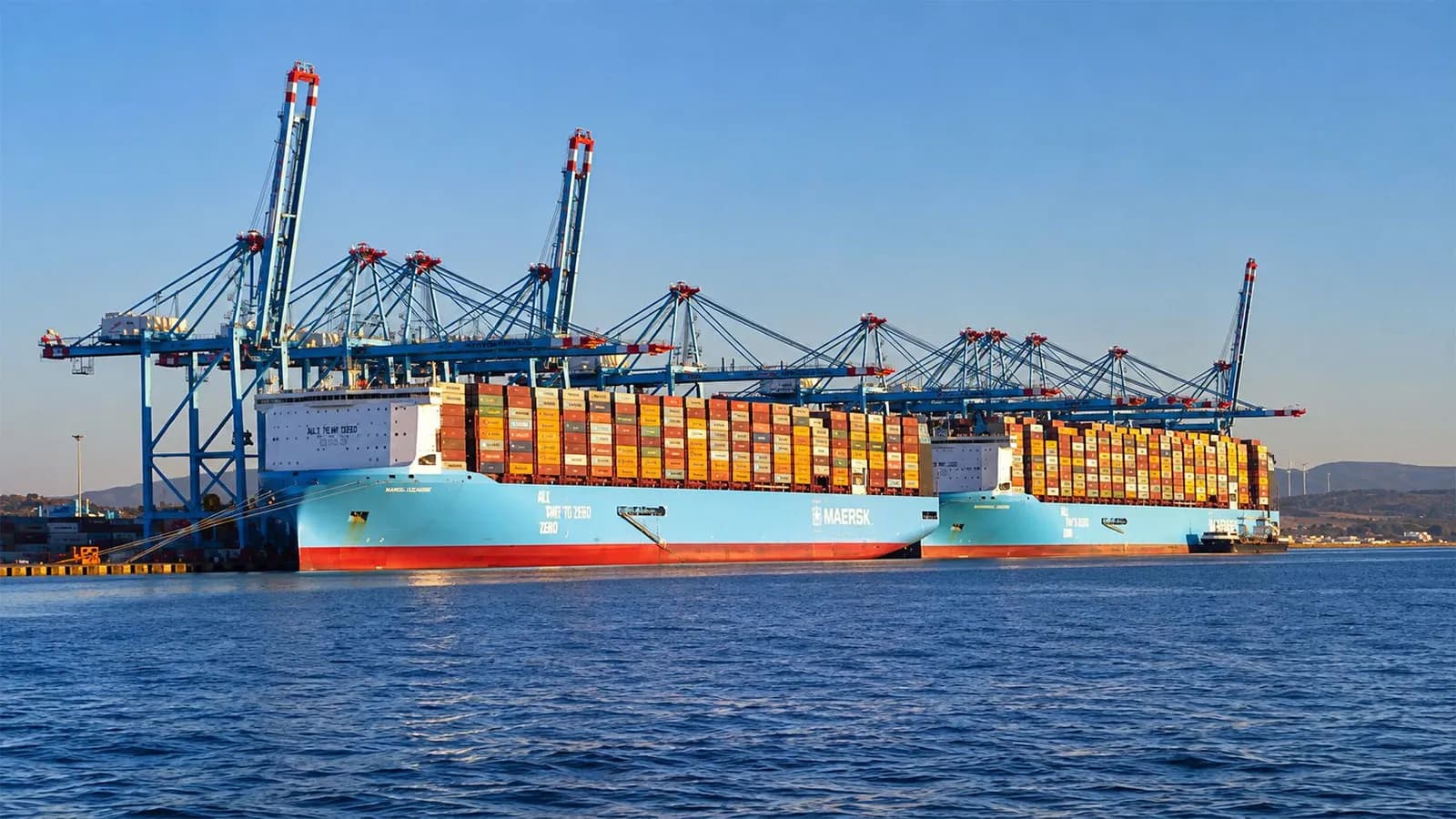
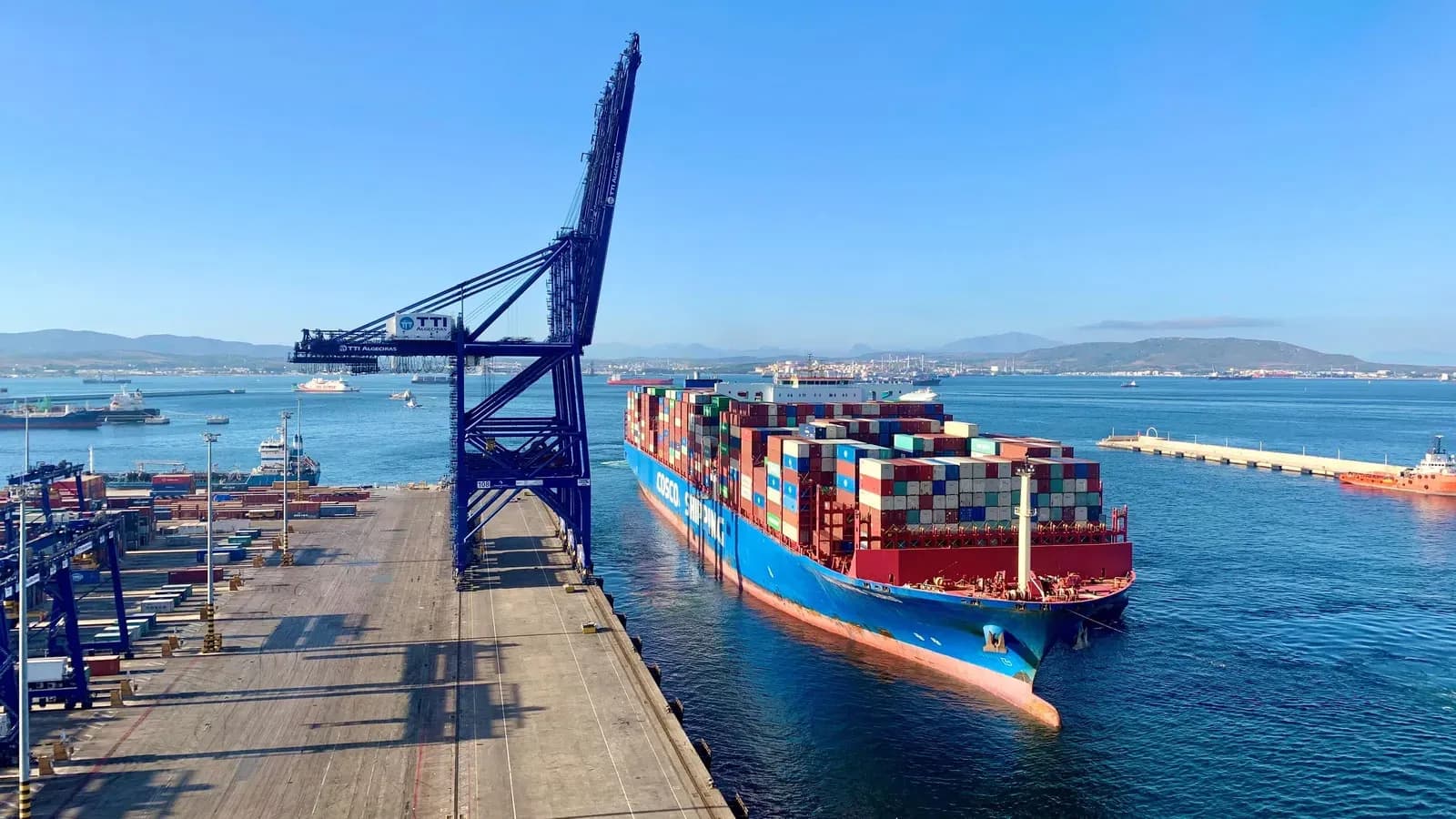
The Danish shipping line Maersk has announced a reorganization of its container shipping network between the western Mediterranean and West Africa, which includes the addition of two new rotations calling at the port of Algeciras and the modification of two other regional services. The changes, scheduled to take effect in the third week of December 2026, will affect the WAF1, WAF3, WAF5 and WAF6 lines, adding new connections via the ports of Algeciras and Tanger Med to various markets along the African Atlantic coast.
The main development will be the configuration of the WAF1 service as a dedicated connection between Algeciras, Tanger Med and Dakar, the capital of Senegal. The rotation will follow the route Algeciras–Tangier–Dakar–Algeciras and will enable cargo from other regions, particularly Asia-Pacific and the Middle East, to be routed through transshipment operations at the ports in the Strait of Gibraltar. The company says the reorganization is intended to facilitate maritime connections with the Senegalese market through its international network.
The second change concerns the WAF5 service, which will add Algeciras and Tanger Med to a rotation calling at five West African ports. The new route will start in Algeciras and continue via Tangier, Monrovia (Liberia), Abidjan (Côte d’Ivoire), Takoradi (Ghana), San Pedro (Côte d’Ivoire) and Lagos (Nigeria), before returning to the port of Algeciras. This configuration will establish direct connections from the western Mediterranean to several port hubs in the region, for both import traffic and export flows using these facilities.
The reorganization will also affect WAF3, whose coverage will be changed to include the ports of Tema in Ghana; Onne in Nigeria; and Pointe-Noire in the Republic of the Congo. With these changes, Maersk envisages new connection options between the western Mediterranean and various markets in the Gulf of Guinea and Central Africa. The WAF6 service will also expand its coverage by adding Cotonou, Benin’s main commercial port.
This move follows the shipping line’s announcement on September 30 of an initial series of changes to its network between Europe and West Africa, scheduled to take effect in October. That reorganization included new WAF6 calls at Port Said in Egypt and Lomé in Togo, as well as an extension of WAF3 to Pointe-Noire. The company also outlined the connections offered by other services in the region, including WAF2, which runs between Algeciras, Tangier and Dakar, and the lines linking the ports in the Strait with Cape Verde, Mauritania, Guinea and Gambia.
The changes announced for December coincide with another reorganization of Maersk and Hapag-Lloyd’s intercontinental connections within Gemini Cooperation, the operational alliance the two companies launched on February 1, 2025, for their East-West maritime services. Although the regional WAF services are part of Maersk’s commercial network, their connection to intercontinental routes enables the movement of goods between Asia, the Middle East, Europe and African ports.
In this context, the two shipping lines announced on October 19 the creation of the AE18 service, known as SE5 by Hapag-Lloyd, which will directly connect several Asian ports with Algeciras and Tanger Med. Its rotation will include Shanghai, Xiamen, Tanjung Pelepas, Algeciras, Tangier, Algeciras and Xiamen, with two calls at the port facilities in Algeciras. The first voyage will be operated by the container ship Maersk Edirne, scheduled to depart Shanghai on November 22. This new line will take over part of the coverage previously provided by the AE2, AE11 and AE12 services at western Mediterranean transshipment hubs.
The Gemini reorganization also includes changes to the AE2, AE11 and AE19 services, as well as the ME2 line, which connects India and Europe. The latter will add a call at Jeddah, Saudi Arabia, to a rotation that continues to include Algeciras and Tanger Med. The changes are part of the itinerary review announced by Maersk and Hapag-Lloyd in September, when they said several services would return to the Suez Canal route instead of sailing around the Cape of Good Hope, subject to developments in Red Sea security.
As for the African network, Maersk has set the third week of December as the implementation date for the new WAF1 and WAF5 configurations in the western Mediterranean, alongside the planned changes to WAF3 and WAF6. The company has warned that sailing schedules may change during implementation.