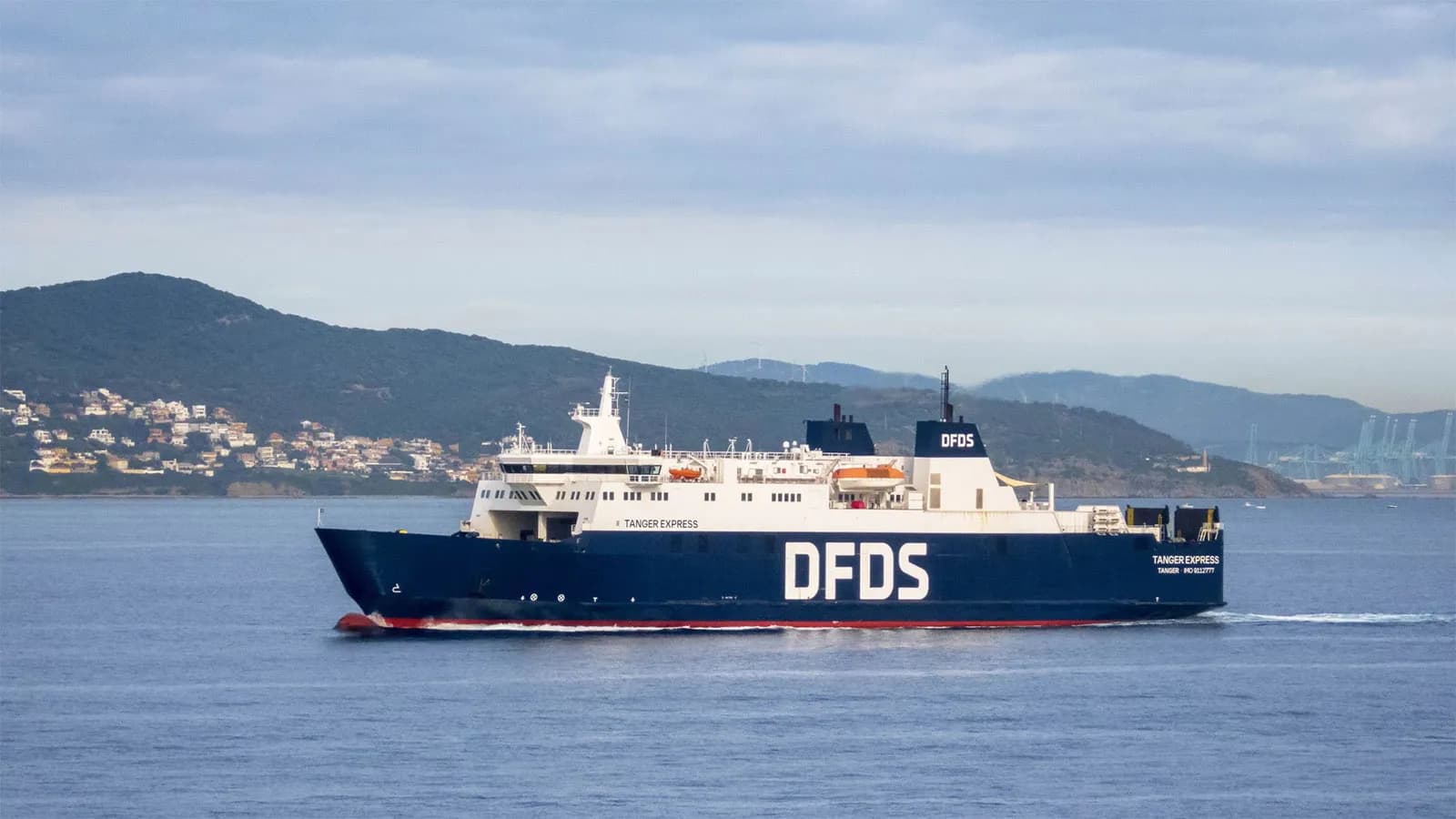
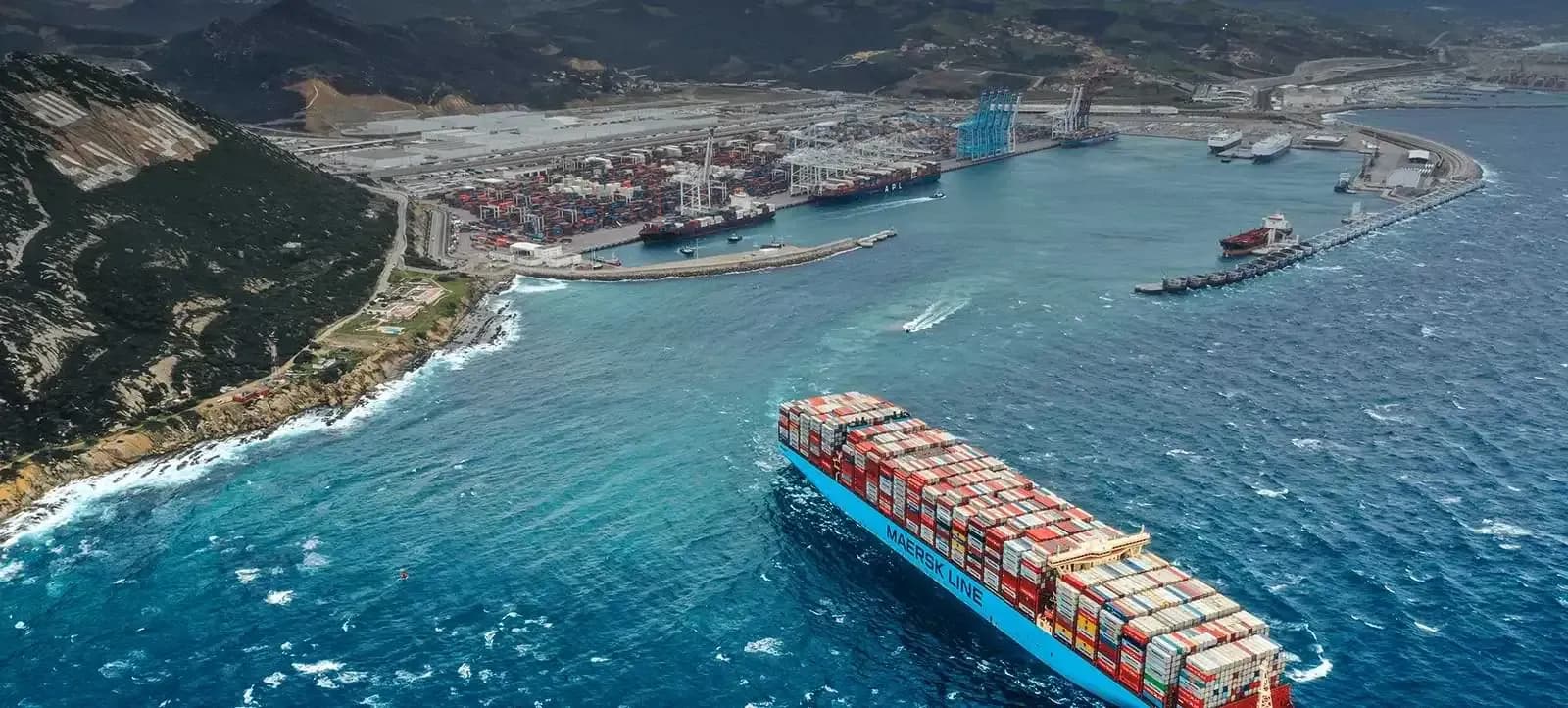
DFDS Iberia participates in Fruit Attraction 2026 as part of a delegation of 24 companies from the port community accompanying the Port Authority of the Bay of Algeciras (APBA) at IFEMA Madrid. The company adds to this offer the maritime component of the horticultural corridor between Morocco and Europe through its Ro-Ro freight service between Algeciras and Tanger Med.
The connection is prepared for the transport of unaccompanied cargo units and accepts both conventional trailers and refrigerated semi-trailers, as well as ISO containers and reefer containers. This configuration allows for the boarding of units that need to maintain temperature during the crossing of the Strait, a condition directly related to the traffic of fruits, vegetables, and other perishable products from Morocco.
DFDS sets the scheduled time for the crossing of its Ro-Ro service between both ports at one and a half hours. The schedule reviewed during Fruit Attraction includes four departure slots from Algeciras, at 02:00, 08:00, 15:00, and 22:00 hours, although the shipping company itself warns that schedules may experience daily variations. The company guarantees, in any case, a minimum of two Ro-Ro departures per day in each direction.
The operation is also supported by cargo terminals open 24 hours a day, seven days a week, both in Algeciras and Tanger Med. For Ro-Ro service cargo units, DFDS currently establishes an admission closure three hours before the scheduled departure.
The company complements this specific link for unaccompanied cargo with its Ro-Pax service between Algeciras and Tanger Med. This second operation is aimed at trucks with drivers and currently has eight daily departures from each port, also with a scheduled sailing time of one and a half hours. Thus, DFDS provides differentiated alternatives for accompanied and unaccompanied cargo in the corridor.
For horticultural flows, the Ro-Ro model allows the merchandise to remain within the transport unit during the maritime segment. A refrigerated semi-trailer loaded at origin can travel to Tanger Med, board toward Algeciras, and subsequently continue its land itinerary once the corresponding entry procedures into the European Union have been completed.
This continuity is particularly applicable to Moroccan products such as tomatoes, red fruits, avocados, and other fruits and vegetables that use the maritime connections of the Strait to later integrate into the Spanish and European distribution networks. Road transport and short-distance maritime transport thus form part of the same logistical route.
DFDS's presence allows for the incorporation of this road traffic into an Algeciras representation where different models of perishable transport coexist. Alongside the reefer containers from transoceanic markets, the Port of Algeciras channels goods from North Africa via trucks and semi-trailers that make the short maritime crossing before continuing by road.
DFDS additionally publishes capacity for its Ro-Ro service for industrial cargo, hazardous goods, and project cargo, although refrigerated trailers and containers constitute the units with the highest direct relationship to the sector that gathers this week in Madrid. The facilities of both ports also offer handling and transfer services for goods associated with the route.
The Algeciras–Tanger Med connection is integrated into DFDS's maritime freight transport network in Europe. In the Strait, its offer currently includes Ro-Ro and Ro-Pax services between Algeciras and Tanger Med and the connection between Algeciras and Ceuta.
At Fruit Attraction 2026, this maritime capacity is incorporated into the joint proposal of the APBA, which brings together transport services, cold storage, customs management, inspection, and distribution aimed at international fruit and vegetable chains.