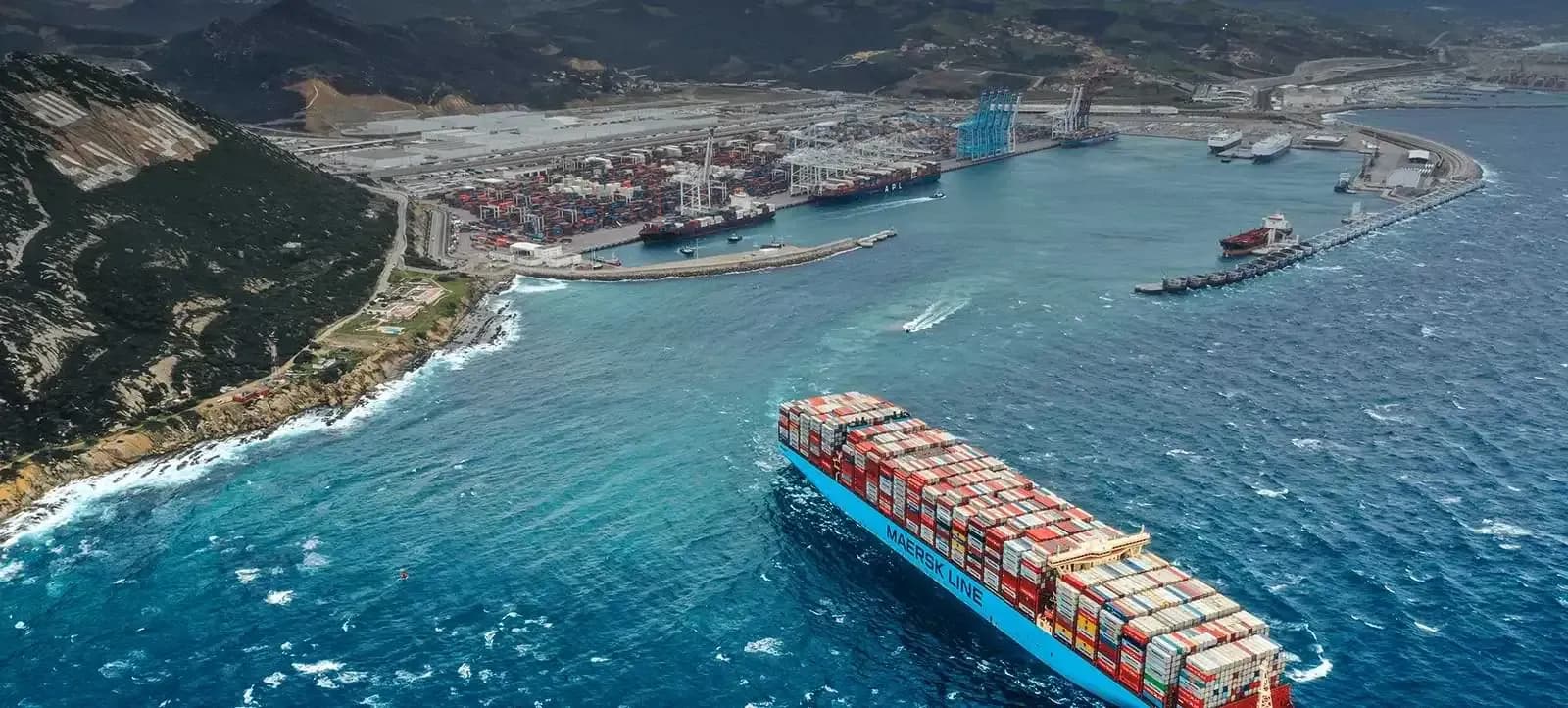
Tanger Med has nearly doubled in estimated volume compared to the port of Algeciras since the European emissions trading has been applied
The estimated volume by AIS of the Moroccan port rises by 21% year-on-year, and the Algeciras port drops by 18%, with the gap between the two shores of the Strait at maximums for the period.
The port of Tanger Med moved an average of 382,716 tons per day in the week ending August 21, 21% more than a year earlier, while the port of the Bay of Algeciras remained at 179,163 tons, 18.1% less, according to maritime activity estimates from IMF PortWatch based on AIS signals, collected by EED Data, the data platform of El Estrecho Digital.
The estimated volume now places the Moroccan port in a ratio of almost two to one over the Algeciras port in the same weekly cut, although at scale both operate at a similar pace: 13.1 vessels per day in Tanger Med compared to 15.3 in Algeciras. The difference lies in the average size of the vessels that dock on each side and not in the frequency of arrivals.
The comparison of the calendar years since 2024, a compilation made by EED Data based on the series of both ports, places the start of the divergence in the same period in which the European emissions trading regime began to be applied to maritime transport, on January 1, 2024. The daily average estimated volume in Algeciras has decreased from 230,034 tons in 2024 to 217,326 in 2025 and to 200,339 so far in 2026, a 12.9% less in the accumulated period. Tanger Med rose from 351,564 tons in 2024 to 381,650 in 2025 and is moving at 362,263 in 2026, with a positive balance of 3% despite the slowdown of the last fiscal year. The relationship between the annual averages of the two ports has changed from 1.53 in 2024 to 1.76 in 2025 and to 1.81 in 2026.
The European regime, approved by Directive (EU) 2023/959, covers vessels of more than 5,000 gross tonnage that call at ports in the European Union, with a gradual application of 40% of verified emissions in 2024, 70% in 2025, and 100% from January 1, 2026, the first year of full validity. The regulation accounts for the total emissions from trips between Union ports and half of those from routes between a community port and one from a third country. Transshipments in neighboring ports recognized by the Commission, including Tanger Med, are excluded from the accounting.
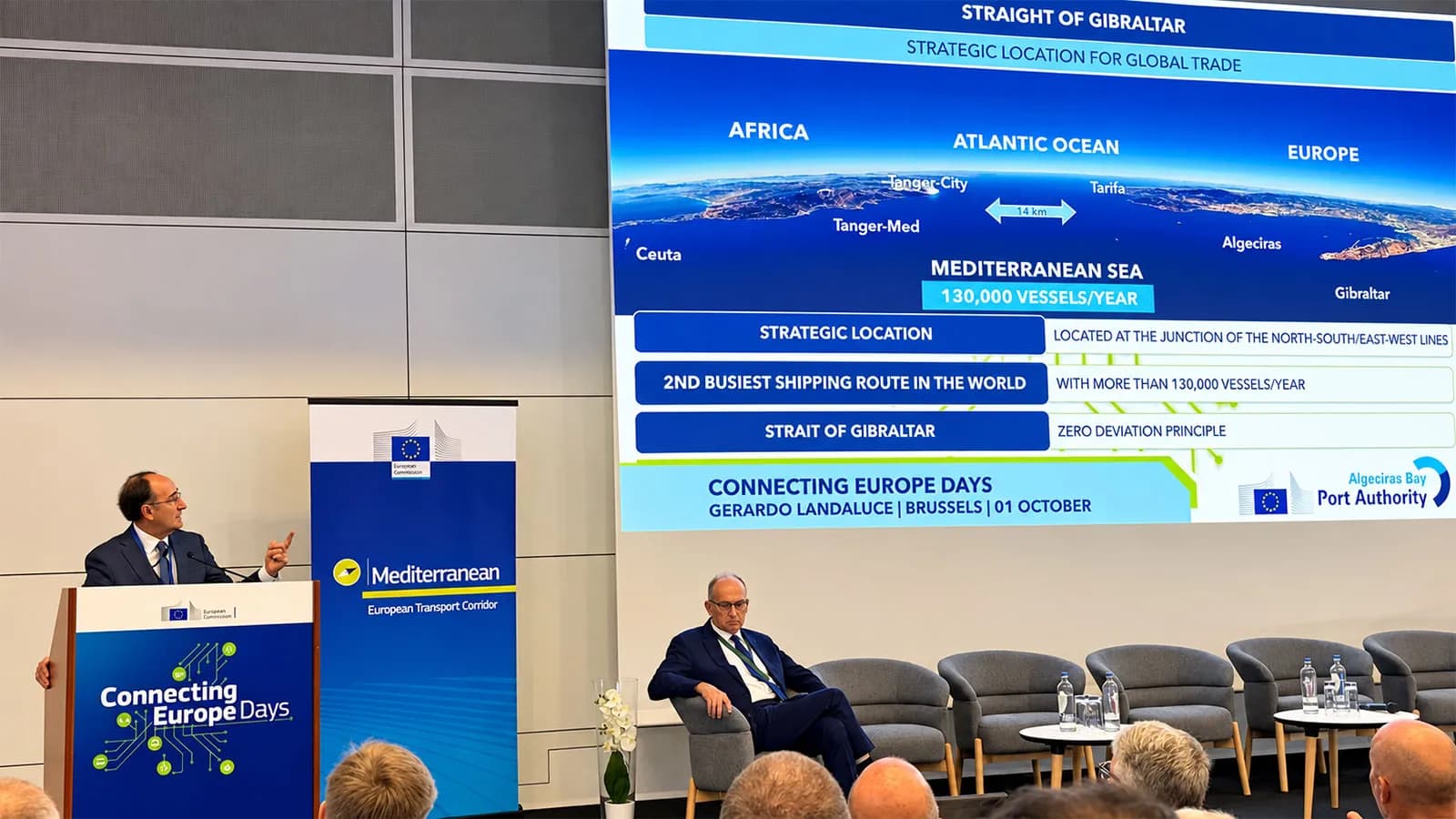
The maritime corridor of the Strait of Gibraltar, measured as a complete passage, helps to place the whole. The estimated aggregate capacity of the passage moved at an average of 3.54 million tons per day in 2024 and 2025, and 3.51 million so far in 2026, with between 132 and 135 daily transits throughout the period. In the week ending August 23, the daily average of the passage was at 3.31 million tons, a 4.4% less than a year earlier. The corridor remains stable in annual figures while activity is distributed differently between the two shores: the southern shore sustains the volume and the northern shore loses weight.
Much of the reorganization of traffic in the area comes from a factor external to the Strait: the crisis in the Red Sea. Insecurity for merchant traffic in the Bab el-Mandeb strait since late 2023 forced large shipping lines to go around Africa by the Cape of Good Hope. The estimated capacity of the Suez Canal has ranged between 1.34 and 1.47 million tons per day during the period, far below its previous levels, while the Cape of Good Hope has handled between 5.23 and 5.68 million. Part of that diverted flow continues through the Atlantic and enters the Mediterranean through the Strait, which explains why the corridor does not collapse despite the fall of Suez.
Against this backdrop, the reassignment between the two shores of the Strait has translated into concrete shipping decisions during 2026. In June, Maersk activated a weekly service between the Baltic and the eastern Mediterranean with a single peninsular stop in Tanger-Med and no stop in Algeciras. In May, Ocean Network Express had removed the Algeciras stops from two of its lines between Asia and northern Europe diverted by the Cape of Good Hope. Both adjustments reduced capacity on the Spanish side. In the face of those losses, the Japanese shipping company added in July a weekly service with five ports in West Africa that does call at Algeciras and Tanger Med, although with lower volume than the eliminated Asian lines.
The weekly estimated volume trajectory within this period shows the extent of the fluctuations. Algeciras marked its low point in the first week of January 2024, with an average of 113,218 tons per day, and its peak in February of that year, with 331,237. In 2026, its minimum was 129,733 tons in the first week of February, a traditionally weak segment due to the drop in transshipment after Christmas. Tanger Med reached its maximum in October 2024, with 531,841 tons, and its minimum in January 2026, with 213,445. In the last four weeks, the daily average was 205,620 tons in Algeciras and 355,043 in Tanger Med.
Newsletter
The maritime briefing, every morning at 8:00
Ports, logistics and shipping essentials in your inbox, Monday to Friday, before the day starts.