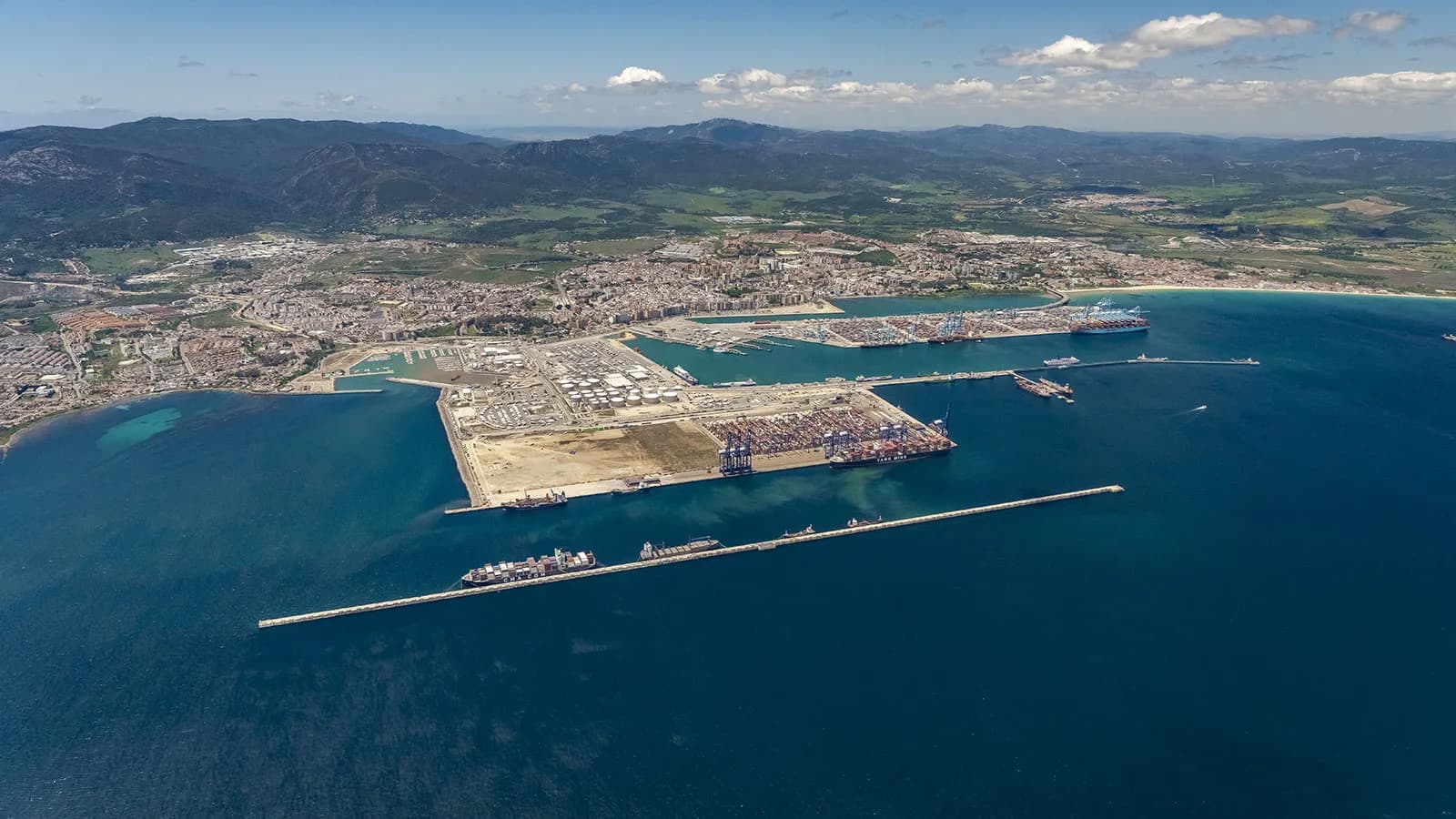
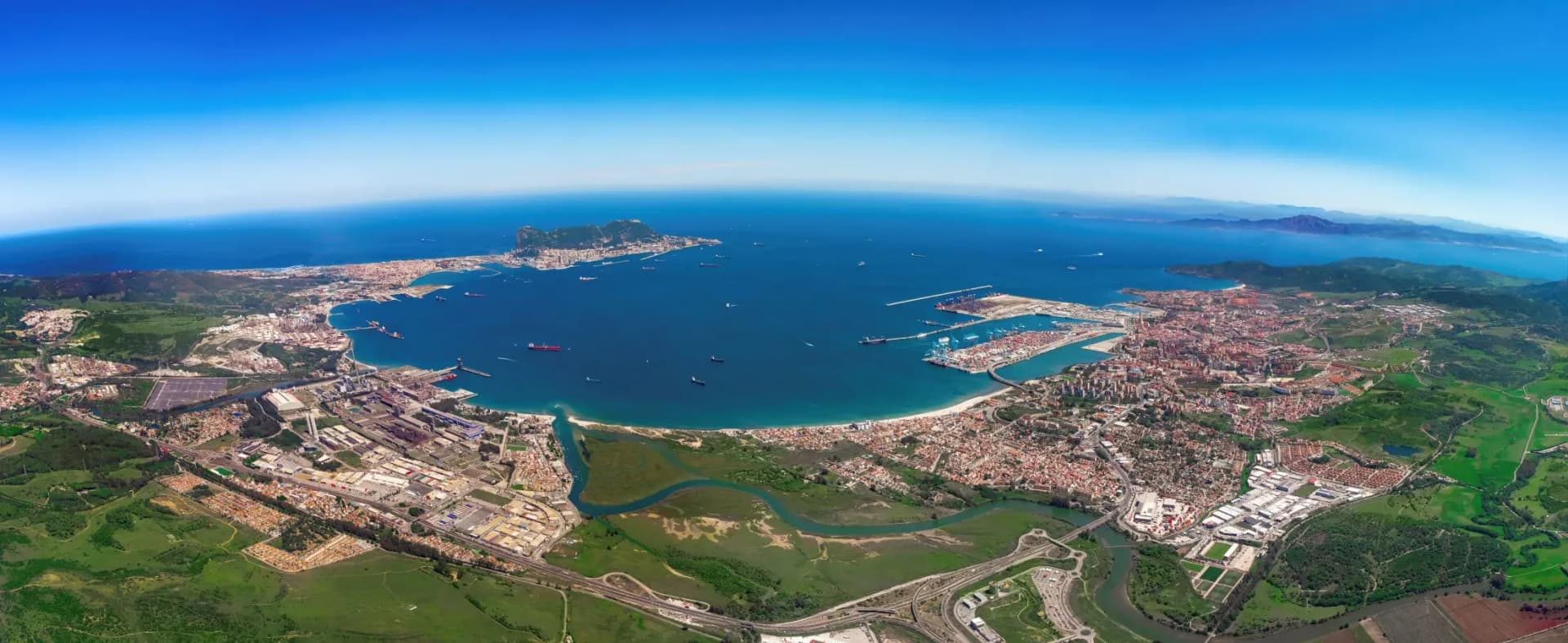
The Port of Algeciras remains among the four major ports of the European Union by traffic volume during the first half of 2026. The Bay facility recorded 50,039,816 tons between January and June, a 1.62% decrease compared to the same period the previous year, according to the report from the Port Authority of the Bay of Algeciras (APBA). The results published by the main community port authorities place Rotterdam ahead of Algeciras, with 212 million tons; Antwerp-Bruges, with 133.9 million; and Hamburg, with 56.1 million. Behind the Algeciras port are HAROPA, with 42 million tons; Gdansk, with 41.7 million; and Valenciaport, with 39.92 million.
Rotterdam continues to lead port traffic in the European Union. The main Dutch port closed the first six months of 2026 with 212 million tons, a 0.4% increase compared to the same period in 2025. Its activity maintains a considerable distance compared to the rest of the community sites, featuring a traffic structure composed of liquid and solid bulk, containers, and other goods.
The second place belongs to Antwerp-Bruges, which handled 133.9 million tons of maritime cargo during the semester, a 2.4% decrease in year-on-year terms. Its activity includes containers, conventional general cargo, ro-ro traffic, and liquid and solid bulk.
Hamburg holds the third position among the main community ports with 56.1 million tons, a 3.1% decrease. The German port also recorded around four million TEU during the first six months of the fiscal year.
About six million tons behind Hamburg is Algeciras, with its 50.04 million tons of total traffic. The activity of the Bay port was mainly composed of nearly 33 million tons of general cargo and 13.66 million tons of liquid bulk, along with solid bulk and other traffic included in the Spanish port statistics.
The next tier corresponds to HAROPA PORT, the port system that integrates Le Havre, Rouen, and Paris, which closed June with 42 million tons of maritime traffic, a 5.7% increase compared to the first half of the previous fiscal year. The difference in total traffic recorded by Algeciras is just over eight million tons.
Very close to the French system is the Port of Gdansk, which recorded 41.7 million tons between January and June, with a year-on-year growth of 9%. Liquid fuels accounted for 45% of its movements and general cargo for 36%, with 15.2 million tons in this latter category.
Valenciaport, which includes the facilities in Valencia, Sagunto, and Gandía, closed the semester with 39,917,708 tons of goods, a 3.12% decrease compared to a year earlier. The Valencian system was, at the same time, the first in Spain for container traffic during the period, with 2.82 million TEU, ahead of Algeciras.
Below 40 million tons is Marseille-Fos, whose traffic totaled 36.4 million during the semester. Of this amount, 22.4 million corresponded to liquid bulk, 3.2 million to solid bulk, and 10.8 million to other goods.
The Port of Barcelona recorded 35.87 million tons between January and June, with an increase of 3.5%. It is followed by the German system formed by Bremen and Bremerhaven, which jointly recorded 34.5 million tons of maritime cargo, a 5.9% increase compared to the same period the previous year. The figure corresponds to the total of the ports of Bremen and not just Bremerhaven.
North Sea Port, which groups facilities located in Belgium and the Netherlands in the Ghent-Terneuzen-Vlissingen axis, recorded 31.8 million tons of maritime traffic during the first six months of 2026. Of this amount, 15 million were accounted for in the first quarter and 16.8 million in the second.
Among the other major European port systems, available statistics place the Italian group of Genoa, Savona, and Vado Ligure around 31.1 million tons during the semester. The Port of Constanța in Romania also moves around 30.8 million tons, while Sines recorded 21,507,228 tons, a 3.8% decline compared to January-June 2025.
The comparison of half-yearly balances thus forms a first line made up of Rotterdam, Antwerp-Bruges, Hamburg, and Algeciras, followed by HAROPA, Gdansk, and Valencia. Between Hamburg and Algeciras, there is a difference of just over six million tons, while the difference between Algeciras and HAROPA reaches approximately eight million.
Creating a European ranking, however, requires considering that port authorities do not use exactly the same statistical criteria in all countries. In Spain, the concept of total port traffic used by the APBA includes, besides goods, categories such as provisioning, internal traffic, and fresh fish. Rotterdam, Antwerp-Bruges, Hamburg, and other ports focus their main traffic figures on handled goods.
This difference does not change Algeciras' position relative to the immediately previous and subsequent ports. If only general cargo and liquid and solid bulk are considered from Algeciras' total traffic, the volume is around 46.8 million tons, still below Hamburg's 56.1 million and above HAROPA's 42 million and Gdansk's 41.7 million.
For this reason, the sequence among the main ports remains unchanged under both criteria: Rotterdam, Antwerp-Bruges, Hamburg, and Algeciras occupy the first four positions among the analyzed first semester balances.
The report has been compiled from the figures corresponding to January-June 2026 released by the respective port authorities and managing entities. It does not constitute a harmonized statistical ranking of the European Union, as some ports have not yet published a directly comparable half-yearly balance.
Among them is Piraeus, whose port authority plans to publish its results for the first half of 2026 on September 29. There has also been no official equivalent balance found for Amsterdam from January to June 2026, which leaves both locations out of the comparison until they have figures for the same period.