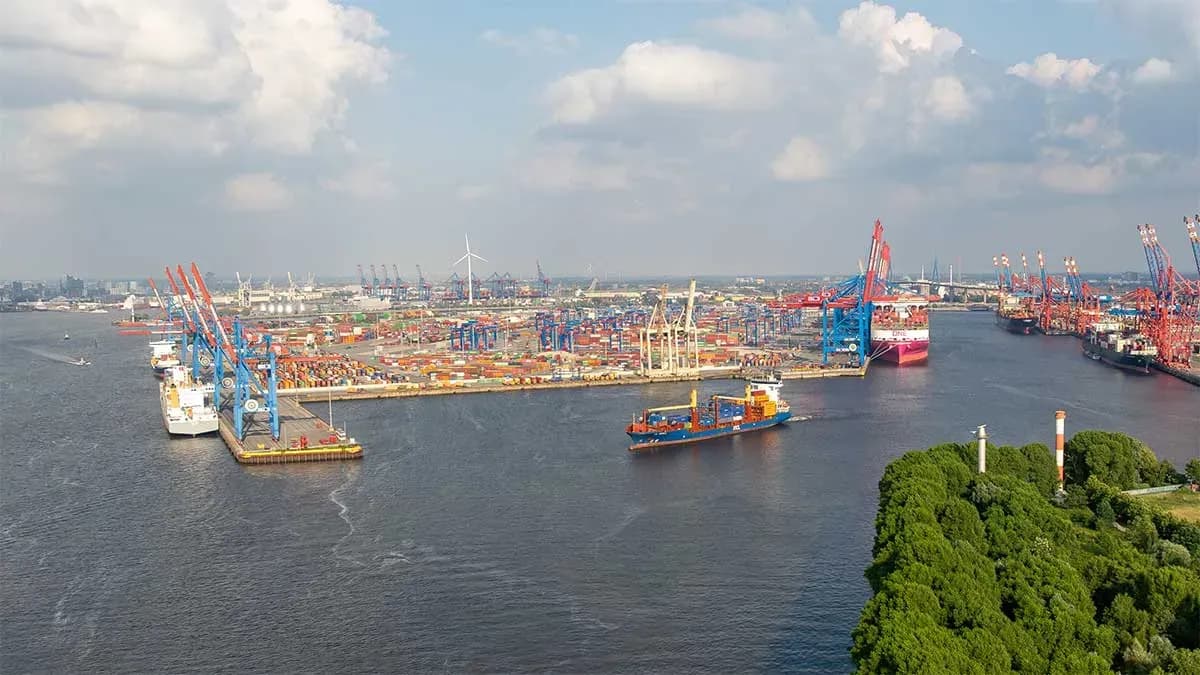
The Port of Hamburg closed the first half of 2026 with a total traffic of 56.1 million tons, representing a decrease of 3.1% compared to the same period last year. The activity's evolution has been influenced by the modernization work at the terminals and the reduction in imports of petroleum products associated with the war in Iran, according to data published by the Hamburg Port Authority (HPA).
Germany's main port had managed to largely compensate for the losses caused by the weather conditions recorded during January by the end of the first quarter. However, the subsequent evolution of the different cargo segments has placed the accumulated balance until June below the levels recorded during the first half of 2025.
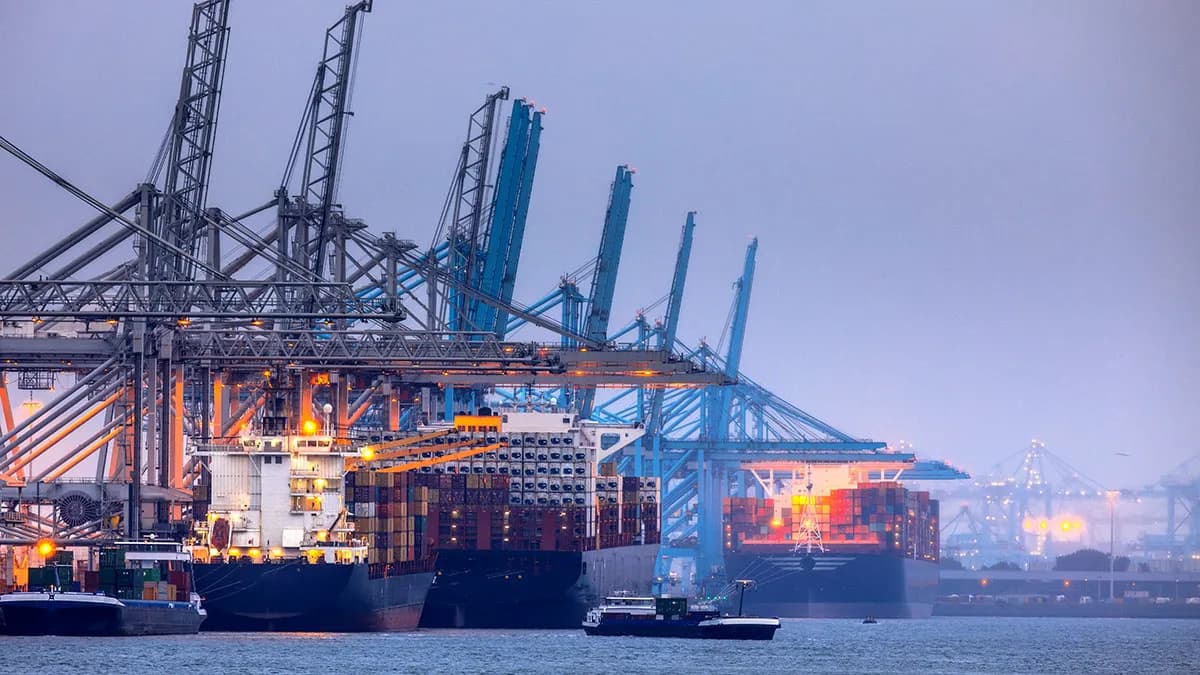
Container traffic reached four million TEUs during the first two quarters of the year. This figure represents a decrease of 3.8% compared to the same period in 2025 in terms of TEUs. Measured in tons, the decline has been 4%.
The port authority links part of this evolution to the modernization efforts that HHLA is currently developing at its facilities. These works have temporarily reduced the available capacity at the terminals during the last quarter, although they are aimed at achieving more efficient handling processes once the planned works are completed.
The evolution of container traffic shows significant differences depending on the markets. Trade with Singapore has grown by 13.1% during the half-year, while Finland has recorded an increase of 24.7%. There have also been increases in trade relations with India, of 7.2%, and Morocco, of 4.7%.
Conversely, trade with the United States has experienced a reduction of 13.5%, one of the most significant declines among the main trading partners of the German enclave. Hamburg has also recorded a negative trend in container movements related to China and the United Kingdom during the first six months of 2026.
The bulk segment closed the half-year with 15.9 million tons, 1.1% less than in the same period of the previous year. Within this category, different behaviors have been observed between liquid and solid bulk.
Liquid bulk has reduced its volume by 14%, while solid bulk has increased by 4.2%. According to the HPA, the situation in international energy markets stemming from the war in Iran has caused a decrease in imports of petroleum products. Since April, there has also been a decline in biodiesel traffic.
The lower activity in these goods has been partially compensated by the growth in imports of ore and exports of cereals. This evolution explains why the overall bulk has limited its decline to 1.1%, despite the reduction recorded in the liquid section.
For its part, conventional general cargo accounted for 535,000 tons during the first half, 5% less than in the same period of 2025. The HPA mainly attributes this behavior to the reduction in exports of steel products.
This segment is usually subject to significant variations due to the high value of the transported goods and the comparatively low number of operations. Despite the accumulated decline until June, the drop has been less than that recorded at the end of the first quarter.
The semi-annual results show an uneven evolution among the different types of traffic. While the work at the terminals has temporarily affected the capacity to operate containers, the changes recorded in energy markets have had a direct impact on liquid bulk. At the same time, certain trade flows, such as those maintained with Finland, Singapore, India, and Morocco, have recorded positive rates.
The publication of traffic statistics for the Port of Hamburg will be conducted centrally by the Hamburg Port Authority. The entity will provide a broader overview of the evolution of the maritime economy and port activity during its annual conference 'State of the Port,' scheduled for September 30, 2026.
The HPA has been responsible since 2005 for the public management of the Port of Hamburg and has competencies over land and maritime infrastructure, vessel traffic safety and management, the port railway network, land administration, and the development of infrastructure projects related to the enclave.