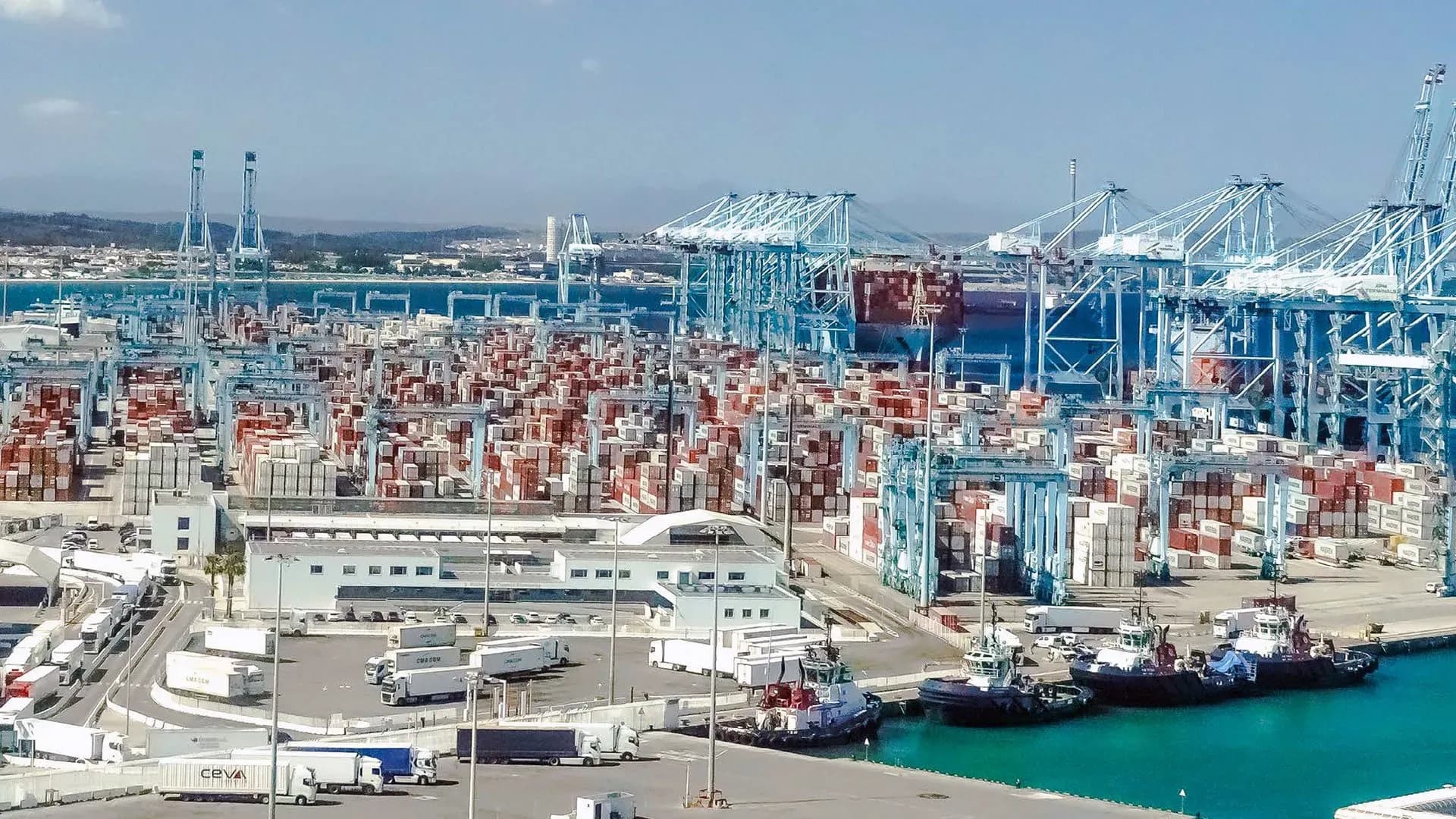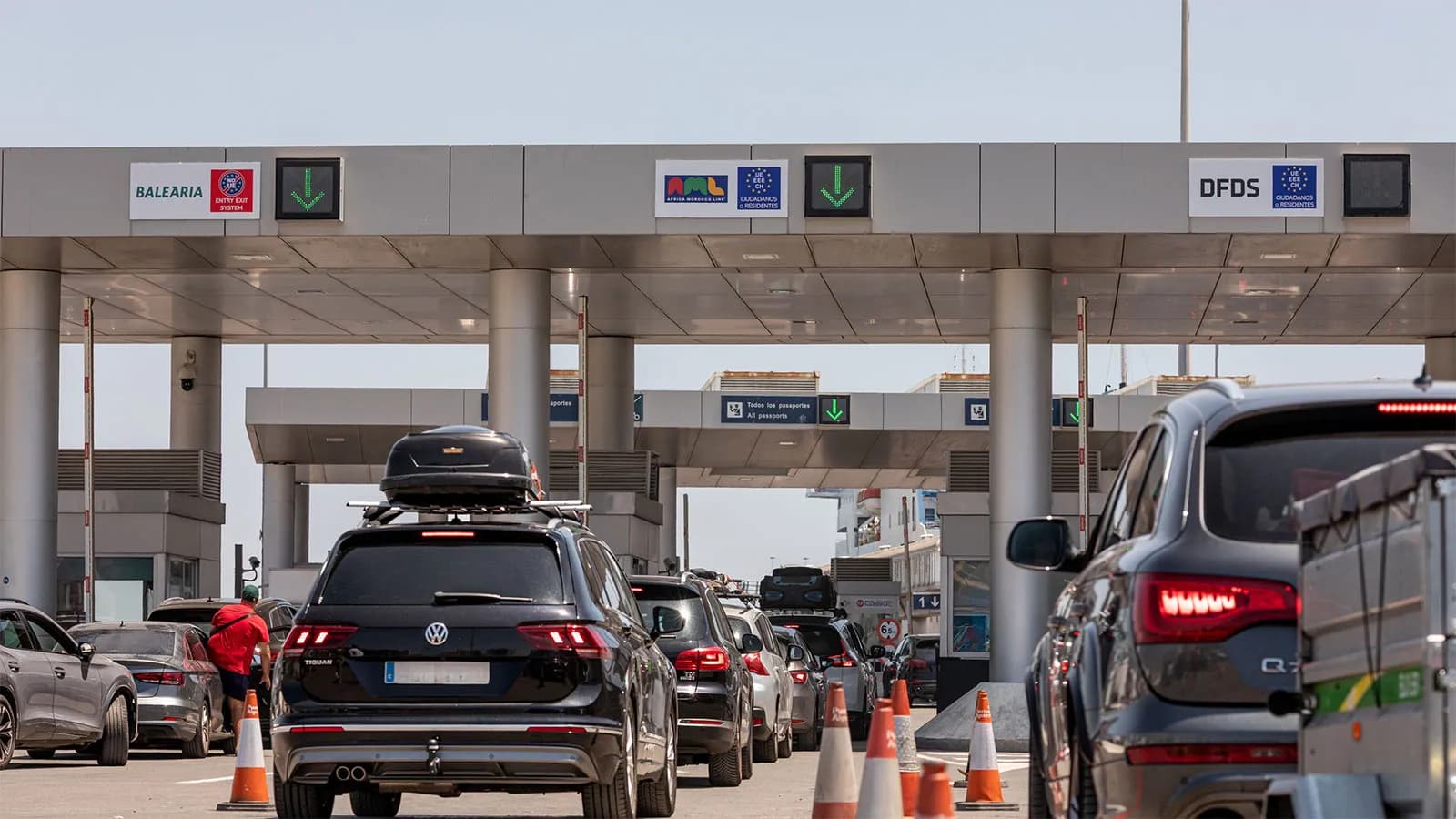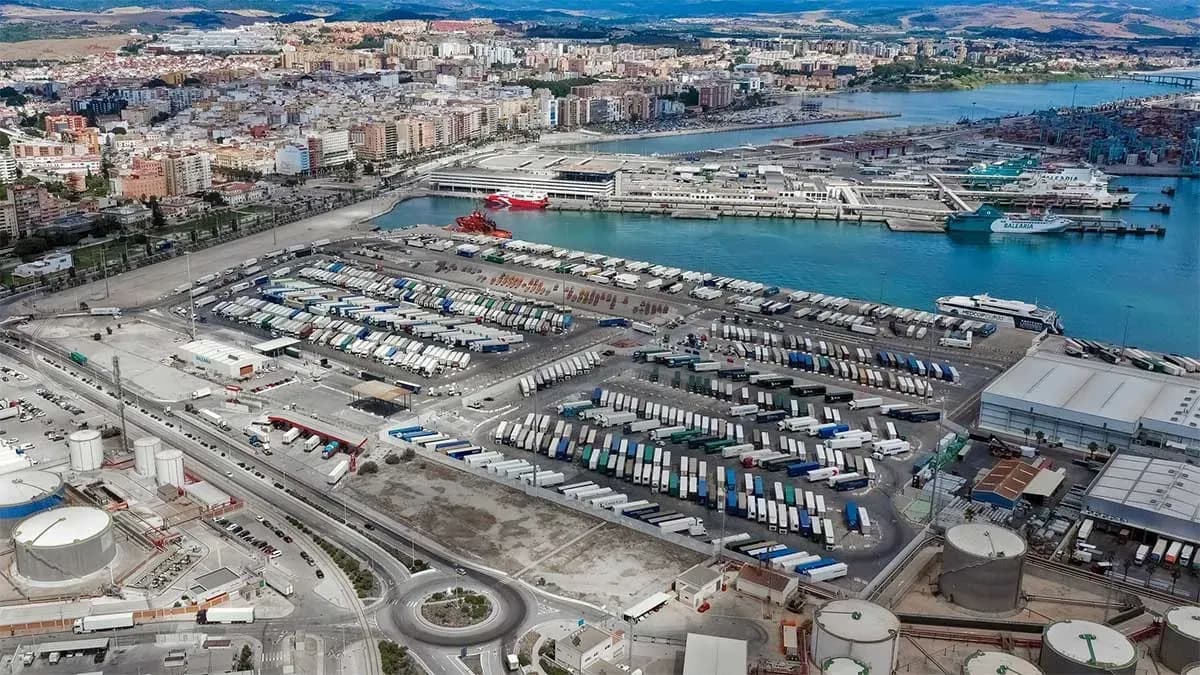
The Customs Dependency of Algeciras applies starting today, July 1, the Informative Note NIN 2/2026, a document that orders and updates the authorized locations for conducting customs controls and procedures in the port area. The measure directly affects the daily operations of transporters, logistics operators, freight forwarders and customs representatives involved in the shipments linked to the ro-ro traffic of the Port of Algeciras.
The new instruction establishes that vehicles must physically remain in the designated areas throughout the customs processing. This obligation turns the actual location of the transport unit into an operational requirement during the process, beyond its documentary consignment. The change has generated concern among transport companies and operators, who must adapt their internal procedures to ensure the traceability of trucks while customs management is carried out.
The note sets as ordinary authorized areas for vehicle parking and carrying out customs procedures the TTP1 and TTP2 areas. Only exceptionally, when no capacity is available in these two locations, auxiliary areas ZA0001, located in TECO; ZA0002, in Cantil; and ZA0003, in front of TTI Algeciras may be used. These auxiliary locations are subject to conditional use based on the availability of the main areas.
One of the most relevant elements of the new regulation is that the truck must be in the declared area before starting any customs procedure. The unit may not leave that location until receiving express instructions or the corresponding authorization to continue operations. This requirement introduces greater rigidity in the internal movements of the port area and forces precise coordination of the arrival, parking, and document management of each vehicle.
The instruction also differentiates traffic flows based on the direction of the operation. In north-south traffic, after entering the port, the transporter must head to TTP1 or TTP2. If there is a lack of capacity, they may park in one of the authorized auxiliary areas. Before starting any customs management, they must communicate their arrival and the exact location of the vehicle, which must remain at that point until receiving new instructions.
In south-north traffic, the obligation is similar. The transporter must communicate the arrival and the exact location of the unit before starting any procedure. The vehicle must stay at that location until Customs authorizes the continuity of operations. In ro-ro operations carried out from pre-boarding areas, the transporter must ensure that the unit is effectively situated in an authorized location.
The regulation also limits the use of pre-boarding areas to customs procedures for trucks coming from Tangier. These areas may not be used for vehicles making the reverse journey to the Moroccan port. This separation of flows aims to organize internal circulation and avoid coincide operations related to import and export in the same spaces.
The main practical difficulty lies in the need to prove the actual location of the vehicle during customs processing. The auxiliary areas planned for exceptional use currently do not have access control systems that automatically verify the effective presence of the unit. This circumstance shifts a significant part of the responsibility to the transporter, the logistics operator, and the customs representative involved in the clearing.
Companies operating in the port area must implement internal control systems that allow knowing and justifying the location of trucks throughout the process. The lack of correspondence between the declared location and the actual position of the vehicle may lead to operational delays, additional controls, or the opening of sanctioning files, depending on the situations contemplated by customs regulations.
The NIN 2/2026 has been issued to comply with the provisions of Articles 139 and 147 of Regulation (EU) No. 952/2013, which establishes the Customs Code of the Union. The documentation sent by the Decentralized Customs and Special Taxes Headquarters of Algeciras also includes the classification of the different types of customs location and the codes assigned to each area of the facility.
Following the meetings held with the Port Authority of the Bay of Algeciras, the information provided considers the possible opening of new parking areas, as well as the closure or modification of others currently existing. For this reason, the informative note could be subject to new updates, especially concerning the authorized locations for parking and carrying out customs procedures.