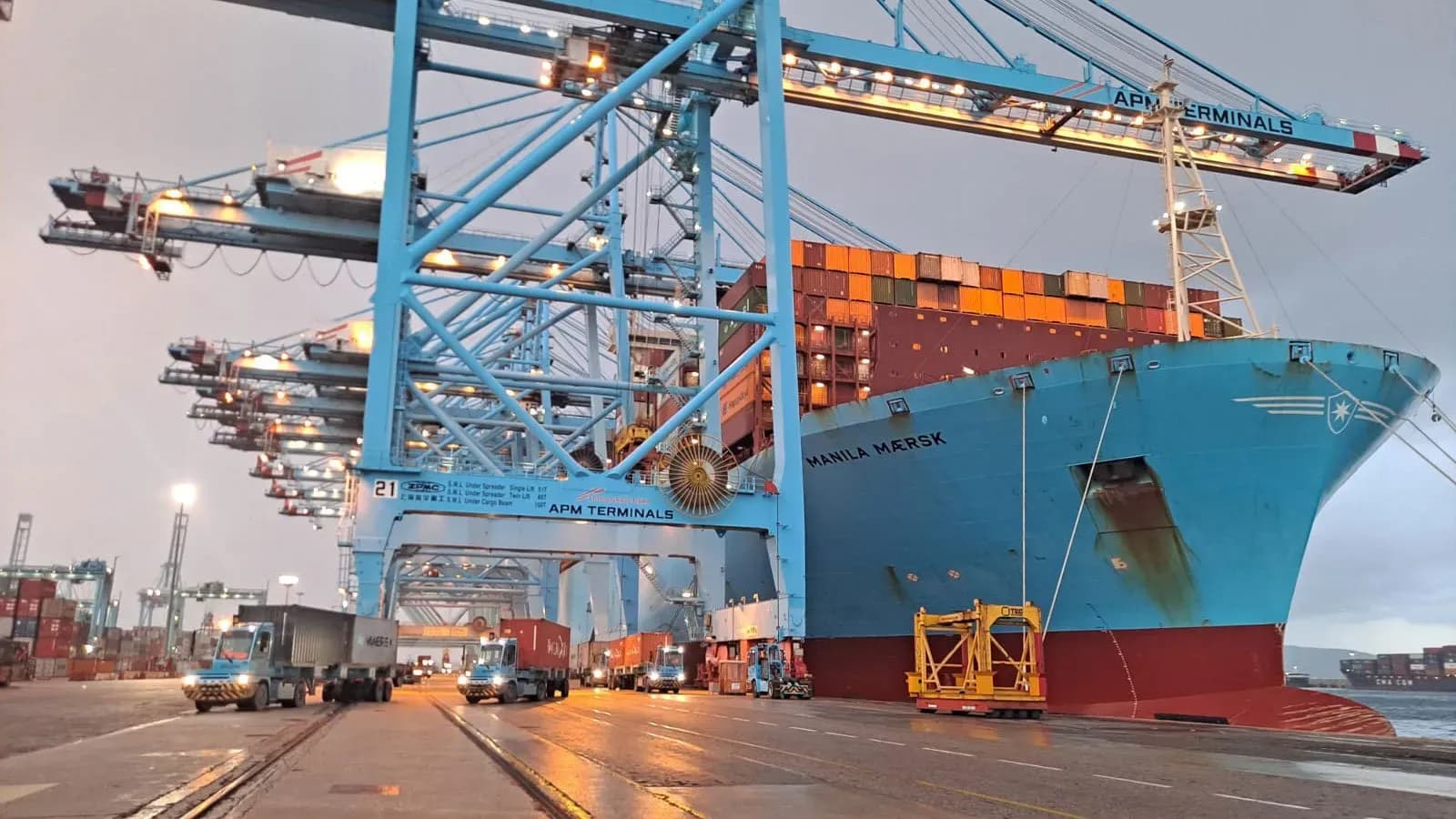
The president of the Port Authority of the Bay of Algeciras (APBA), Gerardo Landaluce, assessed this Tuesday the impact of the conflict in the Middle East on international maritime transport and pointed out that the military escalation is generating an "immediate instability and uncertainty for maritime traffic not only in the Persian Gulf, but also globally." However, the top official of the Algeciras port authority noted that, in this new scenario of logistical disruption, the port of Algeciras can play a "strategic" role in the reorganization of cargo flows on an intercontinental scale.
Landaluce explained that the practical closure of the Strait of Hormuz and, presumably, that of the Strait of Bab el-Mandeb represent a step back in the normalization process of maritime traffic through the Red Sea and the Suez Canal, a process that was already in an incipient phase after the security problems recorded in the area over the last two years. The president of the APBA recalled that, in light of this situation, major container shipping companies are withdrawing their fleets and redirecting their services again via the alternative route around the Cape of Good Hope, skirting the African continent.
Landaluce's assessment comes in a context of maximum tension on the main arteries of global maritime trade. Since last Saturday, March 1, following the military offensive by the United States and Israel against Iran, the Iranian Revolutionary Guard warned through radio transmissions that transit through the Strait of Hormuz was prohibited. Although no international organization has formally declared the closure of this corridor — through which approximately 20% of the world's oil production passes — data tracking ships from various sources confirms an approximate 70% drop in total traffic through the waterway.
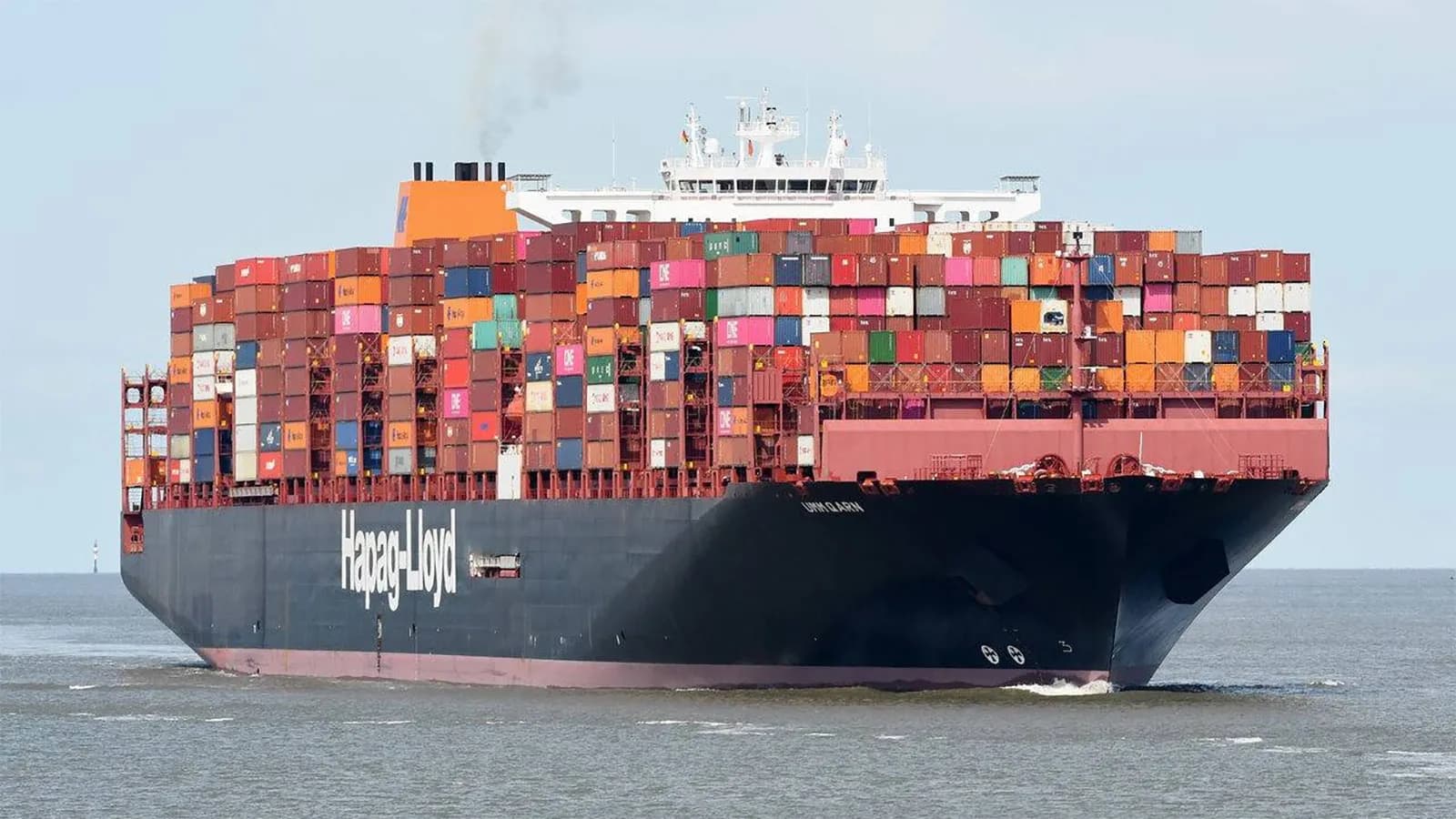
The response from the main operators in the sector has been immediate. MSC forced its ships in the Gulf to head to designated safe areas, while Hapag-Lloyd completely suspended passage through the Strait of Hormuz. Maersk, for its part, has halted all transit of its ships both through Hormuz and the Suez Canal, opting for the diversion via the Cape of Good Hope. CMA CGM ordered its ships to seek shelter and stop transit through the Suez Canal. Japanese shipping companies NYK, Mitsui O.S.K. Lines, and Kawasaki Kisen have also halted all their operations in the area. This operational halt is compounded by the withdrawal of coverage by major marine insurers, who have canceled war risk insurance for ships intending to traverse the strait, which in practice makes transit economically unviable even without a formal naval blockade.
It is precisely in this scenario of massive route diversion that Landaluce places the opportunity for the port of Algeciras and the entire Strait of Gibraltar. The president of the APBA emphasized that "in times of conflict is when the Strait of Gibraltar and ports like Algeciras are doubly strategic for accommodating the foreseeable reorganization of intercontinental logistics, specifically between the Middle East, the Mediterranean, and Northern Europe."
Recent experience supports this reading. In previous crises, insecurity in the Red Sea area reduced maritime traffic by up to 50%, causing an increase in port calls and transshipment operations at the ports of the Strait of Gibraltar, which function as natural logistics nodes on the alternative route around the Cape of Good Hope. Skirting Africa can add between ten and fourteen days to certain intercontinental routes, depending on the port of origin and destination, which directly impacts inventory planning, delivery times, and shipping equipment turnover.
The port of Algeciras, the main transshipment hub in southern Europe, is geographically positioned at the intersection of routes connecting Asia with Northern Europe via the Atlantic and services linking the Mediterranean with West Africa and America. Its location in the Strait of Gibraltar makes it a mandatory or highly convenient stop for ships transiting the route around the Cape of Good Hope.
The current situation represents a potentially more complex scenario than that experienced since late 2023 with the crisis in the Red Sea caused by Houthi attacks, given that the existing problem in the Strait of Bab el-Mandeb is now compounded by disruption in the Strait of Hormuz. A scenario with simultaneous blockages in Hormuz and Bab el-Mandeb would mean unprecedented pressure on routes between Asia, Europe, and America. Global supply chains face longer delivery times, the need to increase safety stocks, and greater exposure to tariff fluctuations if the situation persists.