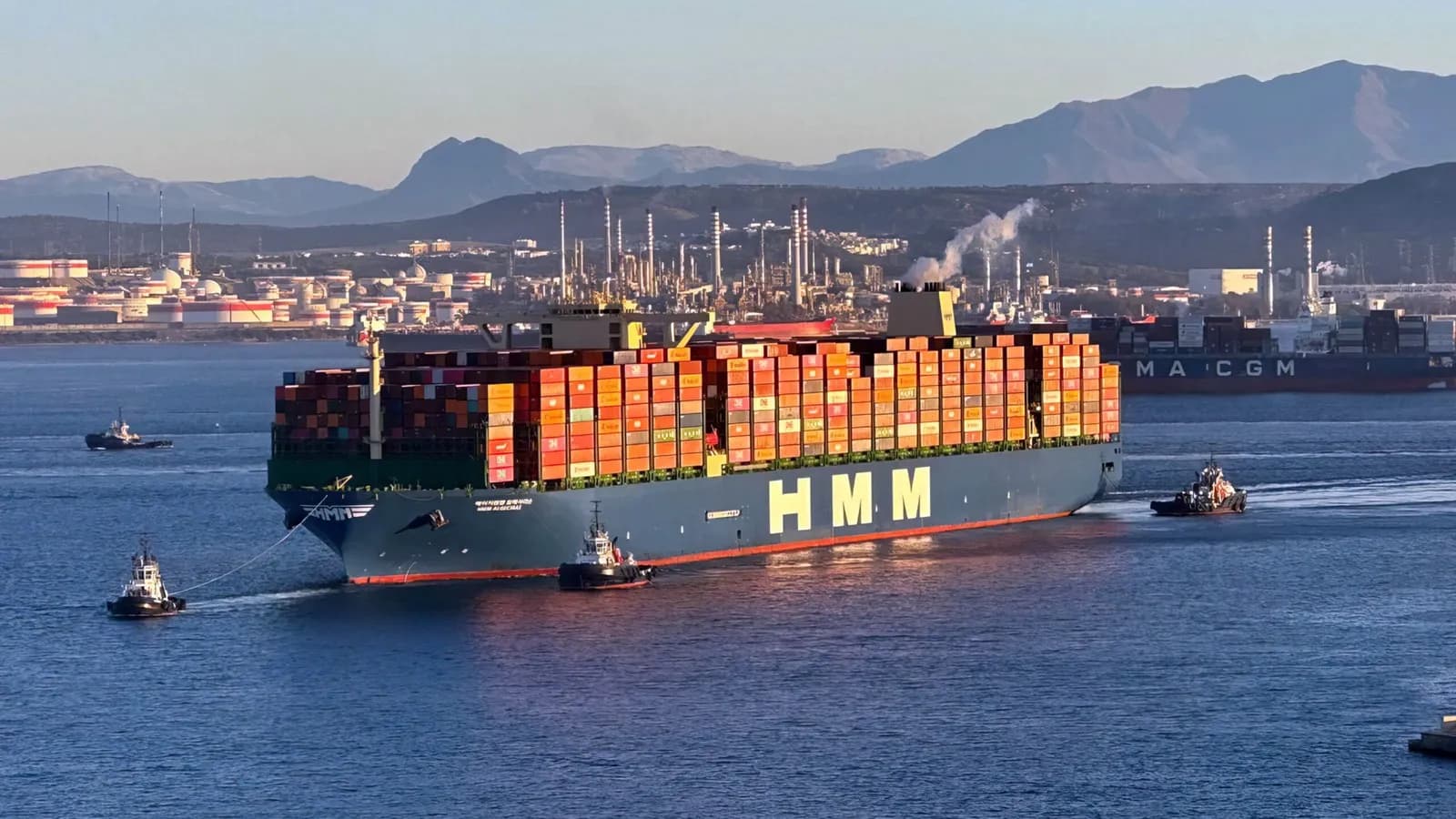
South Korean shipping company HMM closed the third quarter of 2026 with an operating profit of 1.3947 trillion won, up 370% from the same period a year earlier, when it recorded 296.8 billion won. The company generated revenue of 4.1271 trillion won, a year-on-year increase of 52%, while its operating margin stood at 34%.
The results, announced by the company on November 12, represent its highest quarterly operating profit since the third quarter of 2024, when it reached 1.4613 trillion won. The performance reflects developments in container shipping and increased activity in its dry bulk division, whose share of the group’s profits has grown during the current year.
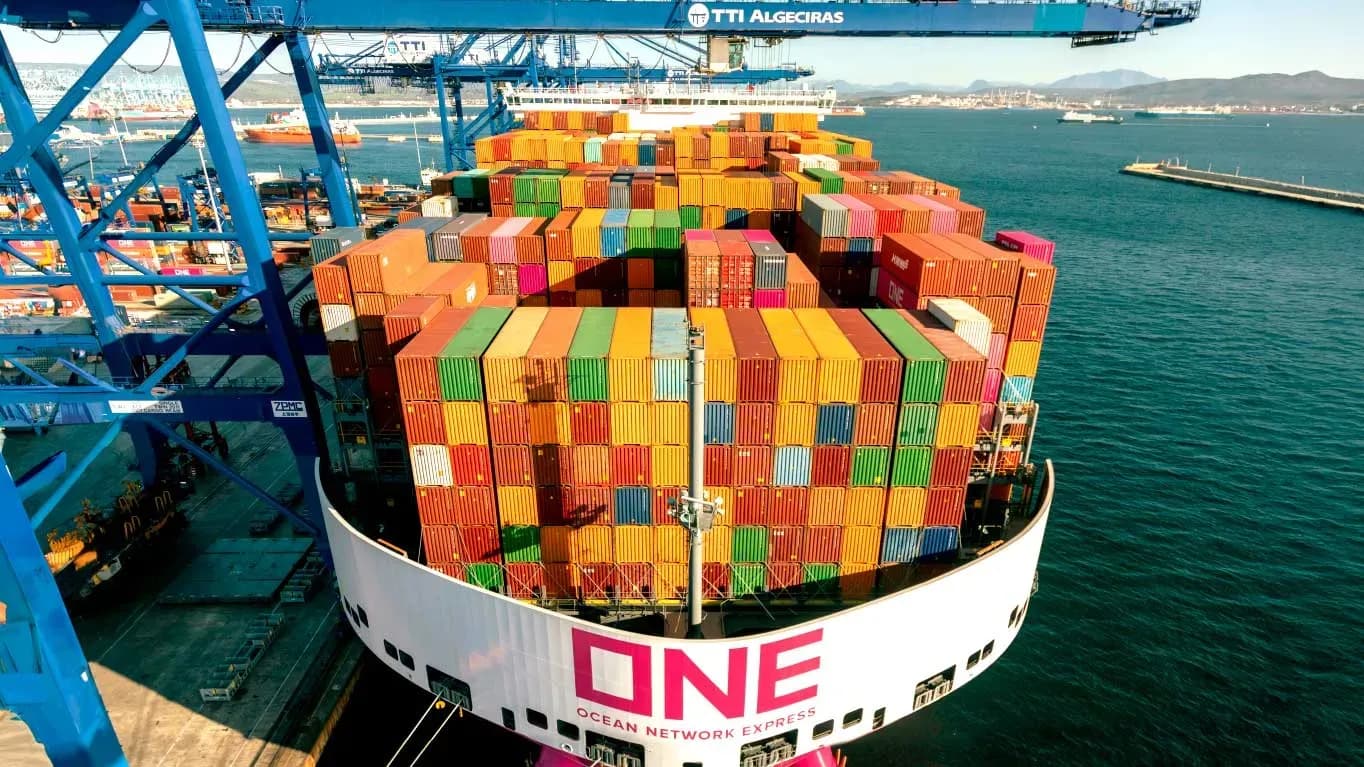
HMM’s 34% operating margin exceeded the figures reported by other international shipping companies for the same quarter, including Maersk, whose ocean division posted 20.6%; Ocean Network Express (ONE), with 21.6%; and COSCO, with 28.7%, according to the comparison included in the South Korean company’s financial information.
From January to September, HMM accumulated an operating profit of 2.0179 trillion won, up 76.4% from the same period in 2025. Cumulative revenue reached 10.2478 trillion won, an increase of 25.2%.
By business area, the container shipping division recorded a cumulative operating profit of 1.6353 trillion won, compared with 1.0533 trillion won booked from January to September of the previous year, representing an increase of 55.3%.
The shipping company attributes these results to the expansion of its maritime service network and its ability to attract higher-margin cargo through an operating strategy based on the hub-and-spoke model, which combines major cargo-consolidation ports with connections to other destinations.
This activity took place against a backdrop shaped by geopolitical tensions in the Middle East, port congestion related to typhoons in China, and navigation restrictions caused by drought in the Panama Canal.
The dry bulk business has experienced stronger percentage growth. Its cumulative operating profit through September reached 378.4 billion won, compared with 73 billion won in the same period of 2025, an increase of 418.5%. As a result, this division’s share of the group’s total operating profit rose from 6.4% to 18.8%.
HMM links this performance to the reorganization of its dry bulk business, which began in the second half of 2025 and aimed to reduce dependence on short-term charter contracts and expand its portfolio of long-term transportation contracts.
In parallel, the company increased its fleet of bulk carriers and other non-container vessels to 60 units at the end of September, up from 44 at the end of the first quarter of 2025. Another 22 vessels are also awaiting delivery, which would bring the fleet in this segment to 82 vessels.
The diversification strategy includes the addition of new vessel types, including pure car and truck carriers (PCTCs), gas carriers, and multipurpose vessels, in addition to the dry bulk carriers and oil tankers already part of its operations.
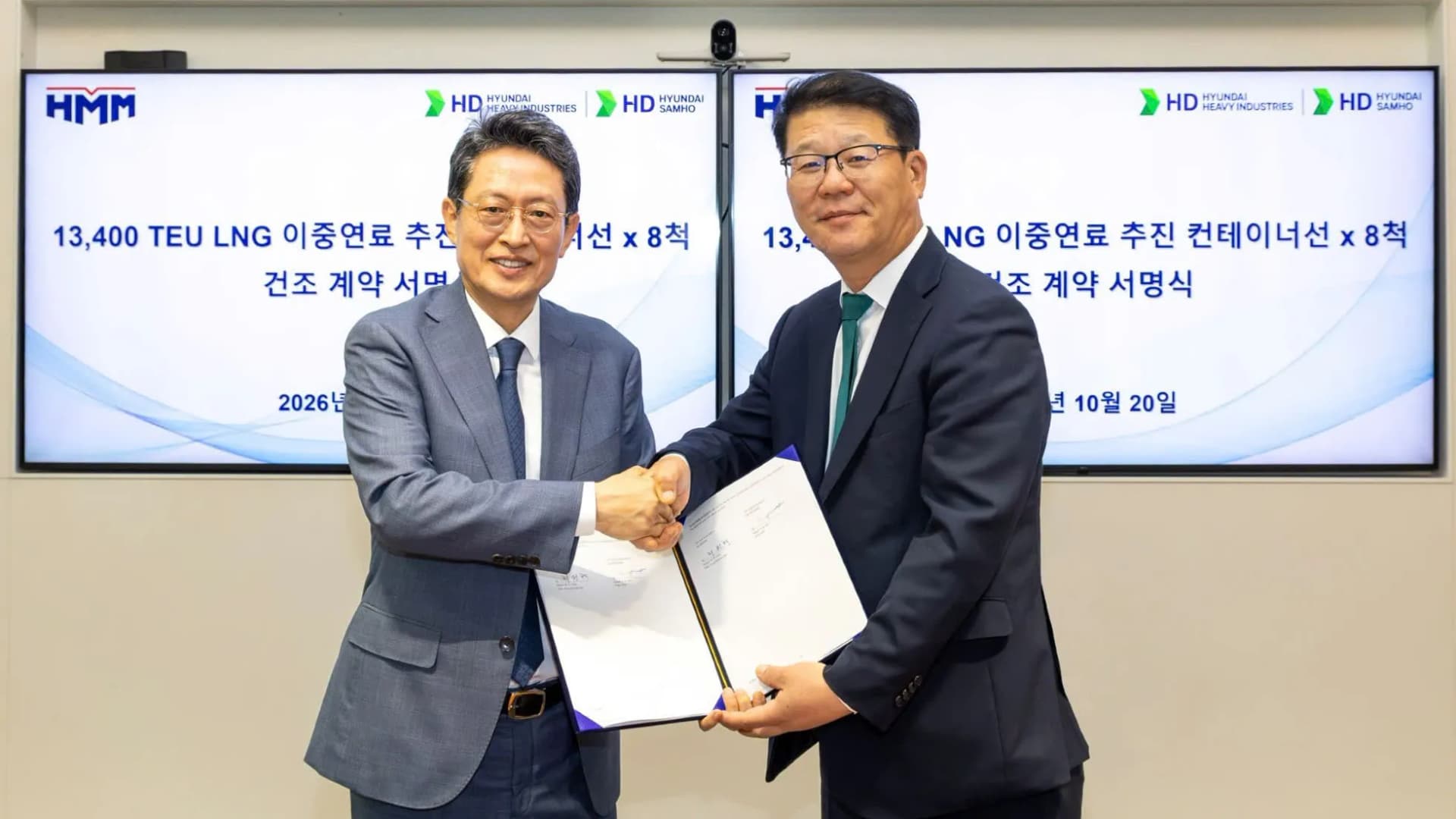
In terms of investment, HMM plans to spend six trillion won in 2026 on fleet expansion, logistics infrastructure, and new technologies. Its plans through 2030 call for total investment of 29 trillion won, with the aim of operating 166 container ships with a combined capacity of 1.47 million TEUs, and 110 vessels for dry bulk transport with a combined capacity of 13.52 million deadweight tons.