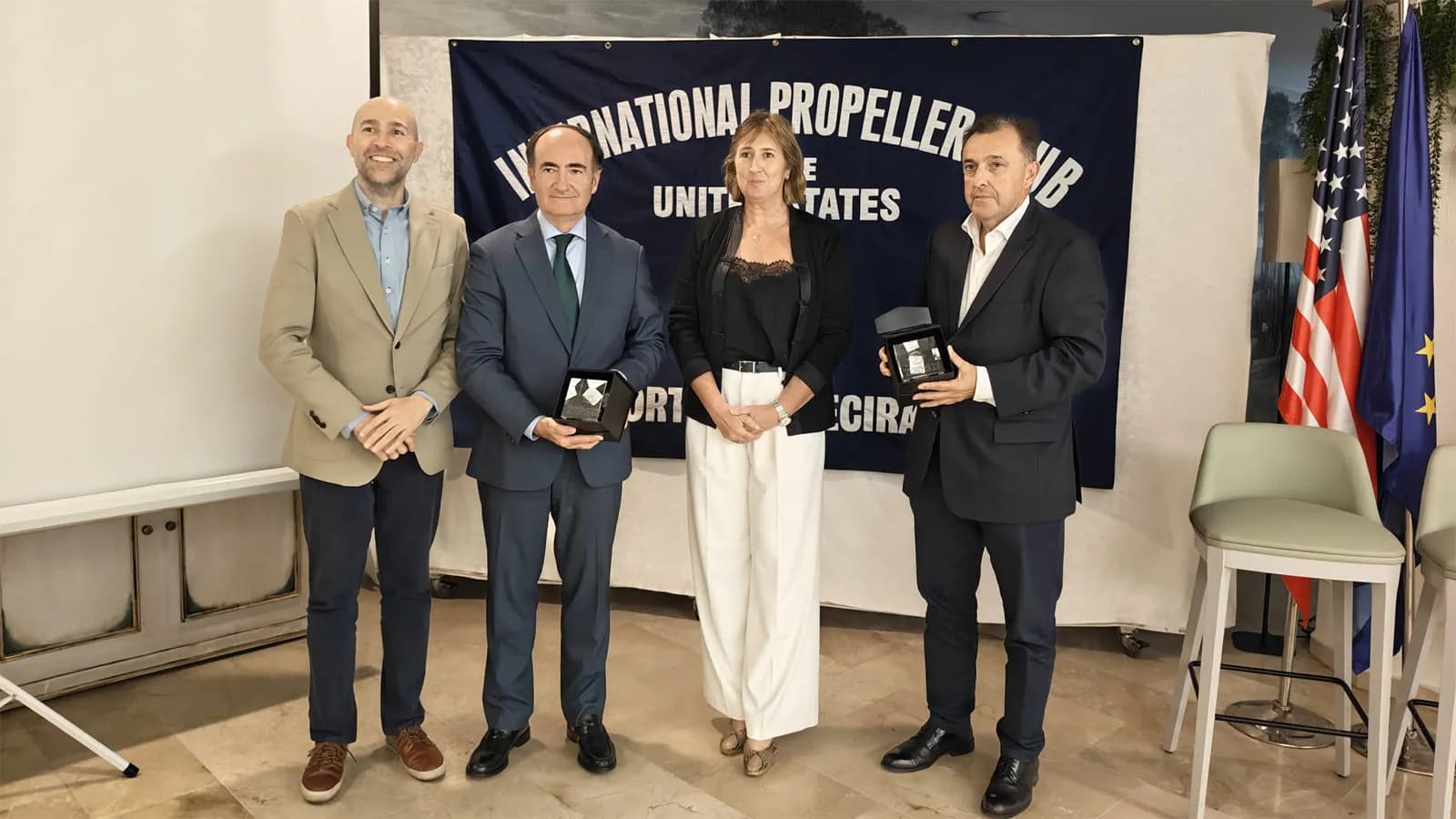
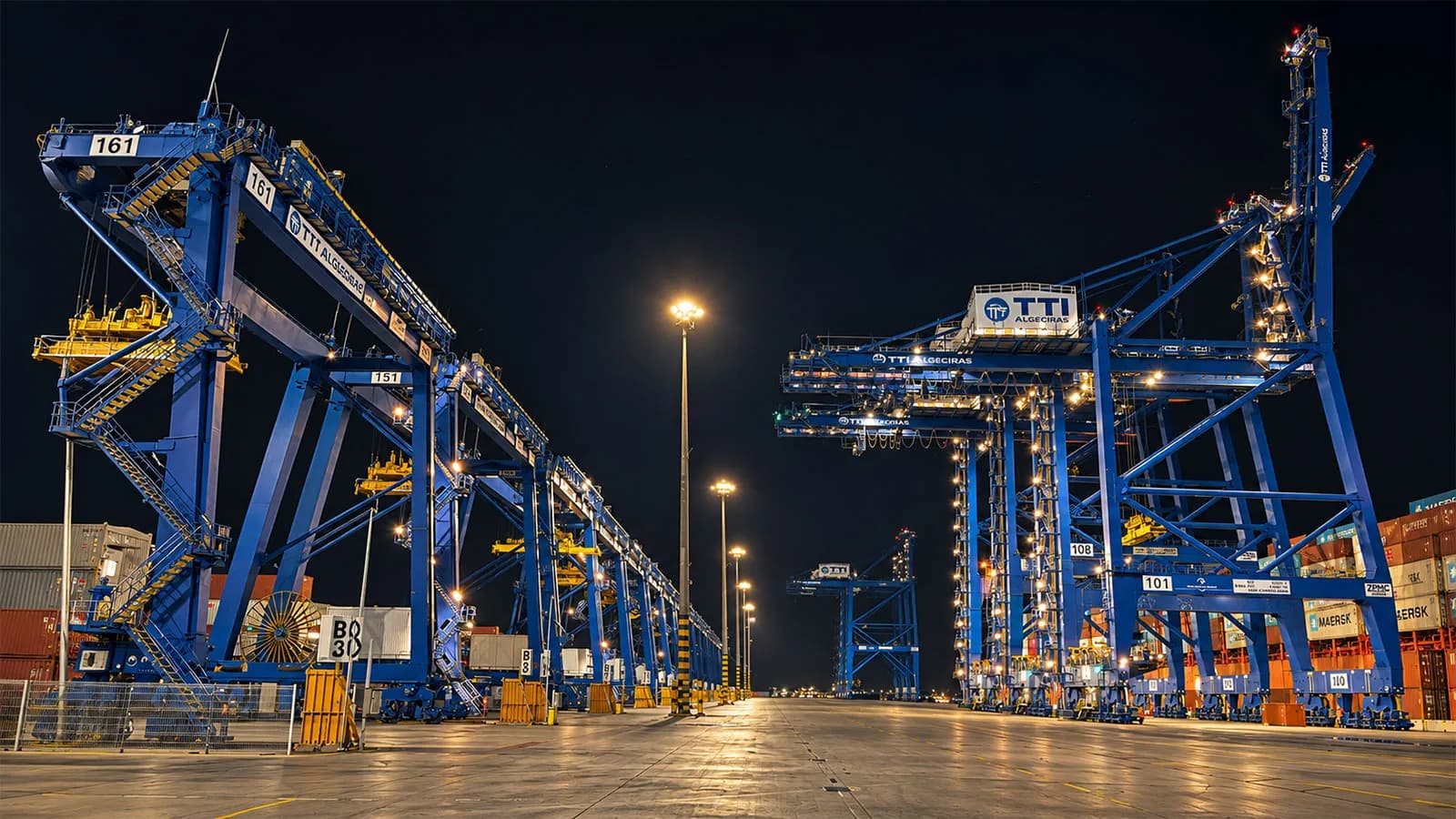
The expansion project for TTI Algeciras, which involves an initial investment of 150 million euros and the addition of 19 hectares to its existing facilities, was the focus of a new lunch discussion organized by the Propeller Club Algeciras. The event, held under the title “Growing to lead: the case of TTI Algeciras”, brought together more than 50 representatives of companies and institutions from the port community to learn about the development of the Isla Verde Exterior terminal and the growth plans for the coming years.
The president of the Port Authority of the Bay of Algeciras (APBA), Gerardo Landaluce, and the CEO of TTI Algeciras, Alonso Luque, took part in a session that covered the background to the company's establishment at the port, its current operational situation, and the investments aimed at increasing its capacity to 2.1 million TEUs per year.
Propeller Club Algeciras president Isabel Millán opened the event with a welcome to attendees and the organization's new members, including Jaime de Castro, who is taking on the role of secretary general. In her remarks, she also congratulated Landaluce, an honorary member of the club, on his recent reelection as vice president of the European Sea Ports Organisation (ESPO) for the 2026–2028 term.
Landaluce began his presentation with an overview of the origins of Isla Verde Exterior, the initial proposals for which date back to the 2000 Strategic Plan for the Port of Algeciras. He explained that the development of this infrastructure was driven by the need for new space for port activity and to diversify container-handling services, which until then had been concentrated in a single major operator.
The APBA president recalled the international promotion process that attracted South Korean shipping company Hanjin and brought the TTI Algeciras project to fruition. The terminal began operating in 2010 as the Mediterranean's first semi-automated container terminal. He also reviewed the challenges surrounding its establishment and the involvement of public authorities, companies, and various port stakeholders in developing the facilities.
In his remarks, Landaluce also discussed the evolution of container traffic in Algeciras, the growth of import and export operations, and competition from North African ports. In this context, he identified public-private collaboration and the development of road and rail connections as issues related to the port complex's future operational needs.
For his part, Alonso Luque focused his presentation on TTI Algeciras's expansion program and the work that will increase the terminal's capacity. The project is backed by its shareholders and is linked to extending the concession period until 2066, which, he explained, makes it possible to undertake investments with a long-term operating horizon.
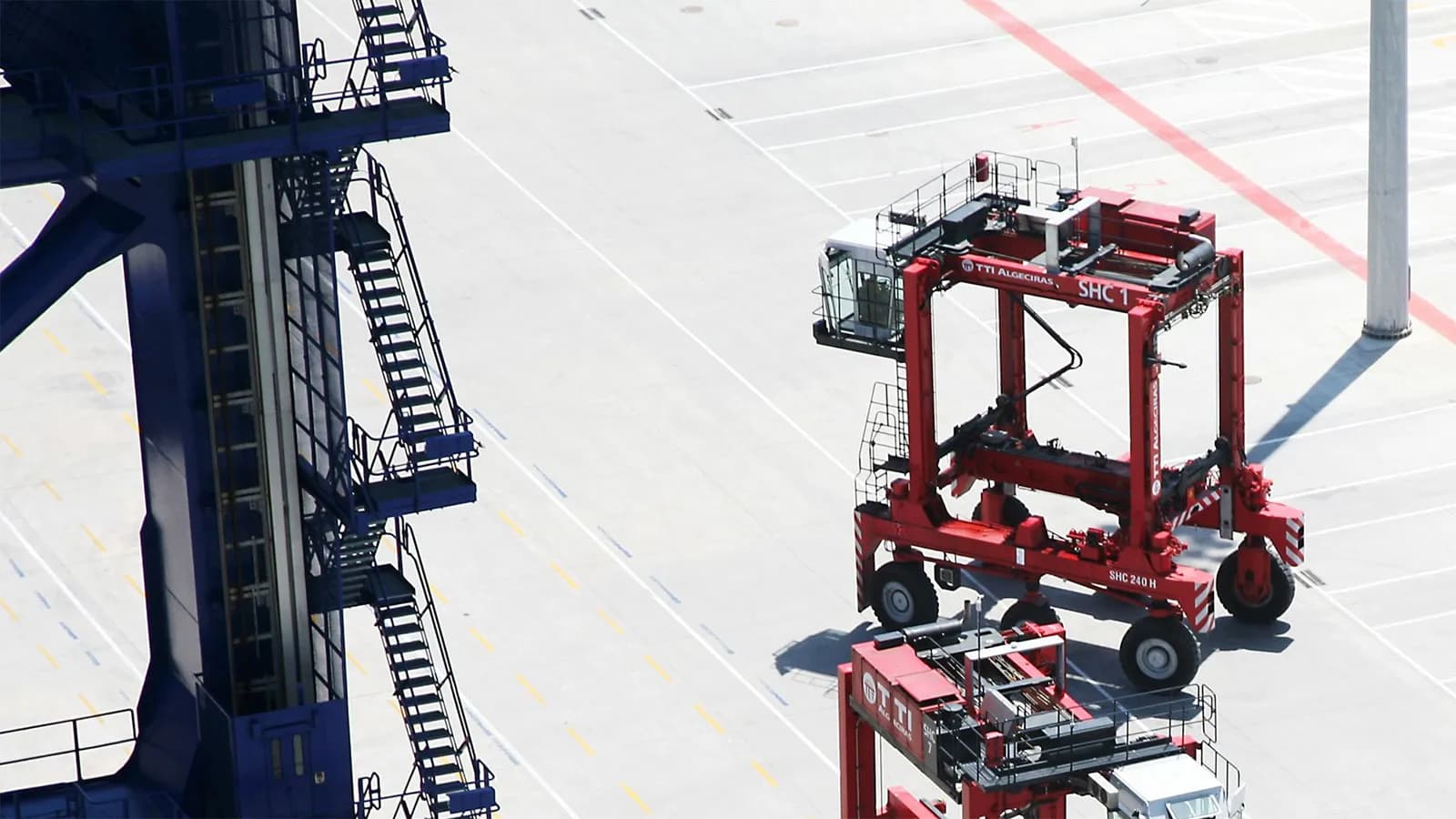
The first phase, known as B1, will involve an investment of 150 million euros and add 19 hectares to the operational area. Planned equipment includes two new quay cranes, twelve yard cranes, and 21 hybrid vehicles for internal container transport. The project also includes modernizing management systems and introducing remote-operation and control technologies.
Planned work includes reorganizing road access by creating a new exit on the south side of the terminal. This change is intended to improve truck traffic and reduce congestion during goods entry and exit operations.
According to the schedule presented by Luque, civil works will begin in January 2027, and the new facilities are scheduled to enter service in the third quarter of 2028. The company expects the terminal to handle close to two million TEUs annually in 2029, with the goal of at least 20% being local cargo linked to import and export operations.
The CEO also explained the process for securing financing for the expansion, which will involve Spanish banks, as well as the plans for contracting services and supplies associated with the project. In this regard, he said the company intends to increase its business with local suppliers and with operators involved in the logistics chain.
The competitiveness of the Port of Algeciras compared with other facilities in the Mediterranean and North Africa was another topic of discussion. Both participants examined factors affecting terminal operations, including operating costs, environmental requirements, and the availability of infrastructure to facilitate the transport of goods to inland Spain.
Regarding road and rail connections, Landaluce referred to the port's northern and southern access projects, rail improvements, and the development of San Roque's logistics infrastructure. He also discussed the future Guadarranque terminal and the possibility of establishing an export terminal at El Fresno, as part of initiatives to expand logistics activity linked to the Port of the Bay of Algeciras.
The event concluded with a question-and-answer session moderated by Manuel Piedra, during which representatives of the port community raised questions about TTI Algeciras's investments, rail connections, competition between ports, and the growth prospects for container traffic.