Maersk believes that the container shipping market is heading toward a scenario characterized by greater freight volatility, but also by average levels above those recorded before the pandemic. The evolution of demand from Asia and increasing capacity constraints in ports and land infrastructures are behind this change in scenario, which is also leading the Danish shipping company to consider expanding its fleet.
The CEO of A.P. Moller-Maersk, Vincent Clerc, has revisited this week a question he posed during the presentation of the second-quarter results. The company believes that the available capacity in the market no longer depends solely on the number of container ships in service, as congestion at terminals and land connections can immobilize part of that capacity and reduce the productivity of the vessels.
Maersk explained in August that demand from East Asia has maintained a high level since 2024 and is generating increasingly imbalanced trade flows. This increase in traffic is testing the capacity of different ports and land transport networks and generating episodes of congestion in various regions.
This situation is also modifying the company's fleet policy. During the presentation of second-quarter results, Clerc noted that the launch of Gemini Cooperation has allowed Maersk to increase transported volumes without increasing its naval capacity in the same proportion. However, the level of utilization achieved is progressively placing the fleet near its current operational limits.
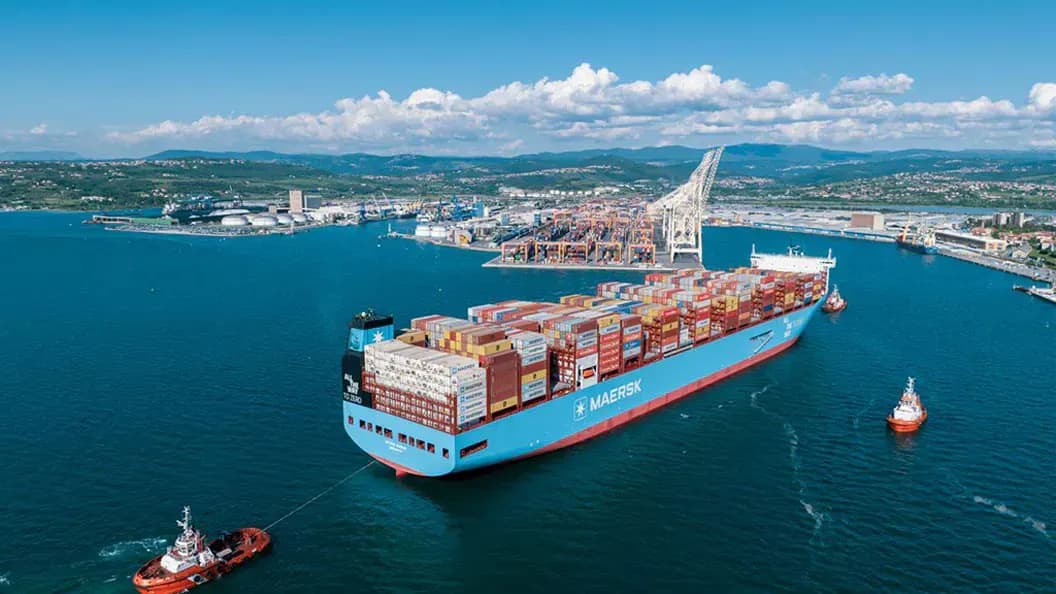
The shipping company therefore considers that future investments should not be exclusively aimed at replacing old units, but should also incorporate some capacity growth. Maersk already contracted eight new container ships of 18,600 TEU with the Chinese shipyard New Times Shipbuilding in February, with delivery expected between 2029 and 2030. Following this order, the company reported that it maintains 33 ships in its portfolio.
The perspectives outlined by Clerc coincide with the signals gathered in the latest market update for Asia-Pacific published by Maersk on September 9. The shipping company is detecting advance planning of traffic ahead of the Chinese Golden Week, which is celebrated at the beginning of October, and the arrival of the fourth quarter.
Maersk recommends its customers to study shipments at the end of September when possible and to take into account both space availability and potential alterations to itineraries. The company points out that seasonal weather conditions and terminal congestion can cause delays that subsequently propagate to other services.
The update cites data from Sea-Intelligence indicating that the 14 most active ports in Asia-Pacific are experiencing a deterioration in the punctuality of vessel arrivals. Port delays also have consequences on available supply, as they prolong rotations and immobilize capacity that, although formally remains deployed in the market, cannot be used with the same productivity.
Jyske Bank believes that these signals show that the expected normalization of the container transport market is still not reflected in operational data. Its senior analyst Haider Anjum notes that the continuity of high cargo volumes, advance bookings for the Golden Week, and congestion may help sustain freight levels in the coming months.
The Danish bank also believes that if rates remain approximately at current levels during the final part of the fiscal year, the likelihood of Maersk revising its forecasts upwards for 2026 would increase. The company has already raised its annual expectations after the second-quarter results, following the recording of higher spot rates and an increase in transported volumes.
Maersk places the limitations of port and land infrastructure among the factors that will determine the future evolution of the market, at a time when the sector is simultaneously facing the incorporation of a large volume of new container ships and Asian demand that continues to absorb capacity.