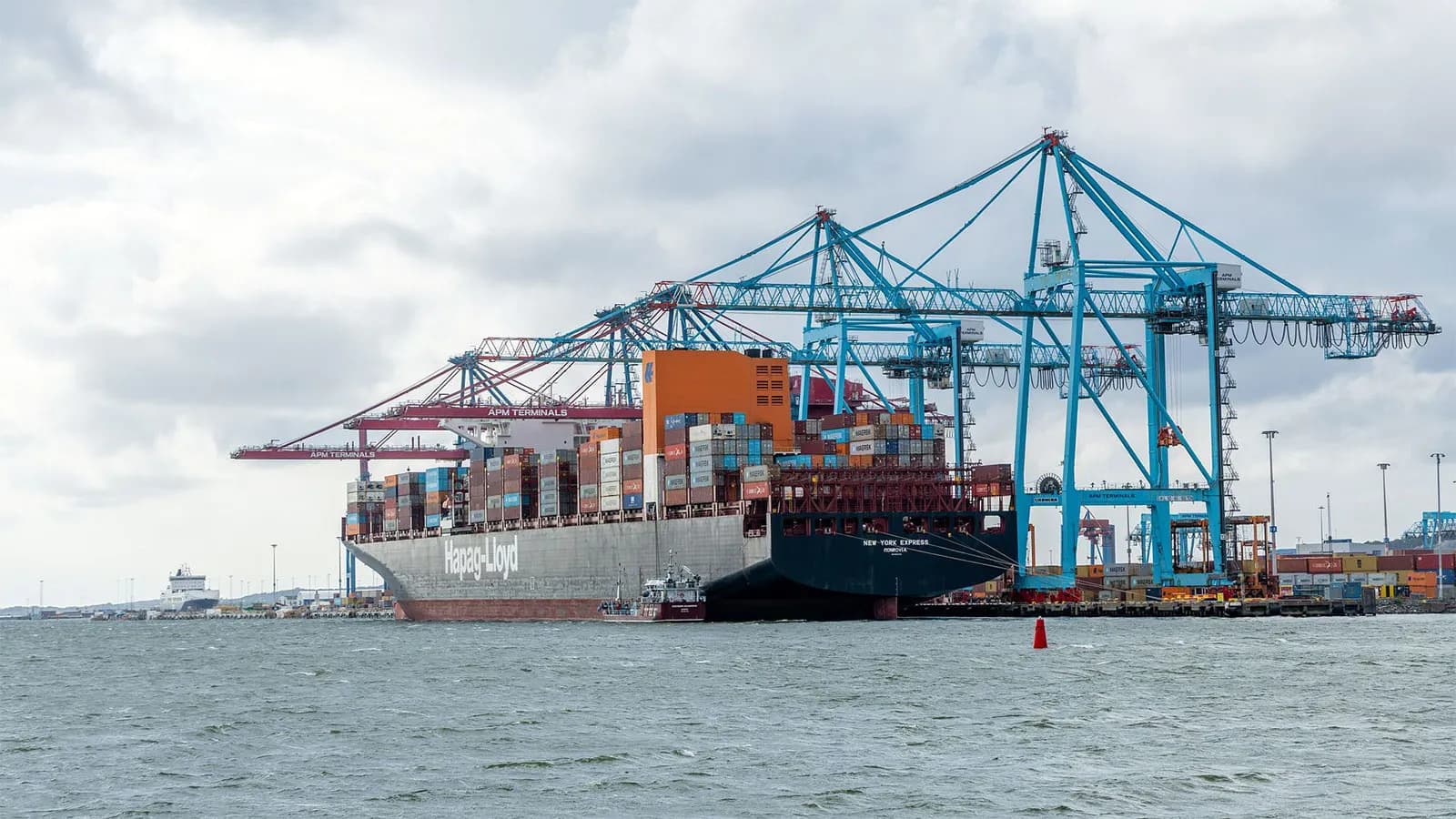
The Port of Gothenburg has closed the first half of 2026 with 462,000 TEU handled, a figure practically identical to the 463,000 TEU recorded in the same period of 2025, a year that, according to the port authority, was the one with the highest volume of containers in its history.
Although the total number of TEU has remained stable, the port indicates that the proportion of loaded containers has increased, while the proportion of empty units has decreased. As a consequence, the effective volume of goods transported has been higher than in the same period of the previous year. This behavior has been primarily supported by the growth of imports, while exports have remained at levels similar to those of 2025.
The data from the first half also reflect an increase in the proportion of containers transported by direct maritime services connecting Gothenburg with Asia.
The Vice President of Sales and Marketing of the Port of Gothenburg, Claes Sundmark, has stated that the facility is the only port in Sweden that offers direct services for containerized cargo originating from or destined for Asia. As he indicated, these connections help reduce transshipment operations and gain greater relevance in light of the congestion problems affecting various European ports.
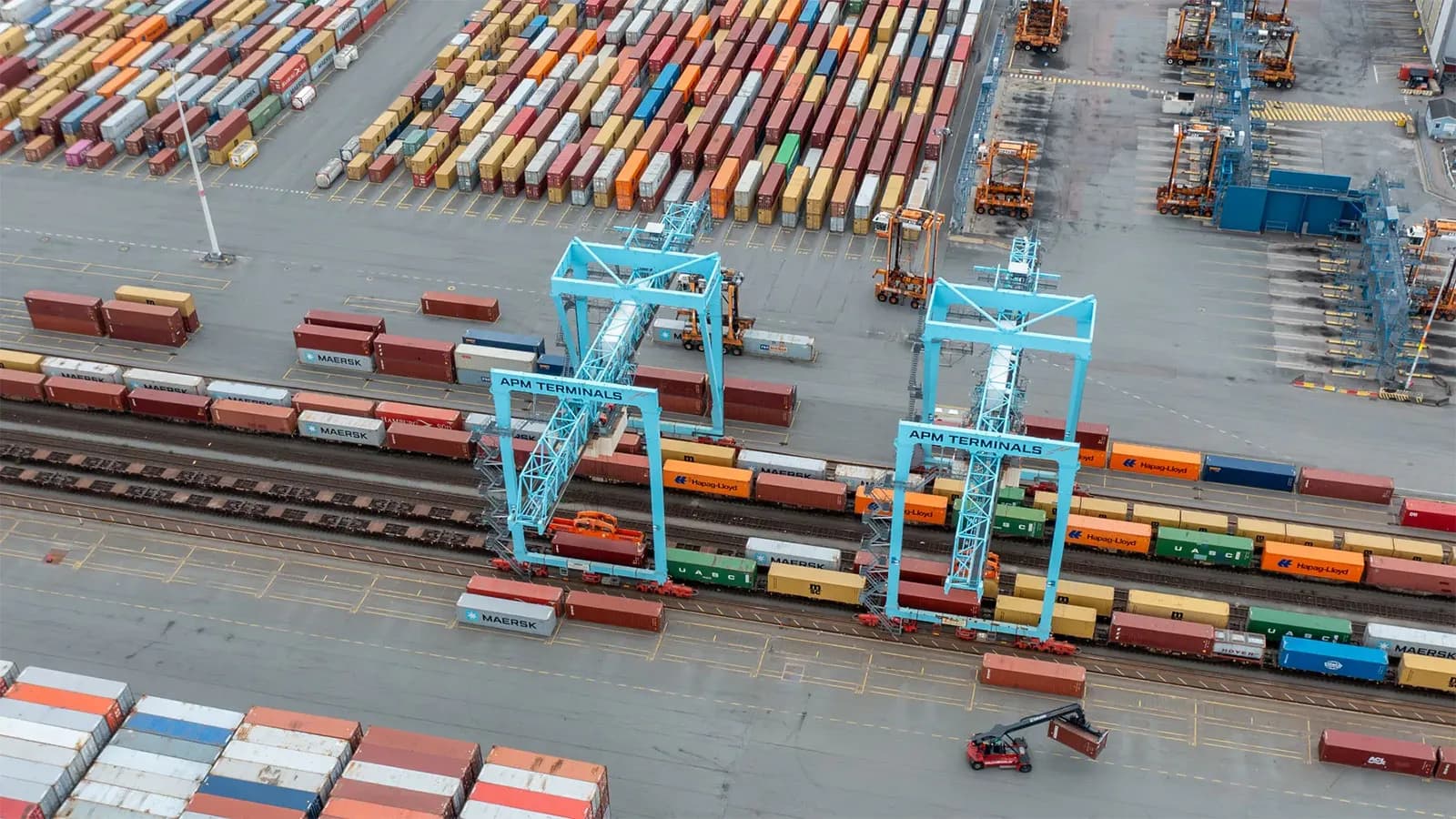
Rail transport has also maintained a positive trend during the first six months of the year. More than 60% of the containers managed in Gothenburg are transported by rail to or from inland destinations.
Between January and June, 268,000 TEU were transported by train, compared to 262,000 in the same period of 2025, which represents a growth of 2%. The port believes that this behavior places rail traffic at levels that could lead to a new annual maximum if the trend continues during the second half of the year.
The handling of new vehicles has recorded the highest percentage increase among the main segments included in the semi-annual balance. The port managed 144,000 cars between January and June, compared to 124,000 the previous year, representing a growth of 17%.
This increase has occurred both in European traffic and in that corresponding to other markets. Approximately three out of four vehicles handled during the period were destined for export.
For its part, Ro-Ro traffic has reached 278,000 units, 2% more than the 272,000 recorded during the first half of 2025. This activity includes trailers and other wheeled cargo transported by maritime services with frequent connections to logistics centers in northern and central Europe, as well as the United Kingdom.
According to the Port of Gothenburg, the evolution of the Ro-Ro segment during these six months has been primarily related to the increase in services with origins and destinations in Central Europe.
The traffic of energy products has also recorded significant growth. Between January and June, 11 million tons were handled, compared to 9 million in the same period of 2025, representing an increase of 19%. Both imports and exports increased during the semester.
The port authority specifies that the comparison is made with a first half of 2025 affected by scheduled maintenance shutdowns at production facilities, a circumstance that reduced the activity of this segment during that period.
Dry bulk totaled 165,000 tons, compared to 155,000 tons the previous year, with an increase of 7%. The growth mainly came from forest products, including cardboard and paper pulp.
The semi-annual balance also records 20 cruise calls, one more than the 19 counted during the first six months of 2025, equivalent to a 5% increase. Passenger traffic reached 585,000 people, compared to 579,000 the previous year, an increase of 1%.
The Port of Gothenburg is defined as the largest port in Scandinavia and notes that it channels around 20% of Sweden's foreign trade and more than half of the country's containerized traffic. Its activities include containerized cargo, Ro-Ro units, vehicles, energy products, and other types of cargo.
The rail connection constitutes one of the components of its land network. The port has more than 30 daily rail shuttles linking its terminals with different points in Sweden and Norway.
The data for the first half of 2026 thus show stability in total container traffic compared to the maximum registered a year earlier, along with increases of 2% in rail TEU and Ro-Ro units, 17% in new vehicles, 19% in energy products, and 7% in dry bulk.