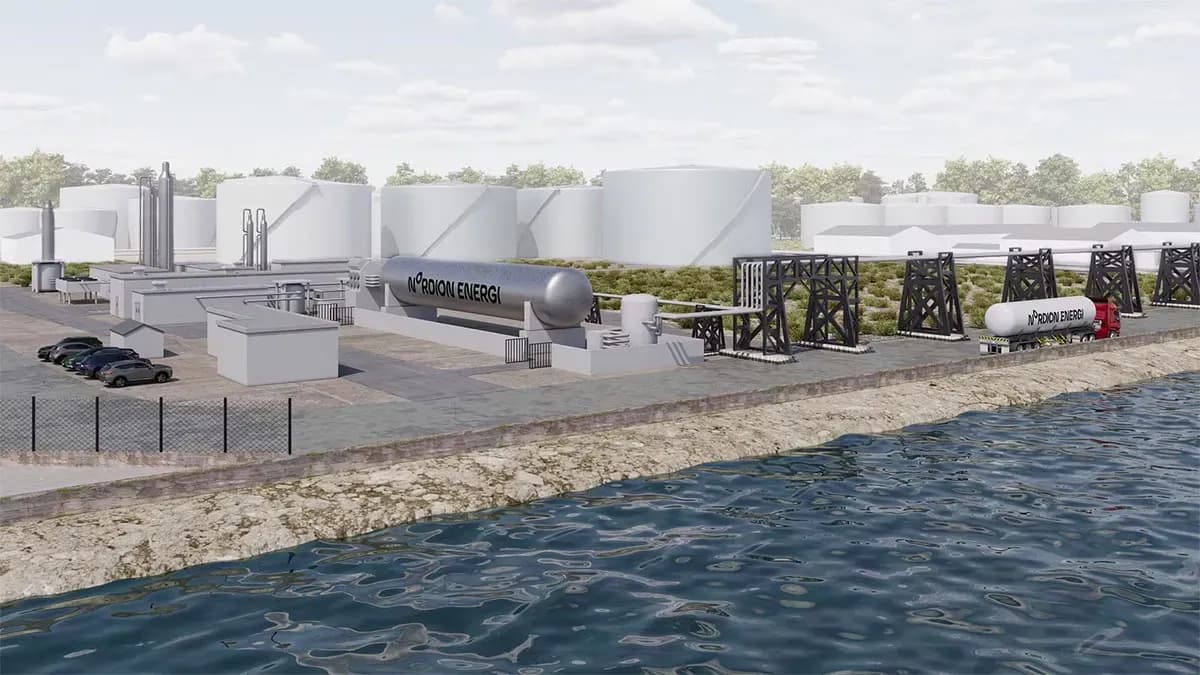
Construction work on a liquefied biogas plant has begun at the Port of Gothenburg. The installation, whose ownership and development belong to the firm Nordion Energi, is planned to play a central role in the distribution of Swedish-origin biogas to multiple commercial activities, with a specific focus on maritime transport.
The goal of this logistics and industrial center is to facilitate access to new consumer markets for biogas producers connected to the gas pipeline network. Through the gas liquefaction process, this fuel can be transported and used in sectors such as navigation, road freight transport, and heavy industry, covering geographic areas that are beyond the reach of the existing gas distribution network.
The Head of Clients and Market of the Gas Network at Nordion Energi, Carolina Wistén, has explained that the corporation's goal is to contribute to the transformation of the gas network to a model entirely based on renewable gas, a change in which the liquefaction plant at the Port of Gothenburg will play an operational role. Moreover, she noted that the infrastructure will support the decarbonization of maritime fleets, heavy transport, and industrial complexes far from traditional pipelines.
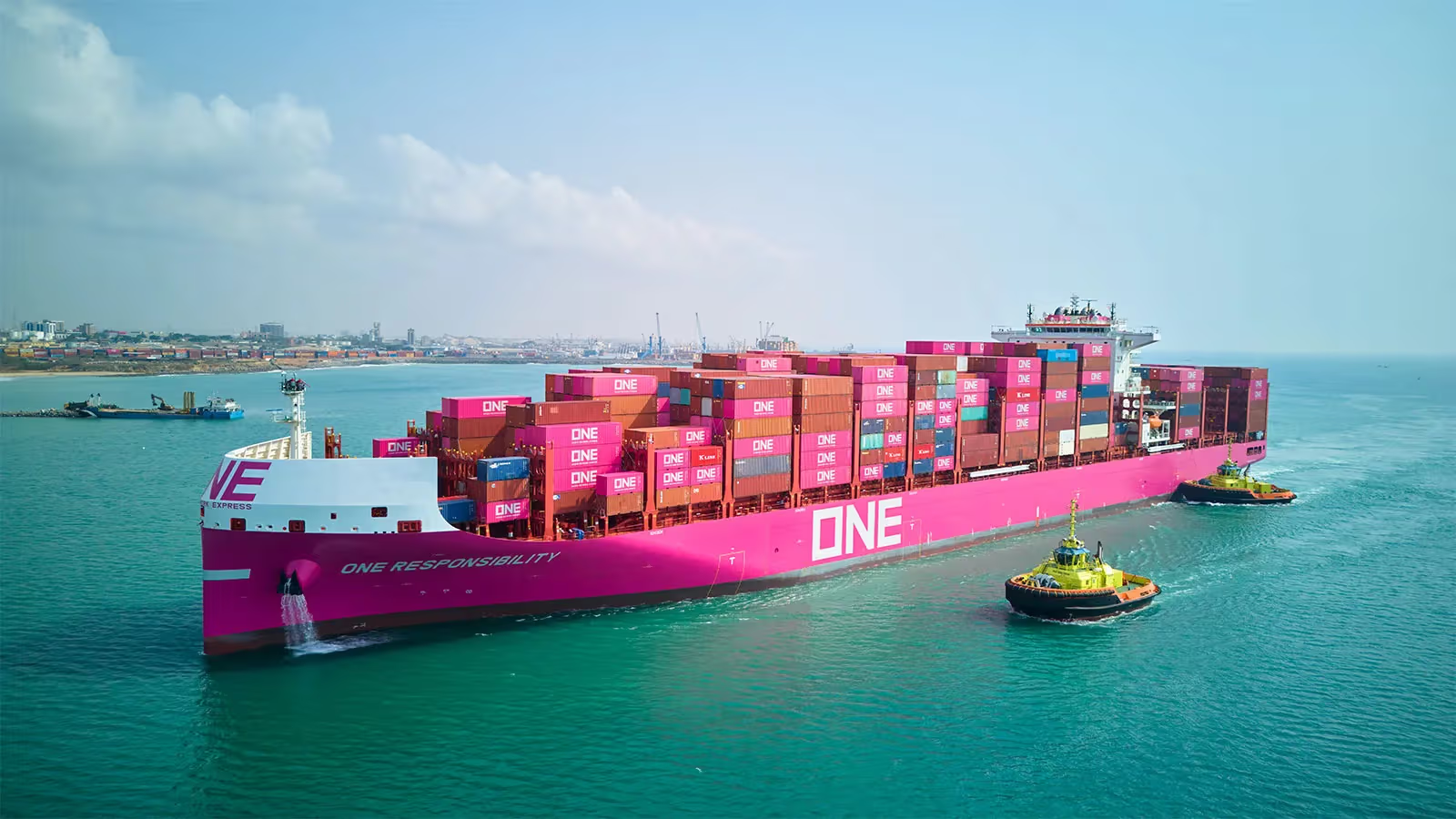
Biogas constitutes a renewable energy alternative that reduces climate impact by replacing fossil-fuel-based sources in various productive areas. In the current context, interest in liquefied biogas is showing a growing demand, particularly in the navigation sector, where shipping companies require a greater volume of sustainable options for fueling their fleets.
The Head of Renewable Energy at the Port of Gothenburg, Therese Jällbrink, has stated that, to consolidate the transition in maritime transport, it is necessary for the entire value chain to be configured and coordinated, a feature that defines the maritime cluster of this port enclave. Jällbrink detailed that this plant strengthens the port area's position in the segment of renewable supply fuels and will provide liquefied biogas to ships on a larger scale.
Producers and users of this service are already located in the port area to utilize the liquefaction plant once it is operational. Different shipping companies that regularly dock at this Swedish port already use biogas for the propulsion of their vessels, and they will be able to increase this consumption scale after the project's completion.
In the field of production, the firm St1 Biokraft is among the companies that have signed a commercial agreement to secure a part of the operational capacity of the future installation. The Head of the Value Chain at St1 Biokraft, Ted Gustavsson, has assessed that the project provides the Port of Gothenburg with a comprehensive logistics solution, which represents a strategic step to market competitive liquefied biogas in the maritime sector and to take a reference position in this market segment.
The construction of the new technical infrastructure will be completed at the beginning of 2027 and projections place its regular operational start before the end of that same year. Once the facilities operate at full capacity, they will have a processing capacity close to 50 tons of liquefied biogas per day.