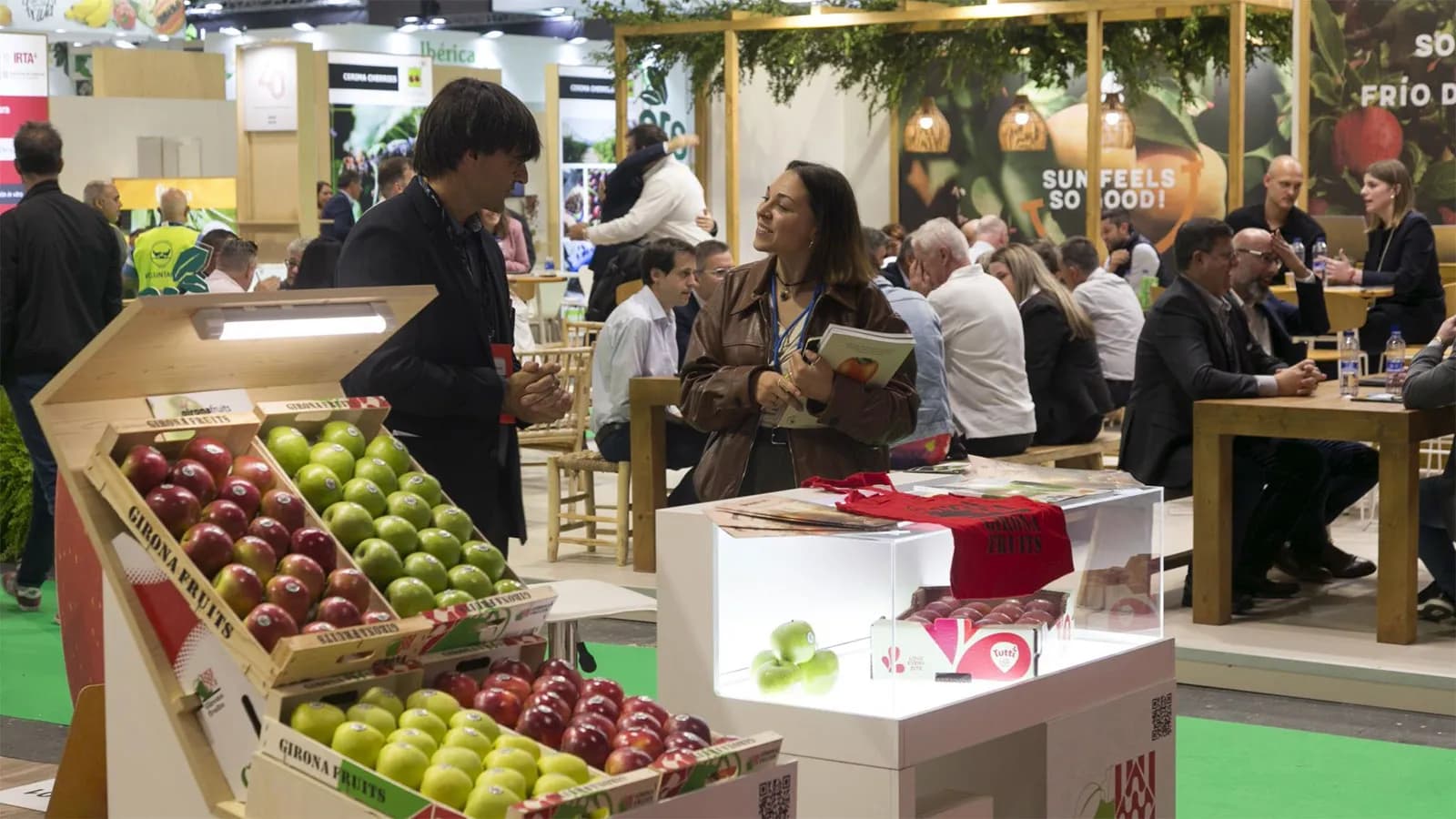
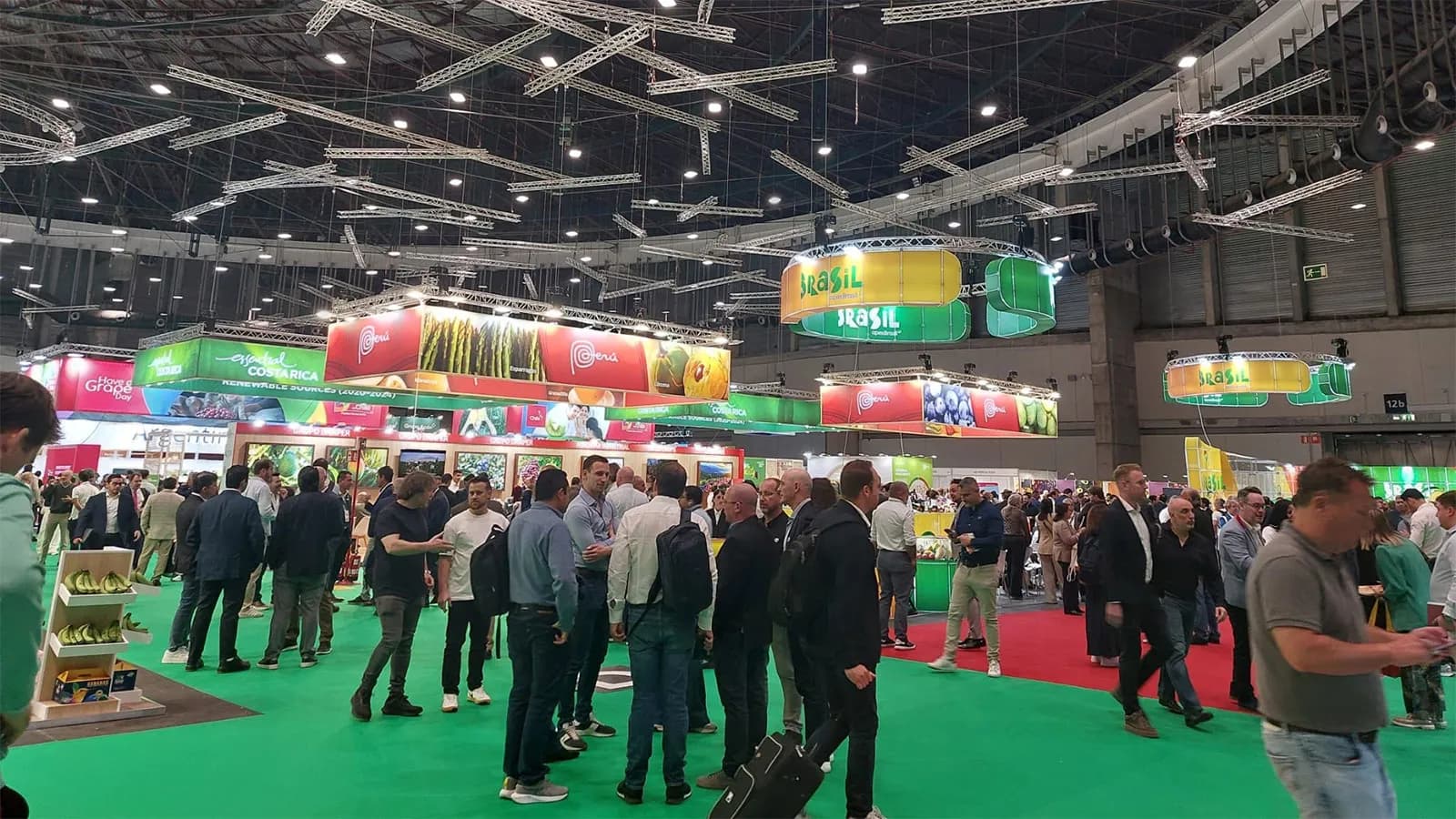
China and the United Arab Emirates occupy a specific place this year at Fruit Attraction as guest importer countries, within an edition that brings together producers, exporters, operators, and international buyers at IFEMA Madrid. The initiative aims to facilitate commercial contact with two markets of very different characteristics, where transportation and access conditions play a decisive role for Spanish exports.
The Chinese market still has a reduced weight for the Spanish horticultural sector. During 2025, Spain exported 1,784 tons of fruits and vegetables to China, an amount equivalent to 0.01% of the Spanish volume marketed abroad. European presence is also limited, as the 27 member states of the European Union jointly sent 10,084 tons of fresh products to this destination during the same period.
One of the main barriers to increasing these exchanges lies in the necessary procedures to authorize each product. FEPEX points out that opening the Chinese market requires formalizing specific protocols whose negotiation can take four to five years.
Spain currently has authorization to export citrus fruits, peaches, plums, grapes, persimmons, almonds, and cherries to China. There are also approved protocols for dried figs and pistachios, although the necessary procedures to start their commercialization have not yet been completed.
The situation of the United Arab Emirates presents different characteristics. The country once ranked among the main non-EU destinations for Spanish fruits and vegetables, with 40,441 tons exported in 2021 and a similar volume in 2022. Since then, exchanges have decreased to 13,621 tons in 2025.
FEPEX relates this evolution to various factors, including the general increase in costs, especially those related to logistics. The sector organization notes that maritime freight rates doubled on certain routes during this period, while geopolitical tensions have generated higher costs and transportation times in long-distance traffic.
These conditions have a direct impact on perishable goods that must travel thousands of kilometers while maintaining their preservation conditions until reaching the destination market. Transportation costs and transit times are thus part of the variables that condition the ability of Spanish exporters to operate in markets far from the European Union.
The United Arab Emirates also has a function that exceeds its own domestic market. According to FEPEX, Dubai acts as a logistics and re-export platform to other countries in the Gulf, Asia, and Africa, which expands the commercial scope associated with operations with this destination. Demand is linked both to internal consumption and to the food channel related to tourist activity.
The presence of China and the Emirates is part of the Guest Importing Countries program of Fruit Attraction 2026. The fair, organized by IFEMA Madrid and FEPEX from October 6 to 8, brings together 2,500 exhibiting companies from 78 countries in its eighteenth edition, distributed across ten pavilions and covering an area of 162,000 square meters. The organization expects around 121,000 professionals from over 150 countries to attend.