IKERLAN has led the European project HYPOBATT, focused on the development of very high power charging systems for electric ships in port environments. The initiative, recently completed, has brought together 18 partners from ten European countries and has received funding of 9.35 million euros from the Horizon Europe program.
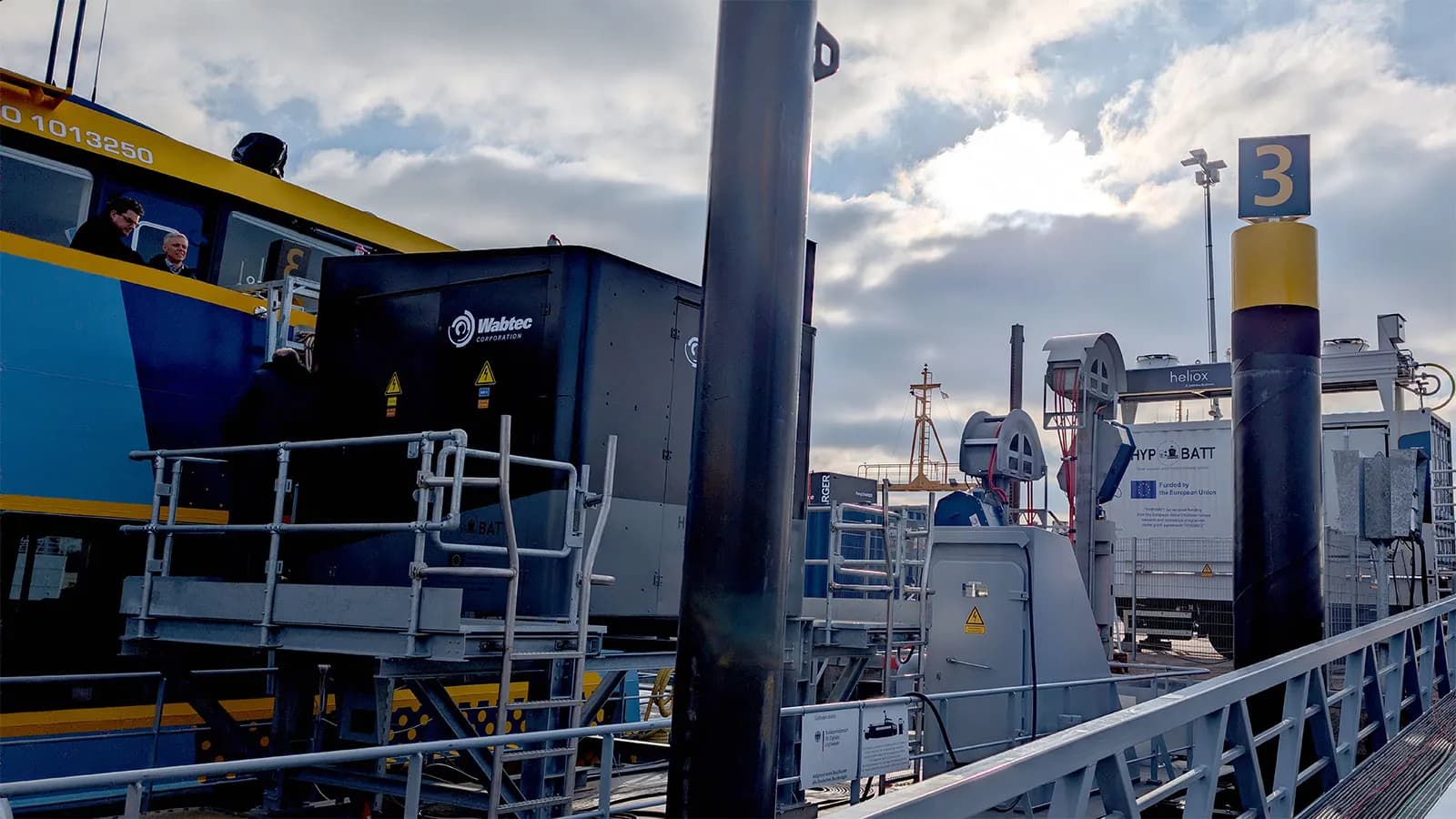
The technology developed within the project has been validated in real conditions at the German port of Norddeich through a demonstration of electric charging for ships. During the tests, the system allowed to automate the connection between the vessel and the port infrastructure and to start the charging process in less than 30 seconds.
The tested solution has a power output of up to 2 MW. According to data provided by IKERLAN, this capacity is equivalent to the simultaneous consumption of more than 400 households.
One of the project's objectives has been to reduce the time associated with connecting electric ships during their docking. In the current facilities, these operations may require several minutes and, in certain cases, need manual intervention, which affects port operations and increases the time ships remain docked.
The system developed within HYPOBATT is designed to work with power outputs ranging from 1 to 5 MW, depending on the needs of each port and the type of vessel. The technology also incorporates adaptive energy management strategies aimed at reducing the aging of the batteries necessary to supply high power without compromising port electrical infrastructures.
IKERLAN indicates that the solution can reduce operation and maintenance costs for electric fleets by up to 20%. The project also proposes to reduce the turnaround times of ships in port by automating the connection and increasing the available power during recharging.
The Basque technology center has participated in HYPOBATT both in coordinating the consortium and in developing different technological components. Among them is a digital twin of the power converter responsible for the charging process.
This tool allows simulating and optimizing the operation of the system before and during operation. Additionally, it includes the integration of real-time charging algorithms hosted in the cloud, designed to improve the efficiency and robustness of the recharging process.
Endika Bilbao Muruaga, researcher of the electromagnetism and converter control team and project manager of HYPOBATT at IKERLAN, considers that the availability of port infrastructures with sufficient power and standardized systems is one of the necessary factors to extend the electrification of ships.
“The electrification of ships is one of the most promising ways to reverse this trend, but without powerful and standardized charging infrastructures in ports, no transition is possible,” Bilbao Muruaga has stated.
The project has been developed in a context where maritime transport channels about 80% of world trade and accounts for approximately 3% of global carbon dioxide emissions, according to the data included in the project information.
HYPOBATT has also worked on aspects related to the standardization of maritime electric charging infrastructures. Its developers believe that compatibility between ships, chargers, and port systems will be one of the necessary elements to extend this type of solution to different European ports.
The results obtained during the test conducted in Norddeich have confirmed the technical viability of the system under real conditions. The demonstration included both the automated connection between the ship and the infrastructure and the operation of the high-power charging process.
In addition to reducing the time needed to make the connection, the architecture proposed by HYPOBATT considers the possibility of adapting the system's power to the characteristics of each installation. The expected range, between 1 and 5 MW, allows configuring the technology for different types of vessels and operational needs.
The project has involved 18 participating entities from ten European countries and a funding of 9.35 million euros within Horizon Europe. With the completion of HYPOBATT, the consortium has completed the development and validation of a solution aimed at facilitating the incorporation of high-power electric charging systems in ports.