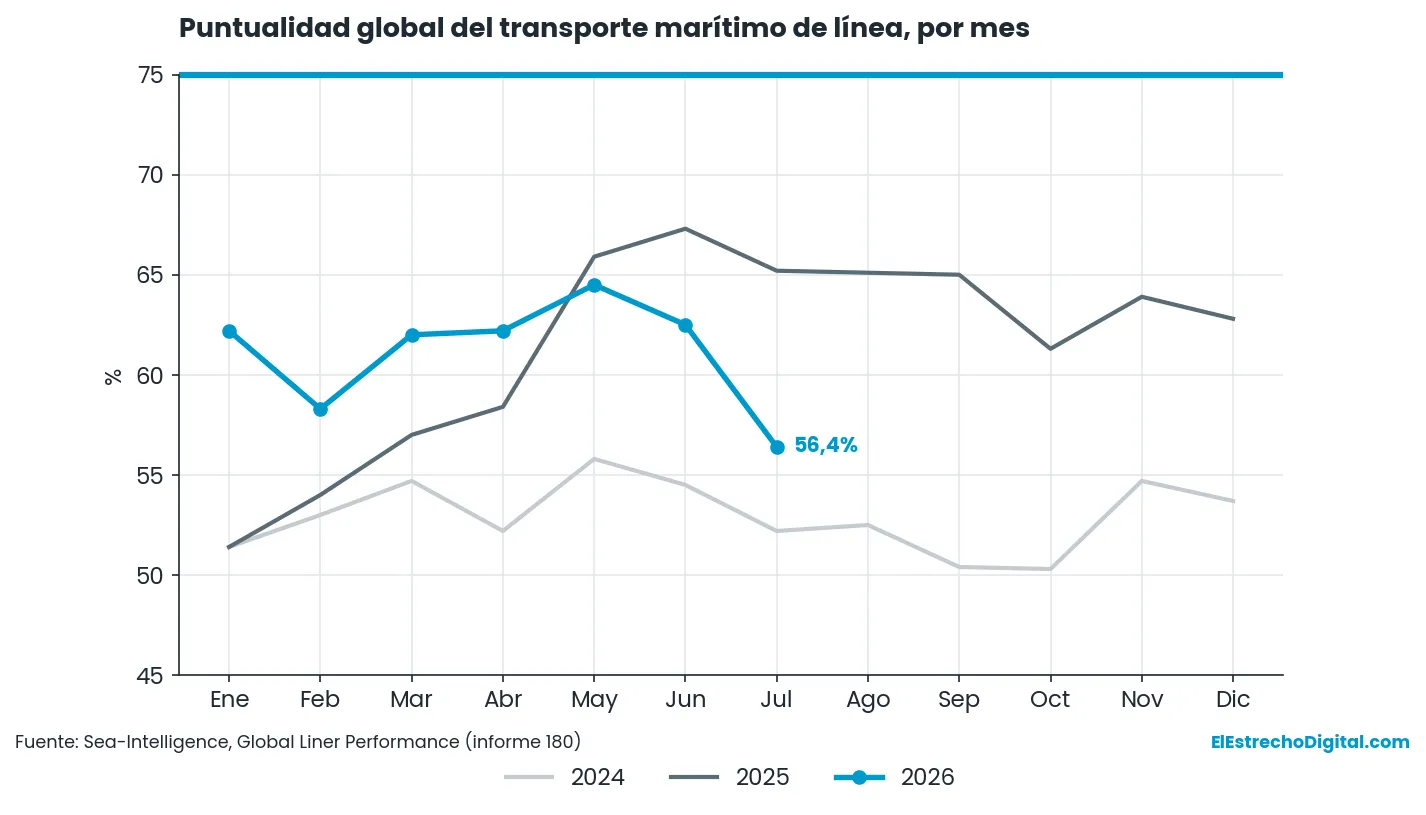
The reliability of the global liner shipping schedules plummeted to 56.4% in July 2026, according to data published by the consultancy Sea-Intelligence in report number 180 of its Global Liner Performance (GLP) report. The indicator fell 6.1 percentage points compared to June and is 8.8 points below the record for the same month in 2025. It is the lowest level of the current year and the worst monthly figure since February 2025.
The other metric tracked by the report, the average delay for vessels arriving late at ports, evolved in the same direction. In July, these missed port calls accumulated an average delay of 6.06 days, 0.59 days more than in June and 1.34 days more than a year ago. The indicator hadn’t reached such a high figure since January 2024. The combination of lower punctuality and greater delays means that vessels failing to meet the expected window are now doing so with a significantly larger margin, complicating the planning for terminals, importers, and logistics operators that depend on the container chain.
The GLP is the usual benchmark in the sector for measuring schedule compliance. The Danish consultancy monitors 34 trade routes and over 60 shipping companies and publishes a report of nearly 120 pages each month. In its statement, Sea-Intelligence only anticipates part of the content and details the performance of the thirteen main liner operators.
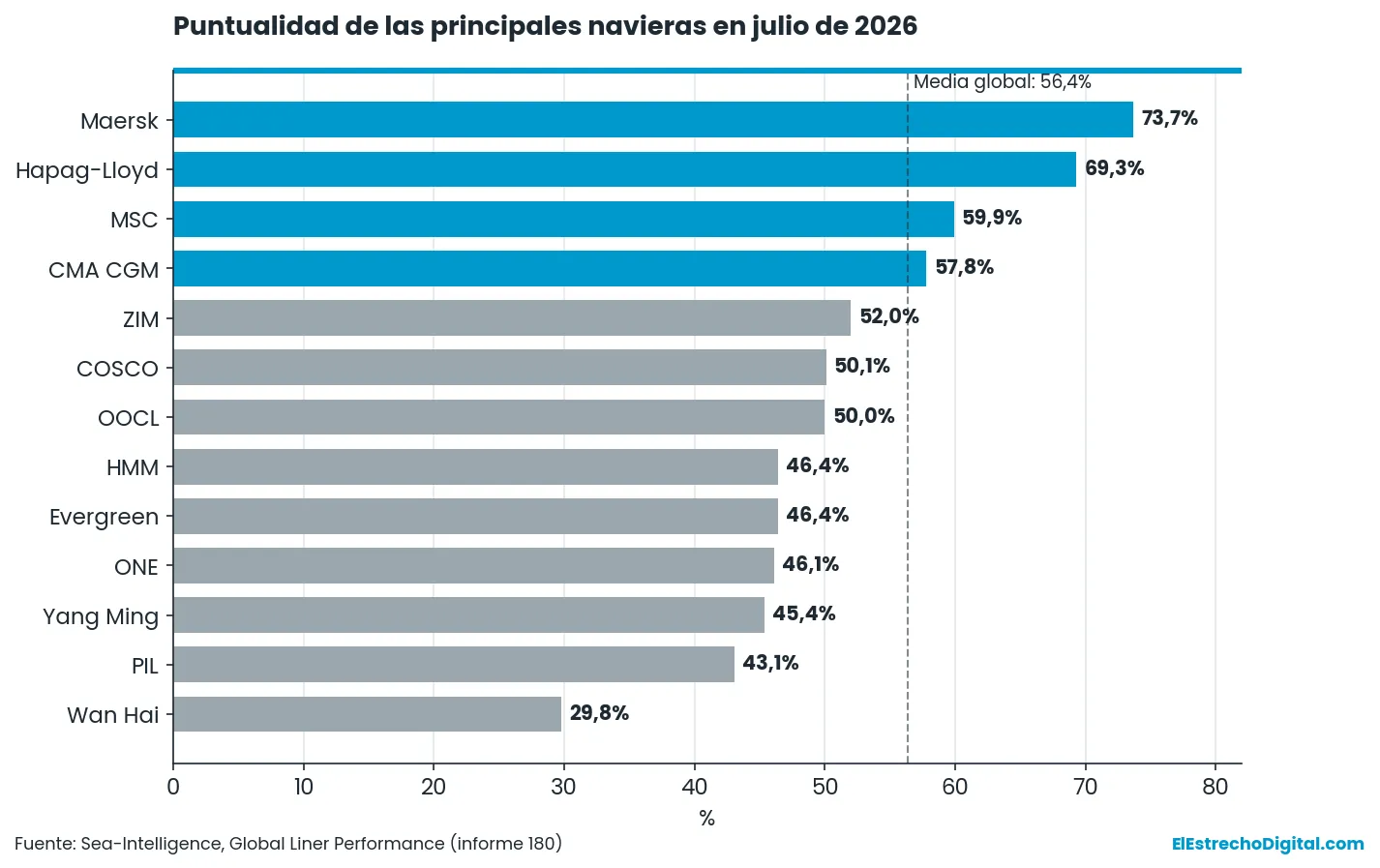
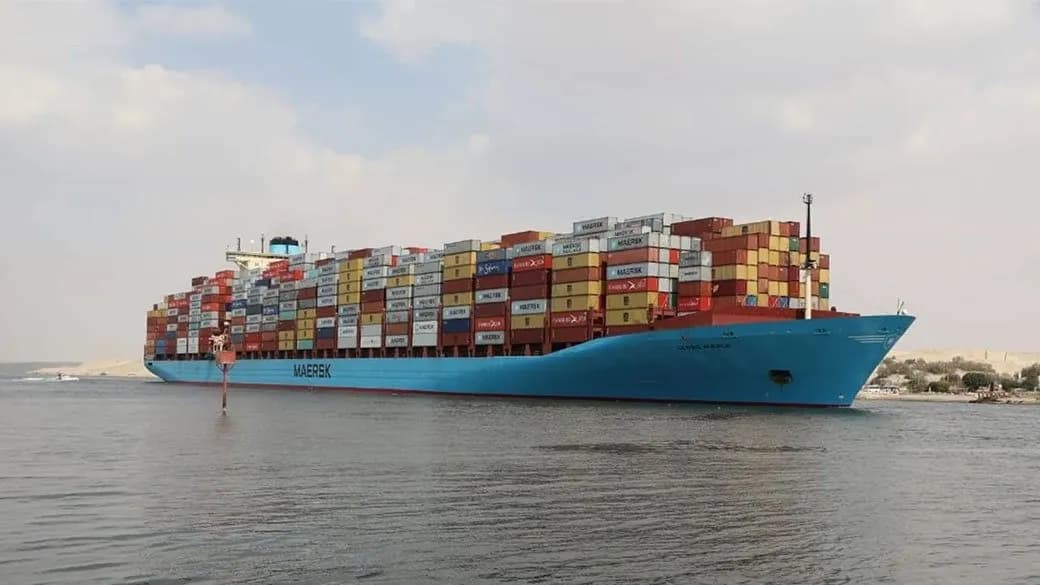
Maersk was the most punctual shipping company among the thirteen large ones in July, with a reliability of 73.7%. The Danish company was also the only one to exceed the 70% threshold. Hapag-Lloyd followed with 69.3%, as the only operator situated in the range of 60% to 70%. Behind them, five companies operated in the range of 50% to 60%: MSC (59.9%), CMA CGM (57.8%), ZIM (52.0%), COSCO (50.1%), and OOCL (50.0%). The rest fell below the 50% threshold, with HMM (46.4%), Evergreen (46.4%), ONE (46.1%), Yang Ming (45.4%), and PIL (43.1%). Wan Hai closed the ranking with 29.8%, being the only one in the group with a figure below 30%.