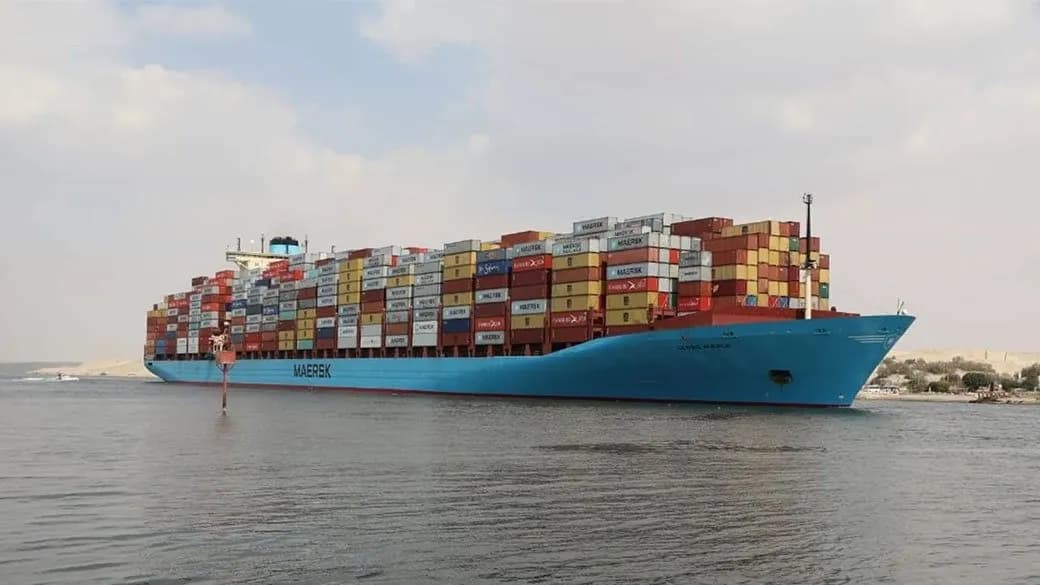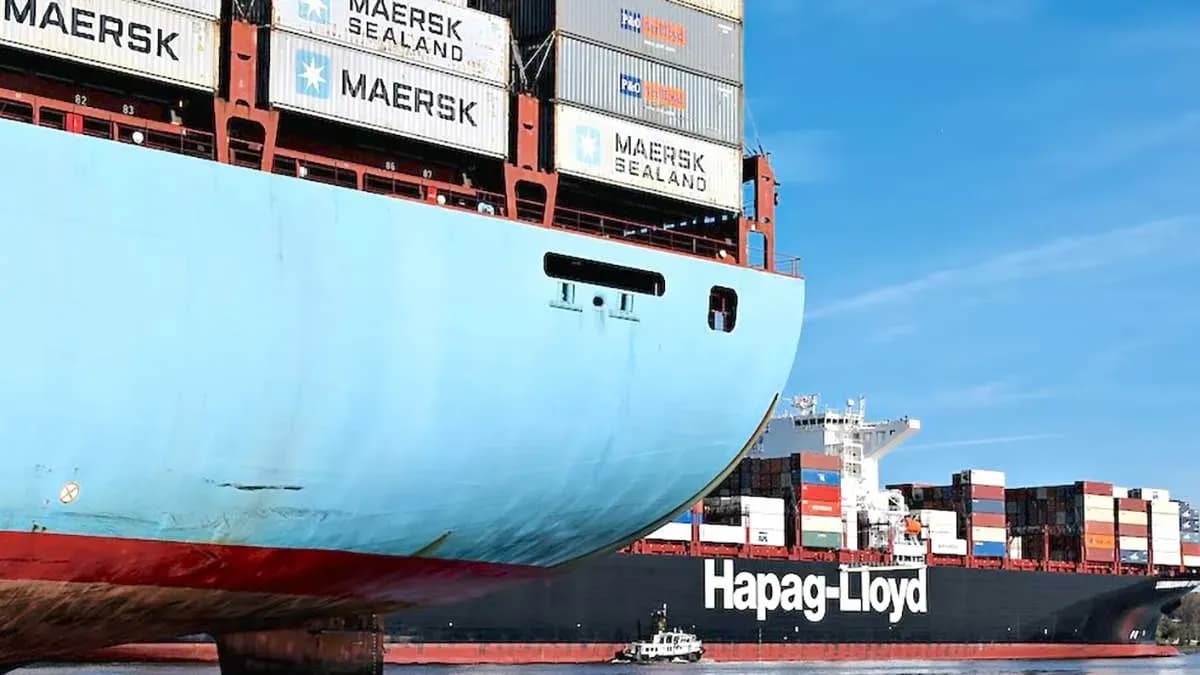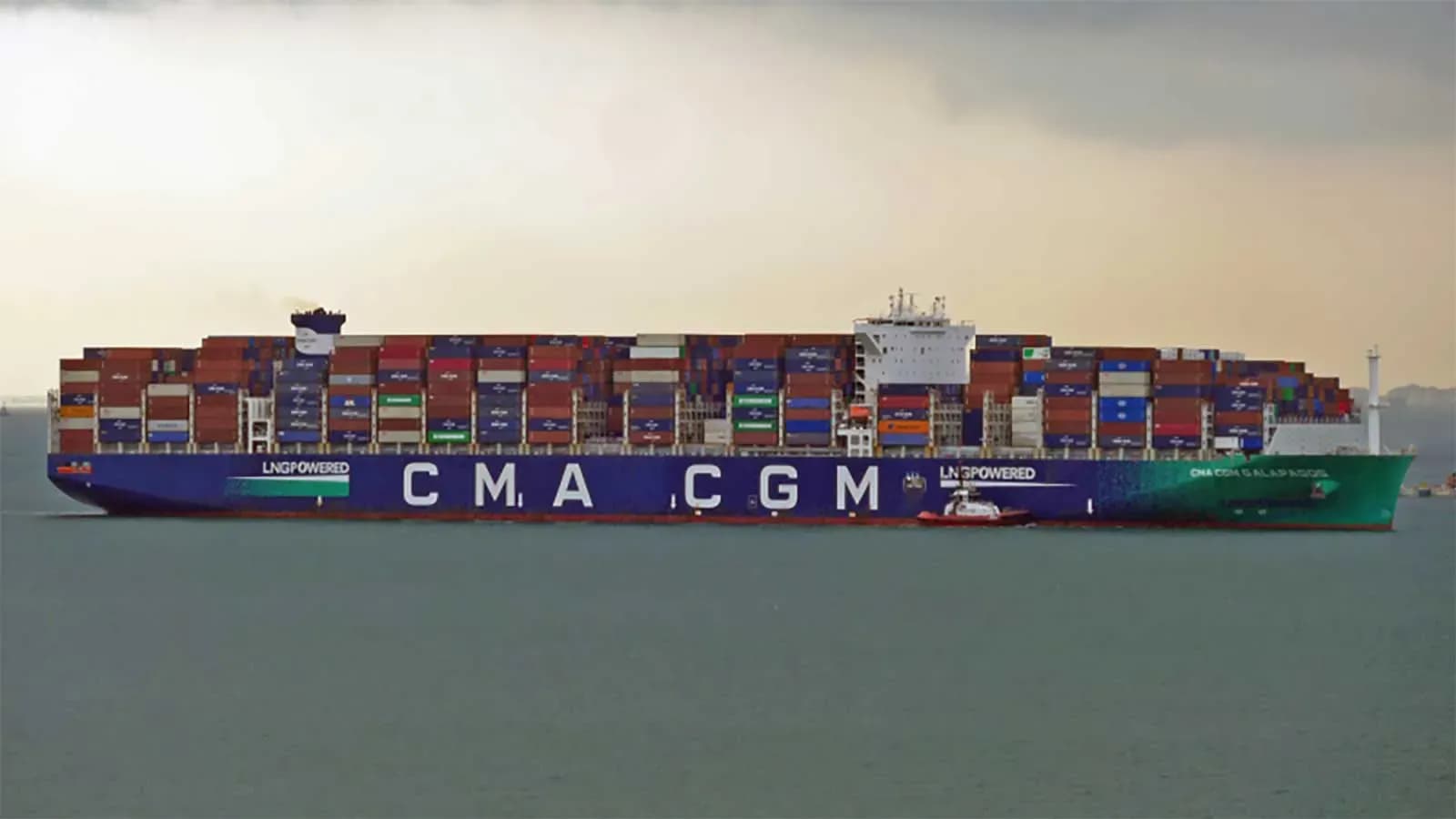
The main container shipping companies have started to remove vessels from the Persian Gulf after a security window opened following the agreement between the United States and Iran on a 60-day ceasefire and the resumption of talks regarding a nuclear deal. Maersk, Hapag-Lloyd, and CMA CGM have confirmed successful completed transits through the Strait of Hormuz.
Hapag-Lloyd has confirmed that all of its vessels affected by traffic disruption in the critical maritime route, which were waiting in the Persian Gulf, have already safely left the region. The company had four vessels in the area when the peace agreement was announced and had already expressed its willingness to begin removing them from the region, given the improved security situation.
"This has only been carried out after a thorough assessment of the security situation and in close coordination with the relevant authorities, security partners, and our teams on board and on land," stated the German shipping company, which specified that it will not disclose names of vessels, routes, or specific timelines for security reasons.
The company has detailed that, out of the four vessels, two have left the Persian Gulf, one has been sub-chartered, and another has started serving within the Gulf itself.
Maersk has also confirmed the departure of two vessels late on June 24 and in the early hours of June 25. The Danish shipping company has indicated that the owned container ship Maersk Baltimore, with a capacity of 4,500 TEUs, along with a time-chartered vessel, completed their transits following security assessments and recommendations from regional security partners. After these departures, Maersk maintains three vessels in the Gulf and has stated that it will seek to carry out another transit through the Strait of Hormuz at a later stage.
At the beginning of the conflict between the United States, Israel, and Iran, at the end of February 2026, Maersk had seven vessels, owned or chartered, in the Gulf. One of them, the Alliance Fairfax, was escorted out of the area on May 4, while a time-charter contract for another vessel was not renewed, leaving five vessels in the region before the last departures.
"The safety of our seafaring people, our vessels, and our clients' cargo remains the top priority," Maersk has stated, adding that to keep trade flows moving between Gulf countries, the company will deploy the remaining two vessels in intragulf services directed to clients and markets in the Persian Gulf. The shipping company also specified that during the conflict, it managed to resupply its vessels and make crew changes without "significant difficulties."
During the disruption, Maersk explained that it maintained cargo movements into the region through alternative logistics routes. When the conflict began, 47,000 containers destined for points in the Gulf were aboard the company's vessels. Maersk detailed that it established land bridges and diverted cargo to ports outside the Gulf, to later transport it by road to its final destination. Of those containers, 44,000 have already been delivered and 3,000 remain awaiting their final delivery, according to the shipping company.
For its part, the French shipping company CMA CGM has also confirmed that its French-flagged container ship CMA CGM Galapagos completed its transit through the Strait of Hormuz on Sunday morning, June 28. The vessel remained unable to leave the Persian Gulf for four months before anchoring off Muscat, Oman. An official account of its passage has not been released, although tracking data indicates that it followed the corridor designated by Iran, near Lark Island.
"This transit represents a significant step in a regional context that remains complex and requires constant vigilance. The Group wishes to recognize the professionalism of the entire crew, as well as the commitment of all teams involved in ensuring the safety of the vessel and its seafaring people," CMA CGM stated in a release. "The Group continues to closely monitor the evolution of the situation in the region and remains fully mobilized to ensure the safety of its crews."
At the height of the conflict, more than a thousand vessels and about 20,000 sailors remained stranded in the region, after Iran closed this strategic maritime route to traffic. After the latest peace agreement, the International Maritime Organization (IMO) initiated coordination of a large-scale evacuation of stranded sailors. The operation has been suspended due to Iran's opposition to the two proposed maritime corridors, while Iranian forces are believed to have directed attacks against vessels using the route closest to Oman, in a context where Tehran seeks greater control over transit through the Strait.