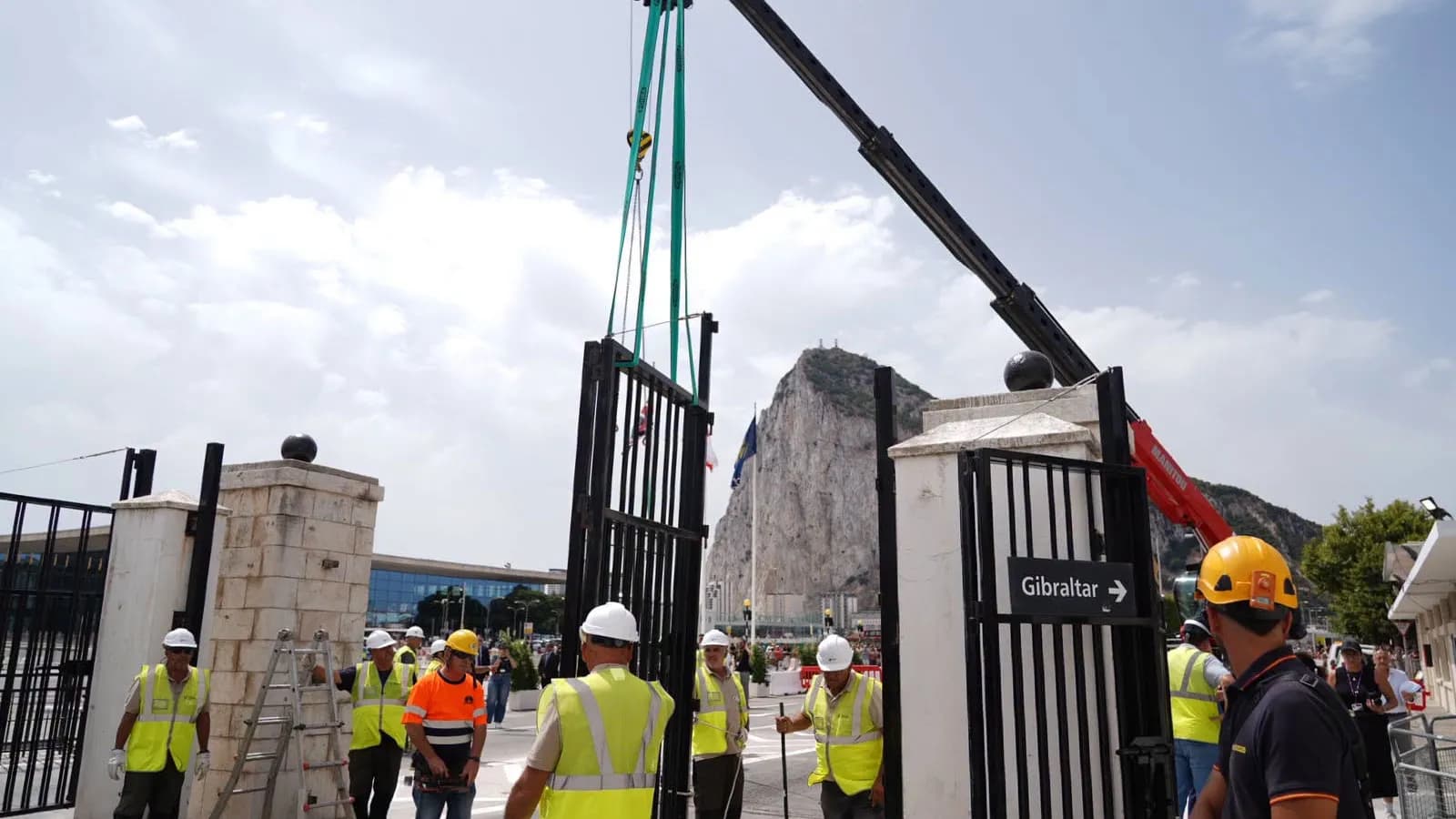
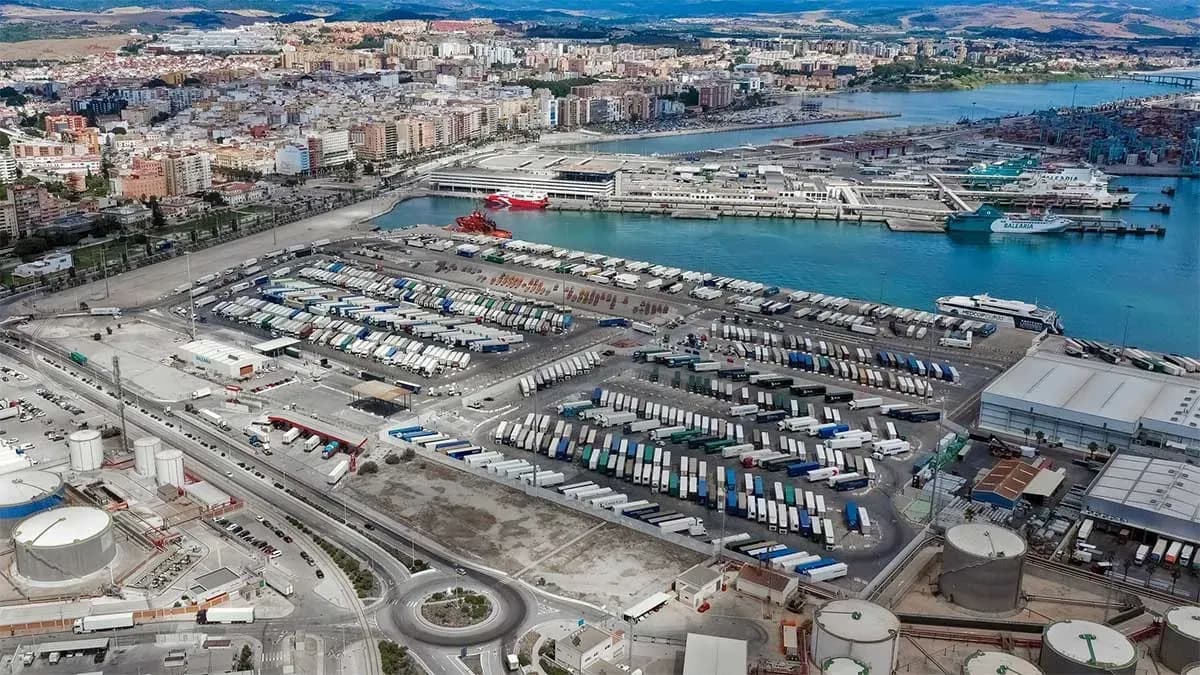
The Agreement on Gibraltar came into effect at midnight on July 15 and reorganizes the customs and tax regime between the Rock, Spain, and the European Union. The union of Technicians of the Ministry of Finance (GESTHA) has analyzed the implications of the treaty in a statement in which it maintains that the objective of the text is to eliminate all physical barriers to the movement of people and goods to create an area of "shared prosperity," preserving the Single Market and the EU Customs Union.
In the new framework, goods can only enter or exit Gibraltar by land through three Designated Customs Points (DCP): La Línea de la Concepción, Algeciras, and Sagunto. The technicians of the La Línea Customs will take over the controls of the external border at the port and airport of Gibraltar. At the latter, the declarations, formalities, and controls of goods and cash will be centralized, and from there, the import duties will be collected, on behalf of Gibraltar, at the designated customs points.
The movement of goods is organized under the New Automated Transit System (NCTS), with specific codes such as T1GI to ensure traceability and avoid fraud. The Gibraltar Customs, as the destination of the special transits initiated in Spain, will notify the arrival of goods and proof of having settled local taxes, both the Transaction Tax and the Special Taxes.
GESTHA explains that Gibraltar will maintain the designation of "third territory" in customs matters until the Cooperation Council verifies that Union Law is applied in the Rock, as provided in Annex 20 of the agreement, and that the border control posts and customs offices at the port and airport of Gibraltar operate with the agreed procedures.
To take on the workload arising from the new regime, the union requested in March an increase in customs technicians available 24 hours a day, along with an improvement in their working and pay conditions that ensures the stability of the staff in customs considered strategic. Seven new Treasury technicians will join the La Línea Customs in December, allowing for coverage of the service 24 hours a day, 365 days a year with the implementation of a third work shift.
One of the most relevant elements emphasized by the union is Gibraltar's exit from the Spanish list of non-cooperative jurisdictions, the well-known list of tax havens. The exclusion responds to the Rock's commitment to apply standards of good fiscal governance, transparency, and information exchange according to the rules of the OECD and the EU. GESTHA warns, however, that Gibraltar could return to that list if it fails to meet its commitments.
In tax matters, the Rock has a transitional period of three years from last Wednesday to introduce a Transaction Tax (TT), equivalent to VAT, with increasing rates of 15%, 16%, and 17% in each of those years. The Special Taxes on alcohol, tobacco, and hydrocarbons will apply from the entry into force with the minimum rates of the EU and will converge with the Spanish rates up to a maximum difference of 6%.
At the end of the transitional period, the exemptions for travelers will disappear, that is, the current limits on tobacco and alcohol. From that moment, travelers will be able to move without those restrictions, since goods will be taxed at 17% of the Transaction Tax. The agreement also provides for the creation of an Independent Advisory Body that will evaluate annually the impact of these taxes and may recommend adjustments if distortions in competition with the Campo de Gibraltar are detected.
GESTHA concludes its analysis with the specific obligations of the treaty in relation to tobacco smuggling, a sensitive chapter for the region. The agreement imposes "very strict" rules, with the requirement for Gibraltar to implement a traceability system equivalent to that of the European Union and to maintain prices that do not encourage fraud.
The new regime represents an operational transformation for the customs of the Campo de Gibraltar and for the three designated DCPs. The effective implementation of the agreement will depend on both the incorporation of the seven technicians scheduled for December and the verifications carried out by the Cooperation Council on the functioning of the border posts and customs offices of the Rock.