The Port Authority of the Bay of Algeciras (APBA) presents this Thursday, before institutions and the port community, its Strategic Plan 2030 with a vision for 2040, the document that will guide the development of the ports of Algeciras and Tarifa in the horizons of 2030 and 2040. The plan, approved by the APBA Board of Directors last April 8, is the first major strategic review of the agency since 2014, when the previous plan with a 2020 horizon was developed, and comes at a time of profound changes in supply chains, geopolitics, and European regulatory demands regarding sustainability and digitalization.
"The Strategic Plan defines the roadmap that will guide our development, our contribution to the territory, and our capacity to continue creating value in the economic, social, and environmental fields," says the president of the APBA, Gerardo Landaluce, who emphasizes the participatory and rigorous nature of the process and its aspiration for the ports managed by the institution to "consolidate their growth on bases of competitiveness and resilience."
"A strategy that aims to position the APBA as a maritime/port and energy platform, connecting continents"— Gerardo Landaluce, president of the APBA
The initial diagnosis explains why the APBA deemed it essential to update its planning. Maritime trade maintains a growth path that opens opportunities, but the board has shifted in all directions. The European trading scheme for emission allowances (ETS) is identified in the analysis as a threat, as it could be diverting traffic from Algeciras to non-community ports like Tangier Med, while investment in new facilities in North Africa, with Nador West as an example, raises competition for transshipment traffic. This is compounded by the reconfiguration of energy routes, with sanctions on Russia and an increase in European imports from the Gulf, the gradual opening of Arctic routes that could lessen the weight of traditional corridors like the Strait, and changes in alliances among shipping companies. In this last area, the plan includes some favorable news: the Bay of Algeciras has been selected as a hub by the Gemini alliance, although Maersk's presence on both sides of the Strait keeps Tangier Med as a direct competitor in transshipment.
In the face of this scenario, the APBA formulates an ambitious vision: to be the leading intercontinental logistics platform and port and intermodal node in southern Europe, enhancing value-added activities and energy transition, and establishing itself as a center of excellence in sustainable and innovative maritime and port services.
The strategic map is structured around three major lines of transformation. The first focuses on growth based on improving competitiveness, paying attention to operational efficiency, digital transformation, innovation, intermodality, optimizing existing infrastructure, and developing long-term actions. The second is oriented towards decarbonization and proactive environmental management, with measures related to energy transition, reducing environmental impact, protecting biodiversity, and adapting to climate change. The third is directed towards institutional strengthening with social commitment, with special attention to the port-city relationship, attracting investments, territorial cohesion, and internal management capacity.
These three lines are developed through three strategic dimensions: clients and society, processes, and capabilities and resources. Based on them, the plan groups 14 strategic objectives that order the priorities of the APBA. Thus, the plan seeks to move from a general statement of intentions to a measurable action system, with tactical objectives, operational objectives, responsible areas, and monitoring indicators.
The first strategic block is oriented towards clients and society. In this area, the APBA seeks to bring the ports closer to the citizens, generate shared value, and strengthen collaboration with local agents. This goal translates into actions aimed at improving citizens' perception of the impact of the ports and the management of the Port Authority, enabling areas and port spaces for the service of the citizens, increasing participation in port-city interaction activities, and boosting the cruise sector.
The port-city relationship occupies a central space in the new planning. The port is a key infrastructure for the economy of the Campo de Gibraltar, but its technical, logistical, and industrial activity can seem distant from the daily life of the citizens. The plan proposes a more transparent and close relationship, based on generating social value, opening spaces, disseminating port activities, and improving urban integration. This line appears connected with projects such as the Maritime Lake of Algeciras and the anticipation of making new public port domain surfaces available to citizens.
The Maritime Lake of Algeciras is among the projects included in the plan's goals, with a horizon of 2027. Its presence in the planning responds to the will to improve the connection between the city and the port, organize spaces for citizen use, and expand the social dimension of port activities. The strategy does not present the port-city integration as an accessory element but as part of the social legitimacy of the port and its contribution to the environment.
Tarifa has a specific treatment within the APBA strategy. The plan aims to promote the development of the Port of Tarifa adapted to its environment, improving its operational capacity and establishing a closer relationship with the city. The uniqueness of the Tarifa port, linked to passenger traffic and the connection with Tangier Ville, requires differentiated planning compared to Algeciras. The roadmap contemplates its evolution within a common strategy of the APBA, but addressing its urban, operational, and environmental characteristics.
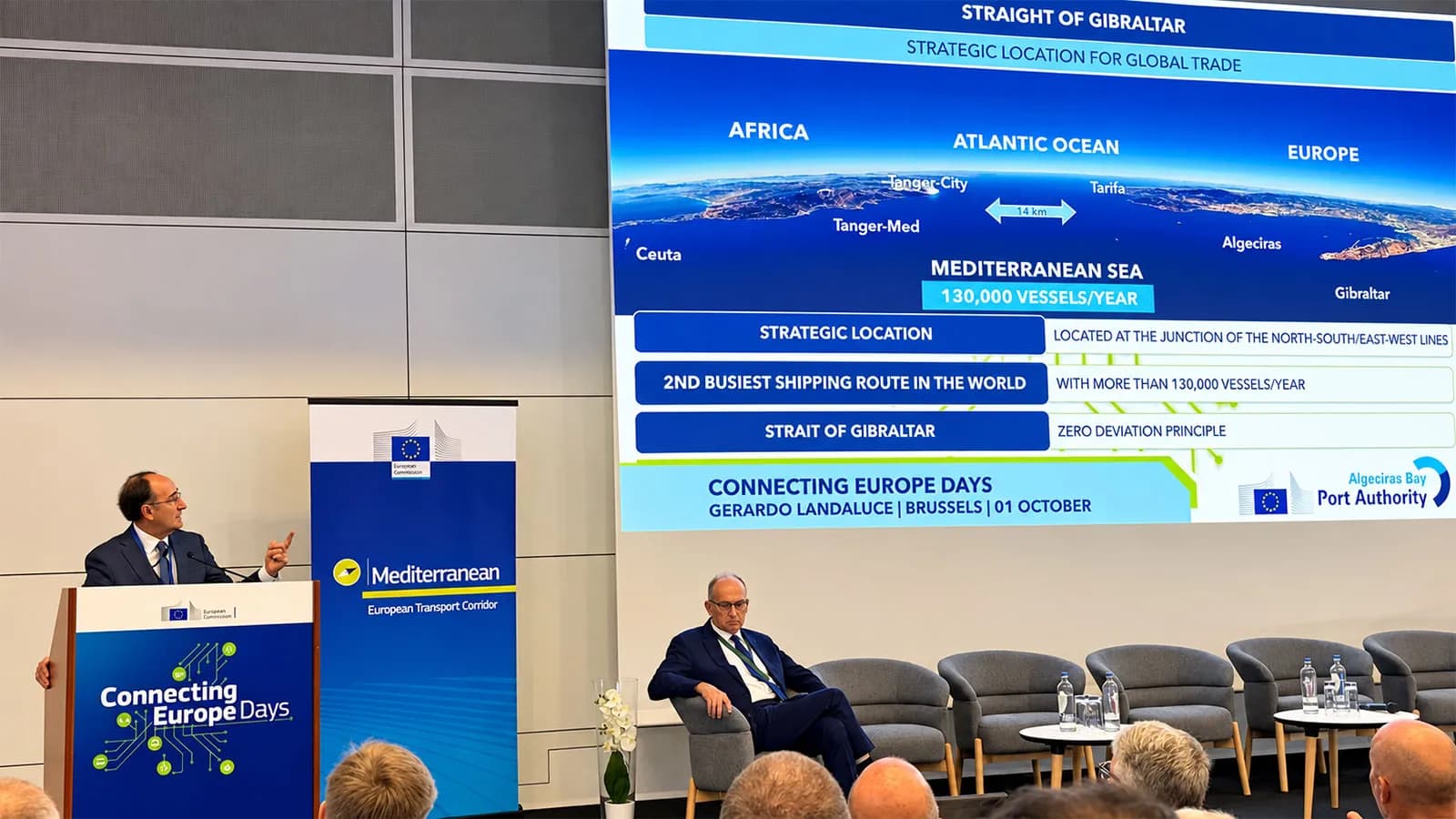
The institutional projection and international presence of the Bay of Algeciras Port constitute another priority. The plan proposes strengthening the capacity for institutional influence, projecting the APBA brand globally, and capturing key traffic through commercial action. This orientation responds to a context in which ports compete for traffic, investments, services, and positioning within global logistics chains. The APBA seeks to maintain an active role in forums, networks, and spaces where the priorities of maritime transport, logistics, and energy are defined.
Attracting investments appears as a goal directly linked to the development of the Campo de Gibraltar. The Port Authority aims to enhance the arrival of logistical and value-added projects that favor the anchoring of cargo and the generation of socioeconomic activity in the environment. This line is particularly relevant because the port is not conceived solely as a thoroughfare infrastructure but as a platform capable of driving industrial, logistical, energy, and service activities.
Innovation is incorporated as another axis of action. The plan defines the objective of consolidating the Bay of Algeciras Port as a systematic innovative port, channeling innovation as a key business process and involving sectors of the blue economy. To this end, it aims to systematize innovation management, consolidate an open innovation ecosystem, project the port's brand as a technologically advanced enclave, and increase the innovative culture within the organization.
This innovation is not limited to incorporating digital tools. The Strategic Plan presents it as a way to improve processes, services, internal capabilities, and relationships with the port ecosystem. The APBA seeks for innovation to be part of the ordinary activities of the port and to be linked to operational efficiency, sustainability, security, data management, training, and collaboration with companies, institutions, and knowledge agents.
The second strategic block focuses on processes. In this section, the APBA aims to establish itself as a safe, protected, and resilient port, capable of ensuring the continuity of essential services in a context of physical, natural, and cyber threats. The plan includes port protection, industrial security, cybersecurity, circulation security, and the capacity to respond to incidents. The strategic condition of the Bay of Algeciras Port requires comprehensive management of these risks.
The plan proposes improving the distribution and utilization of land, sea, and air space to raise operational efficiency and ensure ordered, planned, and future demand-adapted growth. The plan includes actions linked to the capacity for container traffic, passenger traffic, road accesses, infrastructure reliability, increasing concessioned surface area, urban planning of public port domain, and enabling airspace for drone use.
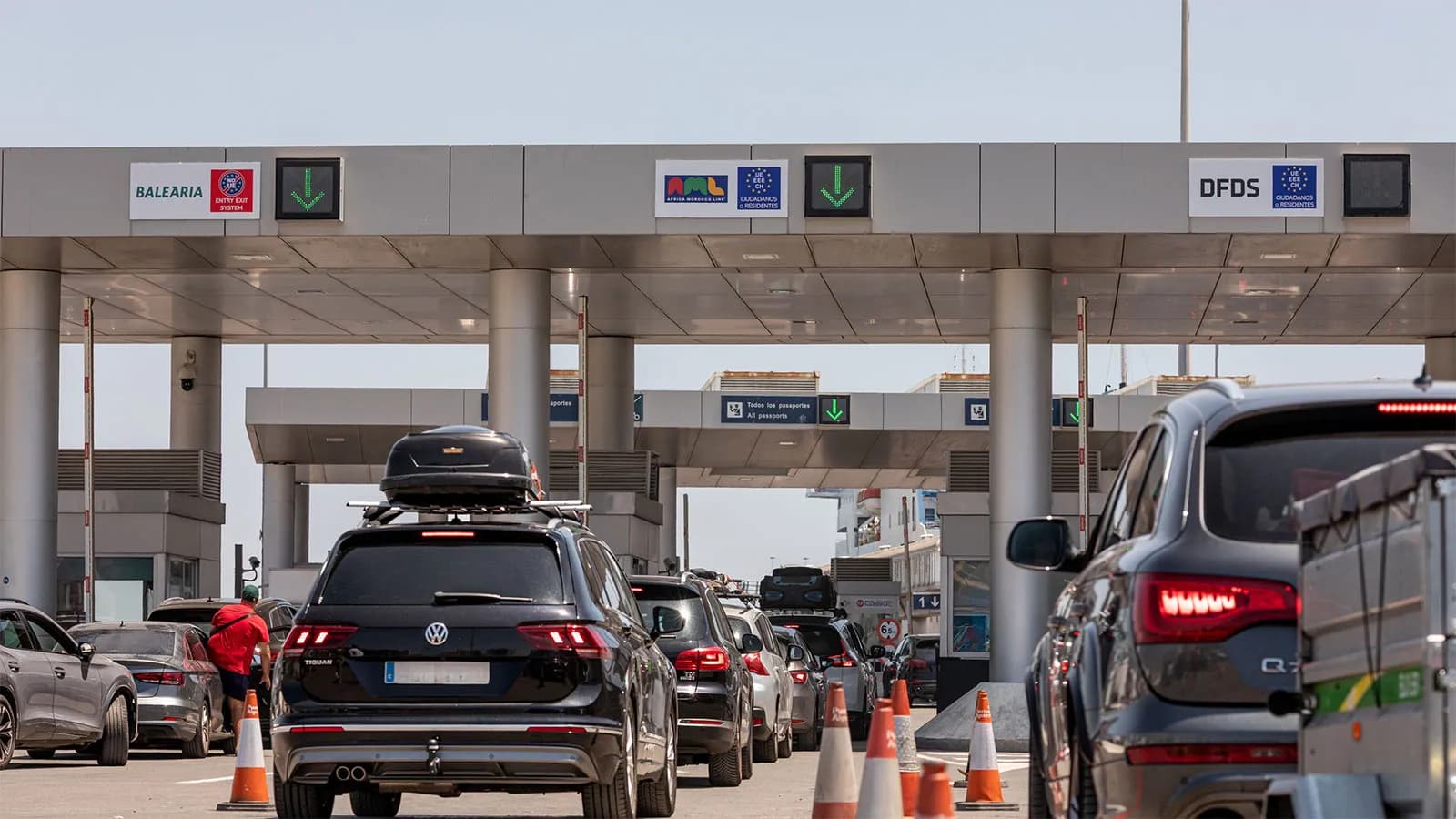
Operational efficiency occupies a relevant place in the strategy. The APBA proposes agile, advanced, coordinated port operations based on reliable predictions and prescriptions in real-time. The goal is to enhance efficiency in the key areas of the port, reduce waits and downtime, improve the traceability of operations, decrease congestion caused by heavy traffic, increase the efficiency of port and commercial services, expedite border controls and inspections, and establish a new governance model for Algeciras-Tangier Med road traffic.
This vision of a more agile port involves more precise coordination between the agents involved in the logistics chain. Terminals, shipping companies, transporters, port services, administrations, and operators require reliable information and systems capable of anticipating needs. Technology appears as support for ordering flows, managing data, and reducing inefficiencies, but the plan links that digitalization to a real improvement in service.
Proactive environmental management constitutes a main centerpiece of the plan. The APBA aims to preserve the natural environment, minimize resource consumption, reduce waste generation, and adapt the ports to climate change. The strategy includes updating environmental management tools, engaging concessionaires and service providers, monitoring environmental impact, protecting biodiversity, reducing the water footprint, and improving waste management.
The Bay of Algeciras is a space where port activity, industry, maritime traffic, urban environments, and environmental values coincide. The strategy recognizes this complexity and proposes integrated environmental management in port planning. Sustainability is not only associated with reducing emissions but also with biodiversity, resource consumption, waste management, climate adaptation, and monitoring the impact of activity.
The third strategic block addresses capacities and resources. In this area, the APBA aims to strengthen its internal management capacity through standardization and optimization of processes, consolidating a workforce aligned with needs, training, diversity, inclusion, and improving job satisfaction. The plan links the future of the ports not only to infrastructures but also to the internal capacity of the organization to execute the strategy.
The training of human capital appears as a necessary condition to tackle new technological, environmental, and operational challenges. The plan includes training the staff in new technologies and promoting an organization prepared to work with digital systems, data, management methodologies, and more coordinated processes. The strategy also incorporates labor inclusion and diversity as part of the APBA's social commitment.
Digital infrastructure is another foundation of the plan. The Port Authority aims to consolidate a robust, secure, and scalable technological platform, endowed with sufficient resources to expedite the digital transformation of the APBA and its port community. This line includes developing advanced technological infrastructure, a TI governance framework, resource availability, and digitalizing information related to port infrastructures and assets.
Digitalization has a transversal role. It correlates with real-time operations, traceability, security, coordination with the port community, administrative management, infrastructure maintenance, and the capacity to anticipate needs. In a port of the scale and complexity of Algeciras, the efficient use of information can have a direct impact on productivity, reliability, and service quality.
The development of new port infrastructures is proposed under criteria linking demand and supply, and with a proactive reduction of environmental impact. The plan includes the approval of new Master Plans and the commissioning of actions considered strategic. Among the goals is the Maritime Lake of Algeciras by 2027, the new maritime station of Algeciras, and the berths at La Galera by 2032, and Phase B of the Isla Verde Exterior container terminal by 2030.
Phase B of Isla Verde Exterior is linked to the future capacity of the port in container traffic. Algeciras maintains a relevant position in major international maritime routes and requires infrastructures adapted to the needs of shipping companies and terminals. The planning of this phase is included in the strategy of competitive growth and the need to organize port supply according to evolving demand.
The new maritime station of Algeciras and the berths of La Galera are part of the planning associated with passenger and vehicle traffic. The maritime connection with Morocco is an essential activity for the ports managed by the APBA, and the plan includes actions aimed at improving operational capacity, organizing flows, and the quality of service.
Rail intermodality acquires a specific role within the strategy. The plan aims to promote intermodal transport chains to improve the port's competitiveness in import-export traffic and maximize its operational and environmental efficiency. Among the included actions are the expansion of the railway terminals of the port T1 and T2, the increase of railway container traffic, and the commissioning of the Algeciras-Zaragoza rail highway in 2028.
The railway is presented as a tool to expand the port's logistical projection into the peninsular and European interior. Improving land connectivity would strengthen import-export traffic, reduce logistics costs, and improve the environmental efficiency of transport chains. For Algeciras, railway development is one of the necessary conditions to complement its role as a major international maritime node with greater land connection capacity.
The energy transition occupies one of the most relevant spaces of the Strategic Plan. The APBA aims to maintain its commitment to the decarbonization of transport and promote the port as a Green Energy Hub reference in the Mediterranean. This line includes energy efficiency, renewable energy production, electrification of port activity, low-carbon alternative fuels, and the development of projects linked to new energy supplies.
The Strategic Plan includes specific targets regarding emission reduction. The APBA aims to reduce by 2030 70% of greenhouse gas emissions associated with its direct and indirect activity in scopes 1 and 2 of the GHG Protocol, using 2019 as a reference. It also contemplates a 50% reduction of emissions included in scope 3 of the GHG Protocol of the ports managed by the APBA, using 2018 as a reference. These targets are part of a broader strategy of electrification, energy efficiency, and adaptation to new fuels.
The launch of a 100% electric ferry service between Tarifa and Tangier Ville in 2027 is among the goals of the plan. This action is part of the strategy for decarbonizing maritime traffic and Tarifa's role as a connection port with Morocco. The initiative combines maritime mobility, energy transition, and service improvement on one of the relevant routes of the Strait.
The Green Energy Hub Algeciras Bay appears as one of the energy investments of the Strategic Plan. Planning contemplates the realization, by 2030, of a committed investment of 3 billion euros in the production and storage of new fuels in the municipalities of the Bay. The strategy aims to position the port environment as a platform for new fuels, energy supply to ships, and logistic chains associated with decarbonization.
The plan also considers multiplying the supply of LNG and bio-LNG, as well as enabling new fuels like methanol and ammonia before 2030. These actions respond to the change that international maritime transport is undergoing, where shipping companies and operators must adapt their fleets and operations to new environmental demands. The capacity to offer supply alternatives can influence the competitive position of ports in the coming years.
The Strategic Plan also incorporates goals related to the growth of specific traffics. Among them are 875,000 TEUs of import-export containers and 4.6 million TEUs of transshipment by 2030, as well as 800,000 units of rolling traffic that same year. The plan also aims to achieve 10 cruise calls in 2030, within the line directed at boosting this sector.
The new planning aligns with the Strategic Framework of the Port System of General Interest, the mandatory reference guide from Ports of the State for the planning of the 46 Spanish ports of general interest, and with the European Ports Strategy presented in March 2026, recognizing the role of ports as strategic infrastructures by concentrating around 74% of community foreign trade. With dated goals and monitoring indicators, the degree of compliance with the plan will be the real thermometer of the ambition presented this Thursday before the Campo de Gibraltar.
The Strategic Plan 2030 with a vision for 2040 proposes, ultimately, an ordered transformation of the ports of Algeciras and Tarifa. The APBA seeks to maintain its role in international maritime routes, improve the competitiveness of its operations, increase land connectivity, develop new infrastructures, accelerate the energy transition, strengthen its digital capacity, improve environmental management, and expand its relationship with citizens.