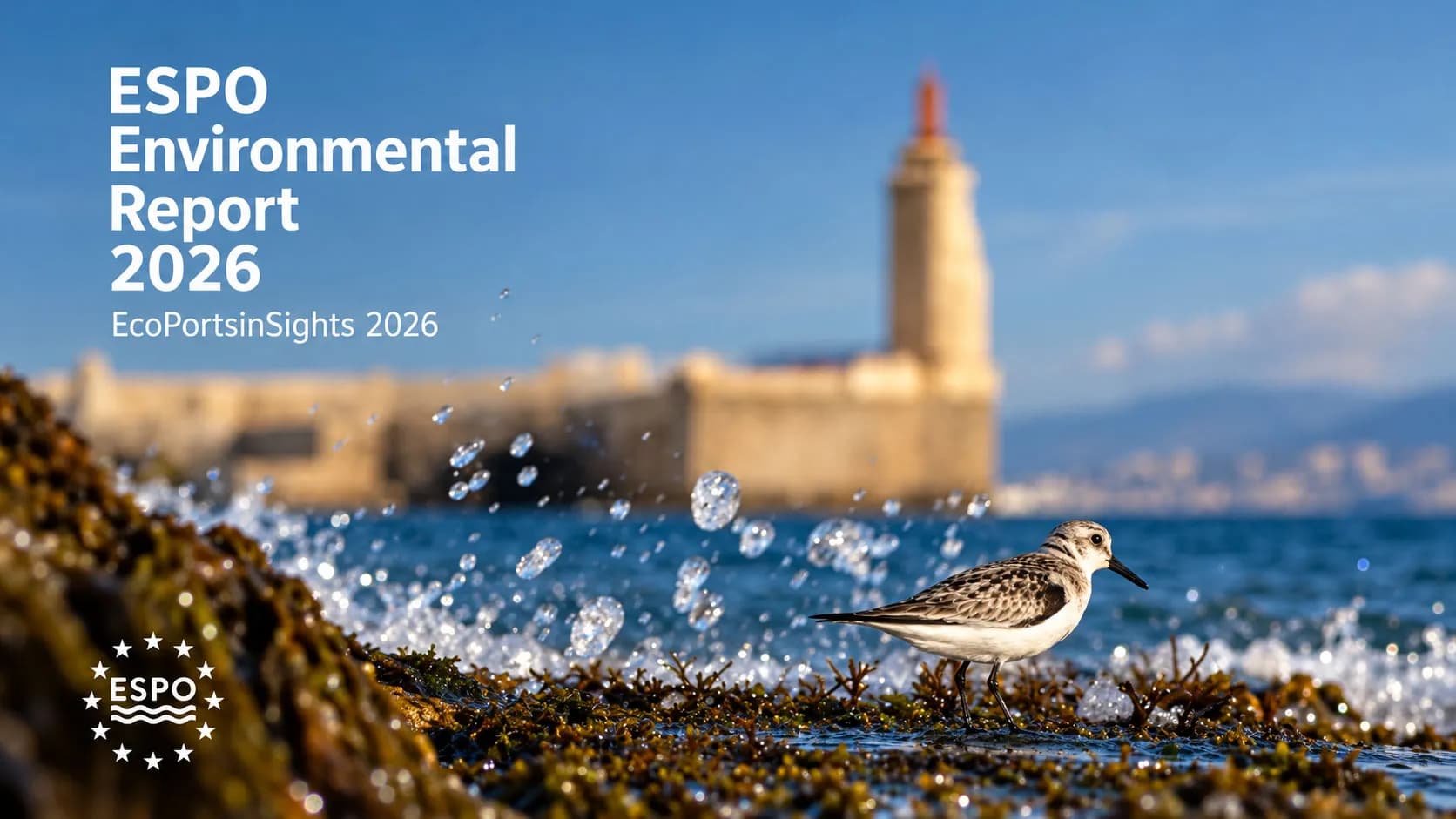
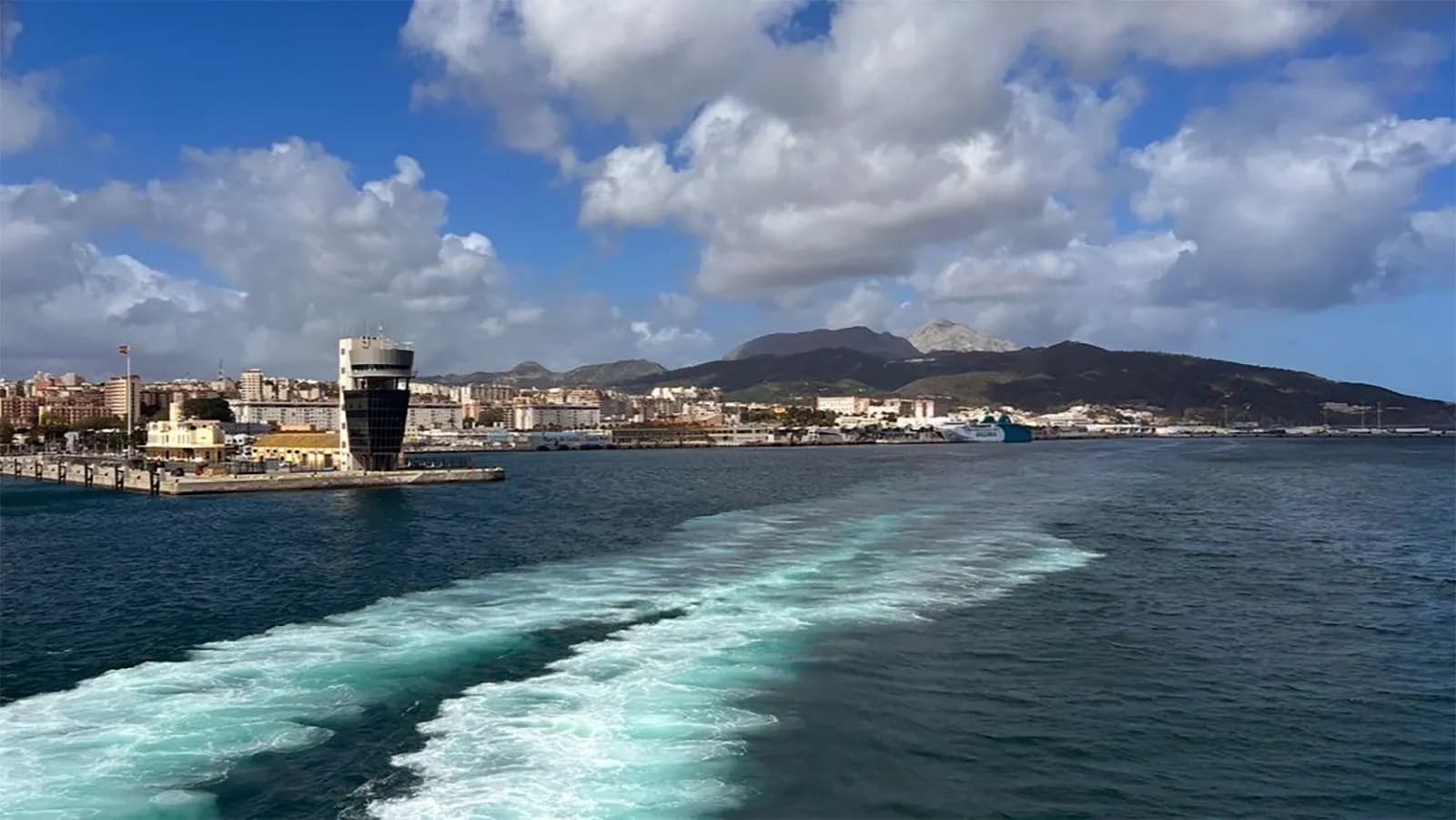
A photograph of the Port of Tarifa features on the cover of the 2026 environmental report of European ports
ESPO selects a prize-winning photograph from the environmental competition of the Port Authority of Algeciras, whose president, Gerardo Landaluce, holds one of the vice-presidencies of the European organization
A photograph of the Port of Tarifa illustrates the cover of the Environmental Report 2026 of the European Sea Ports Organization (ESPO), presented this Thursday during the GreenPort congress held in Portsmouth, United Kingdom. The publication, called EcoPortsinSights 2026, analyzes the environmental management of 73 ports in 17 European countries and collects the evolution of sustainability policies, emission reductions, adaptation to climate change, and the implementation of new energy technologies in the port sector.
The selected image corresponds to a vertical format adaptation of the photograph "Three-toed Sandpiper (White Sandpiper)", by Gabriella Barok, awarded first prize in category B, corresponding to the Tarifa area, in the I Environmental Photography Competition "Port and Nature: Bay of Algeciras and Tarifa", organized in 2024 by the Port Authority of the Bay of Algeciras (APBA).
This competition was held within the framework of the Green Strategy of the port institution, with the aim of showcasing the interaction of the ports of Algeciras and Tarifa with their respective natural surroundings and raising awareness of the terrestrial and underwater biodiversity of both areas.
The European publication explicitly identifies the source of the photograph in its credits, where it lists the author's name, the Port of Tarifa as the location, and its recognition in the competition organized by the APBA. The choice of this image incorporates an environmental initiative developed in the Campo de Gibraltar into the annual report of ESPO on the environmental management of European ports.
The Port Authority of the Bay of Algeciras has stated that the use of this photograph contributes to the European projection of the ports it manages and is part of its participation in ESPO. The president of the APBA, Gerardo Landaluce, has held one of the vice-presidencies of this organization since November 2024, when he was elected by its General Assembly along with the French representative Cédric Virciglio. The presidency corresponds to Ansis Zeltiņš, head of the Port of Riga.
ESPO represents the interests of European port authorities before community institutions and participates in the analysis and development of proposals related to port policy, maritime transport, infrastructure, competitiveness, and sustainability.
In addition to the presence of the Port of Tarifa on the cover, the Port Authority of the Bay of Algeciras is listed in the annex of the report among the entities that have the EcoPorts PERS environmental certification (Port Environmental Review System), a management system developed specifically for the port sector.
This certification allows evaluating the procedures, policies, and environmental actions of port authorities through a review system adapted to the characteristics of these facilities. The list published by ESPO also includes other Spanish port authorities, including those of Valencia, Barcelona, Castellón, Santander, Vigo, Tarragona, Huelva, Sevilla, Málaga, Ceuta and Melilla.
Regarding the sample used to prepare the report, Spain is the country with the highest representation, having 18 ports that account for 24.7% of the participants. It is followed by Germany, with eleven facilities, and the Netherlands and the United Kingdom, with seven each. The document presents aggregated indicators of the set of analyzed European ports, without offering individualized results for Algeciras and Tarifa.
The study, prepared based on information collected through the EcoPorts environmental self-diagnosis system, examines the degree of implementation of sustainability policies and procedures in port authorities. According to its results, 97% of participating ports have a defined environmental policy, 99% have established improvement objectives, and 95% have monitoring programs for their environmental performance.
Furthermore, 77% of the facilities have some form of environmental management certification, such as ISO 14001, EMAS, or PERS, while 85% publish accessible environmental information to the public. This last indicator reaches its highest percentage since the beginning of the historical series recorded by ESPO.
The general environmental management index, which integrates ten indicators related to the planning, organization, and monitoring of environmental policies, stands at 8.51 points out of ten, compared to 8.67 recorded in 2025. The report warns that year-on-year comparisons should be interpreted considering variations in the number and characteristics of participating ports.
Climate change continues to be the main environmental concern of European ports for the fifth consecutive year, followed by air quality and energy efficiency. Noise ranks fourth among the identified priorities, while relations with local communities move to fifth place.
The analysis also examines the measures that port authorities are adopting in response to the effects of climate change. 70% of participants report having experienced operational difficulties that could be related to climate phenomena, while 79% have introduced actions aimed at improving the adaptability of their existing infrastructure.
In the case of new port developments, 89% incorporate climate adaptation criteria during planning. Simultaneously, 85% of participating port authorities have set their own greenhouse gas emission reduction targets, compared to 80% recorded in the previous year.
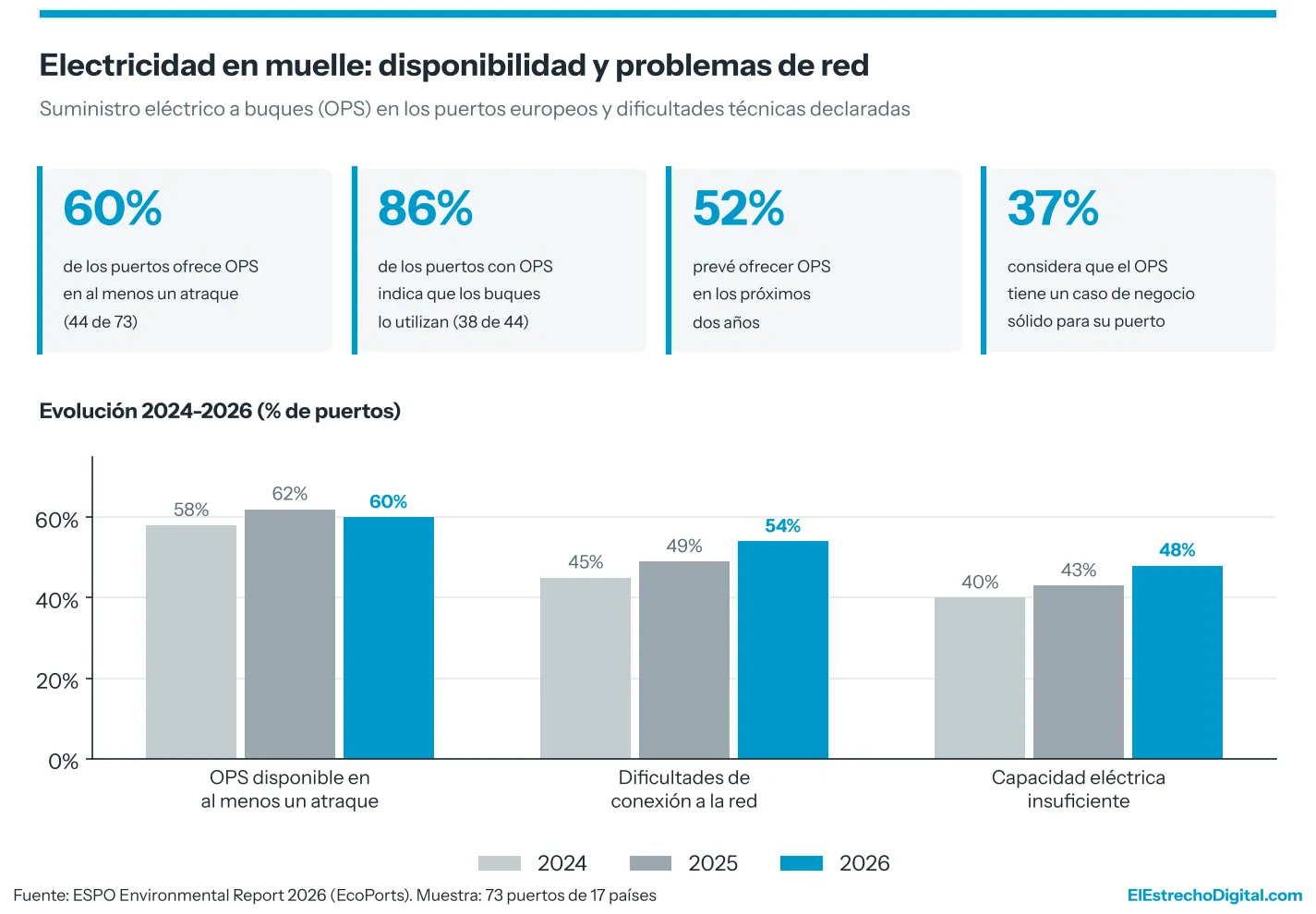
Another area examined is the electrification of port facilities. 60% of the analyzed ports have electrical supply systems for ships from shore (OPS) at least at one of their berths. Among those that have this technology, 55% offer high voltage installations and 98% use fixed systems.
However, the report identifies difficulties in the implementation of these infrastructures, especially those related to access to electrical networks and the availability of power. 54% of ports report network connection problems, while 48% indicate limitations in electrical capacity.
Regarding the supply of alternative marine fuels, 52% of participating facilities have liquefied natural gas (LNG) refueling services. The publication also includes projects related to hydrogen, biofuels, ammonia, and synthetic fuels, distinguishing initiatives under development from those that are already operational.
The report also notes an increase in the application of differentiated port fees according to the environmental behavior of ships. The percentage of ports using these mechanisms reaches 70%, compared to 61% in the previous year. The reduction of greenhouse gas emissions is the most used criterion among port authorities applying these fees.
Concerning land transport, 93% of participating ports have electric vehicle charging infrastructure for cars and/or trucks, while 10% report having hydrogen refueling stations for heavy vehicles.
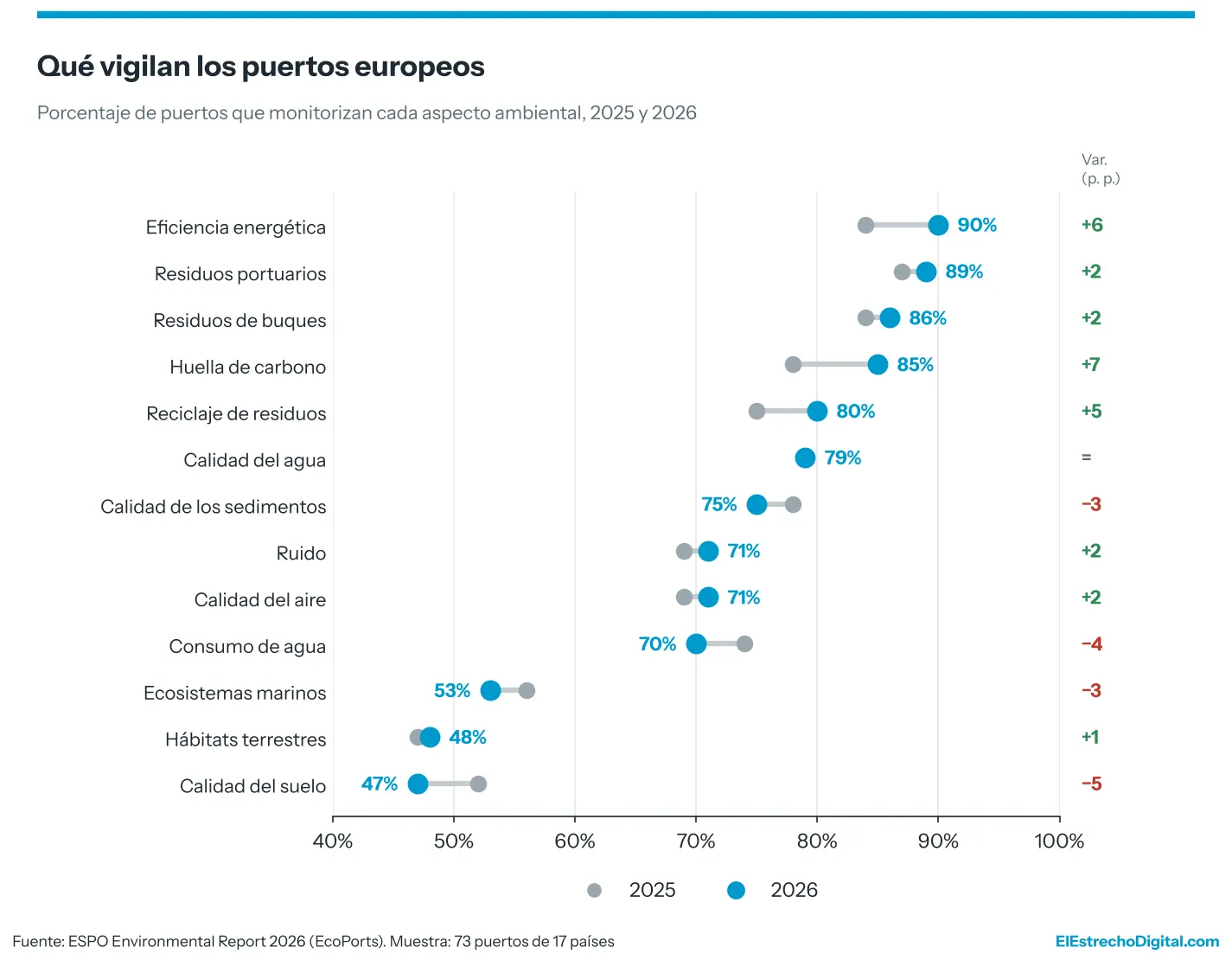
The monitoring of various environmental indicators constitutes another section of the publication. The control of energy efficiency reaches 90% of ports, while the monitoring of waste generated in port facilities stands at 89%, and the carbon footprint at 85%.
In contrast, the percentage of ports that monitor marine ecosystems stands at 53%, compared to 56% in 2025. Monitoring of soil quality also decreases, from 52% to 47%.
The 2026 edition incorporates recommendations addressed to European institutions and national, regional, and local administrations. The addressed topics include the planning of electrical networks, financing infrastructure for alternative fuels, climate change adaptation, and improving environmental information collection systems.
The document also examines the relationship of port authorities with the communities in their surroundings, an issue that gains more weight in this year's environmental priority ranking, along with noise management, air quality, waste, and the effects of port activities on ecosystems.
Newsletter
The maritime briefing, every morning at 8:00
Ports, logistics and shipping essentials in your inbox, Monday to Friday, before the day starts.