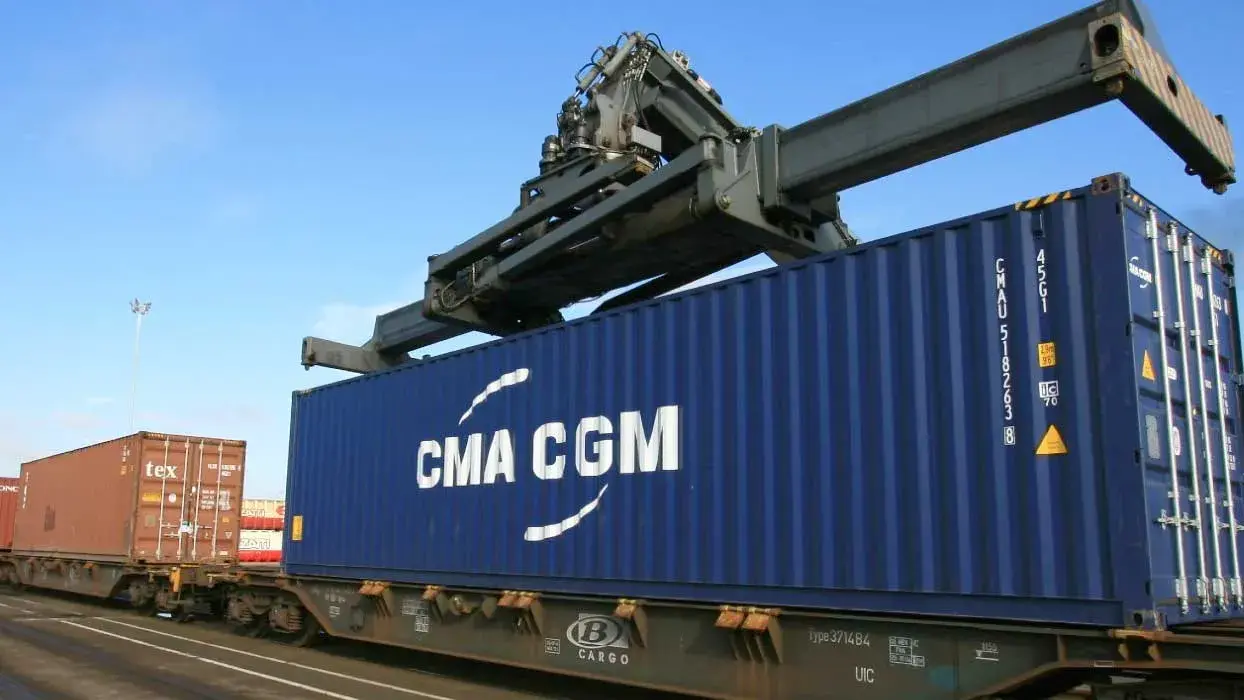
The French shipping company CMA CGM will apply an extraordinary fuel surcharge on all containers loaded in its services starting August 1st, with amounts ranging from 65 to 145 euros per TEU depending on the type of container and the direction of traffic. The company justifies the measure due to the rise in fuel prices recorded after the new military escalation in the Strait of Ormuz.
The new Emergency Fuel Surcharge (EFS) will reach 130 euros per TEU for dry containers and 145 euros for refrigerated ones on the main long-distance routes, known in the industry as head hauls. Converted to dollars, the amounts rise to 150 and 165 dollars per container, respectively. For long-distance return routes and intraregional traffic, the surcharge will be reduced to 65 euros for dry containers and 80 euros for reefers.
CMA CGM has noted that the fee will come into effect for all containers loaded from August 1, 2026, and will remain active until further notice, except in markets where it must first undergo the appropriate regulatory procedures. The company has not set a date for its elimination.
The shipping company has linked the measure to the sharp increase in marine fuel costs recorded in recent days, after the resumption of hostilities in the Persian Gulf interrupted the price decline observed during the previous weeks. The increase affects fuel supply in all regions and trade lanes, not just the routes directly crossing the Middle East, due to the global functioning of the marine fuel market, itinerary changes, and additional supply needs.
The move replicates the mechanism that the shipping company activated in March, when the outbreak of war in the Middle East triggered a rapid rise in fuel prices and disruptions to shipping routes. CMA CGM withdrew that surcharge after the price of oil and marine fuels began to moderate. The new deterioration in security in Ormuz has forced the recovery of the fee.
The difference between dry and refrigerated containers takes on special relevance for the fishing sector. Reefer units need to maintain the cold chain throughout the journey and consume more energy, a circumstance that explains the application of higher surcharges. The new supplement will particularly affect importing and exporting companies of fish, seafood, and aquaculture products that depend on refrigerated maritime transport to connect the main production centers with European markets.
Imports of frozen fish, cephalopods, crustaceans, and aquaculture products from Asia, the Middle East, Africa, and Latin America hold the most weight within this flow. European exporters using refrigerated containers to send seafood to international markets will also bear the surcharge, which adds to the high energy costs and greater sustainability demands already faced by these companies.
Although the surcharge is calculated per TEU, its final impact may be passed on to the logistics prices of each operation and ultimately to the cost of the merchandise. The magnitude of the impact will depend on the duration of the escalation and the evolution of fuel prices. If tensions decrease and energy markets stabilize, CMA CGM could withdraw the surcharge again.
The Strait of Ormuz continues to be one of the main strategic points for global energy transport. Any threat to commercial navigation, ports, or oil facilities in the area quickly impacts international crude oil, gas, and fuel markets used by the merchant marine.
The tensions in Ormuz add to an already logistically conditioned situation due to disruptions in the Red Sea and the use of longer routes to avoid areas deemed risky. Detours increase navigation days, fuel consumption, personnel costs, and the need to have more vessels to maintain the frequencies of regular services. The combination of both fronts maintains pressure on global supply chains.
The decision by the French shipping company could be followed by other large international operators if the increase in fuel prices persists. In previous crises, major container shipping groups adopted similar measures to pass on part of their higher operating costs to shippers.
CMA CGM argues that the volatility of the energy market prevents it from absorbing the increase in costs internally and that the surcharge is necessary to maintain the regularity and reliability of its services. The duration of the measure will depend on the evolution of fuel prices and security on the routes affected by the military escalation.