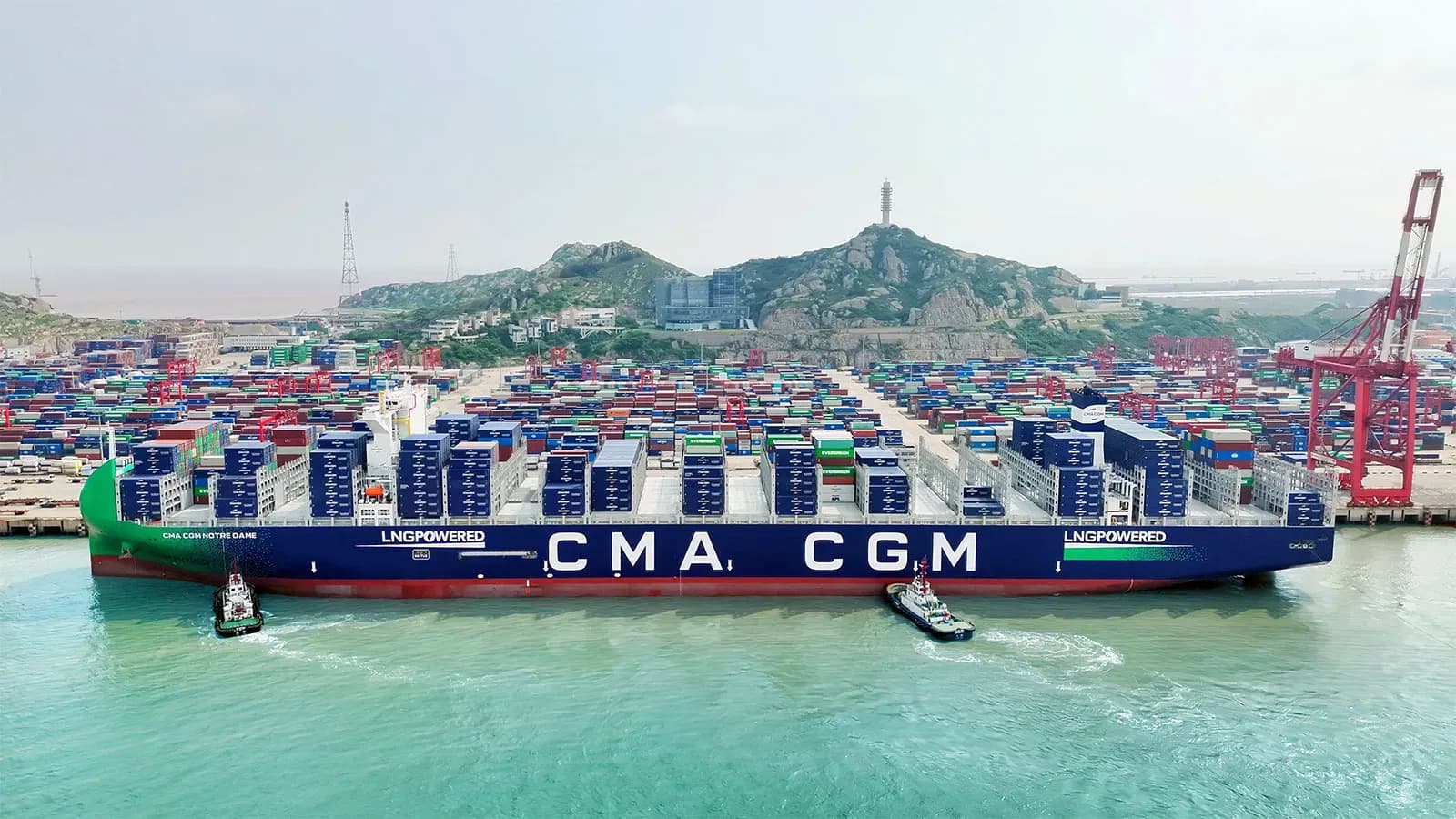
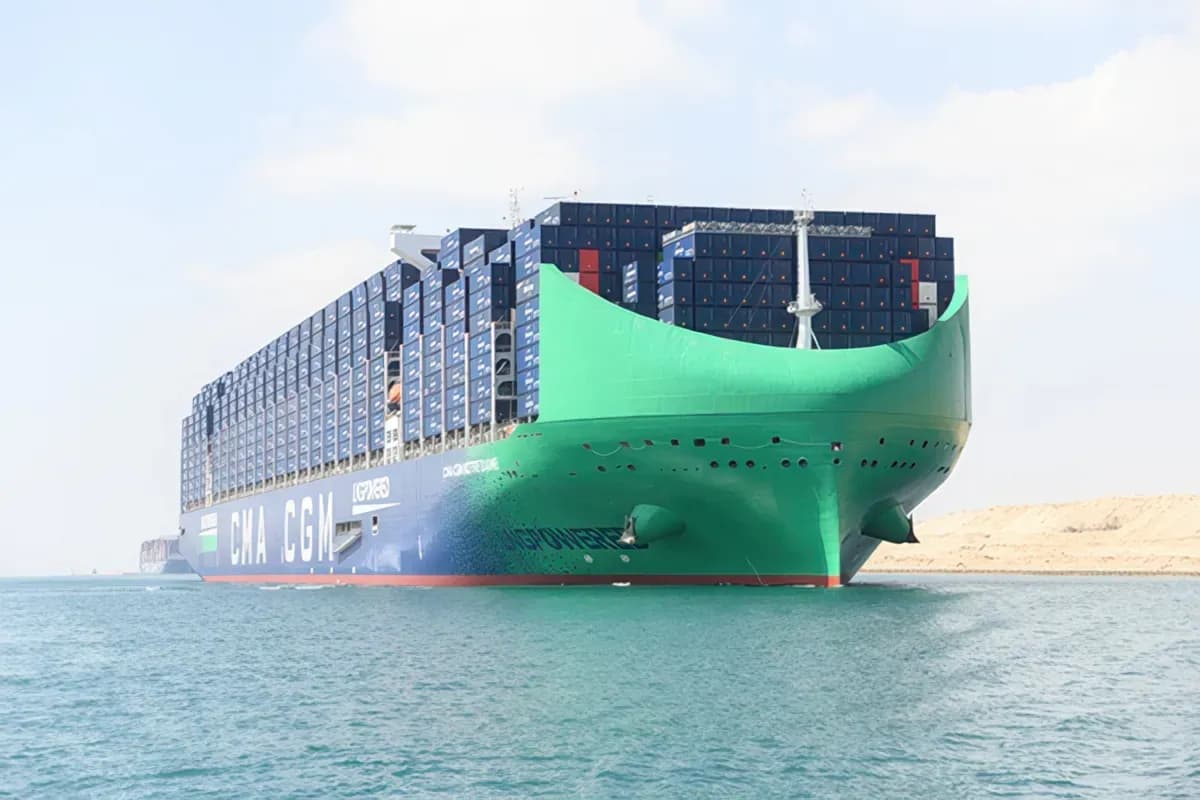
The CMA CGM Group has received the CMA CGM Notre Dame, a next-generation container ship powered by liquefied natural gas and considered the largest vessel of its kind currently operating under the French flag. The unit is the first of a series of ten 24,212 TEU vessels powered by LNG that will sail under the French flag.
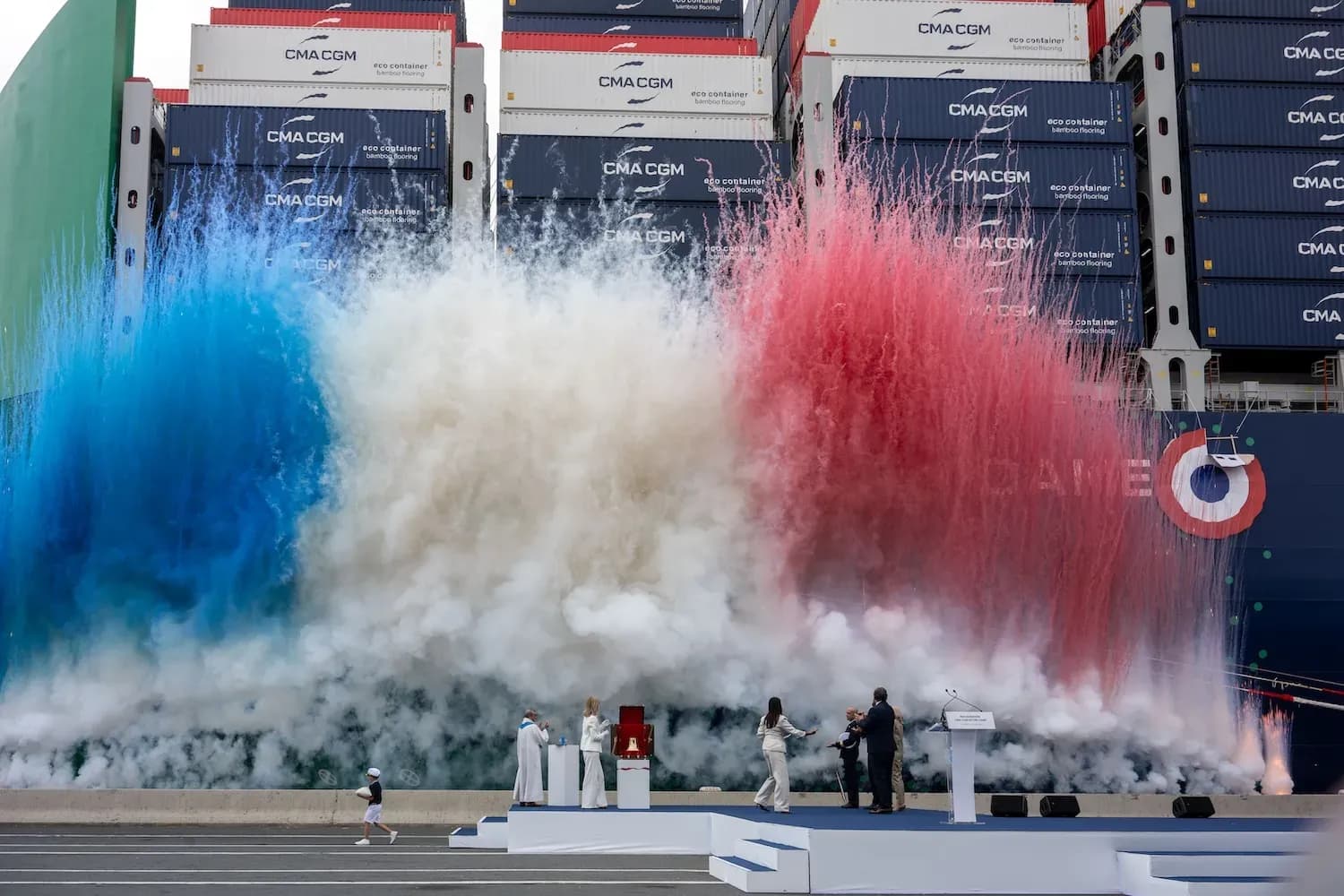
The vessel has initiated its first commercial voyage in Shanghai, China, ahead of its arrival in France and the rest of Europe in early July. Its naming ceremony is scheduled in Le Havre on July 2, one of the ports included in the service rotation in which it will be deployed.
The CMA CGM Notre Dame joins the French Asia Line, known as FAL, one of the group's strategic services, connecting Asia with Northern Europe. This line links some of the main ports of international maritime trade, including Ningbo, Shanghai, Yantian, Singapore, Le Havre, Rotterdam, Hamburg, and Tangier Med. The complete rotation has an approximate duration of 102 days.
With a length of 400 meters, a beam of 62 meters, and a height of 75 meters, the new container ship is designed to carry up to 24,212 TEUs. Its dimensions place it among the largest capacity units in the global fleet and allow CMA CGM to increase its operational capacity on one of the most significant trade corridors between Asia and Europe.
The company places this delivery within its fleet modernization process and its strategy linked to the energy transition of maritime transport. The use of LNG is part of the solutions adopted by the group to reduce certain impacts associated with conventional navigation, in a context where shipping companies face greater regulatory and operational demands in environmental matters.
The CMA CGM Notre Dame incorporates artificial intelligence technologies, digital navigation, and energy efficiency aimed at improving the operational performance of the vessel. According to the company, these solutions are designed to optimize navigation management and support the progressive decarbonization of maritime transport.
The entry into service of this unit occurs at a time of growth in the global fleet of large container ships powered by alternative fuels. Leading international shipping companies are incorporating next-generation vessels to comply with emission reduction objectives, improve efficiency per container transported, and maintain service capacity on the most in-demand intercontinental routes.
The fact that the CMA CGM Notre Dame sails under the French flag also has a strategic dimension for the group. The series of ten 24,212 TEU vessels associated with this delivery is linked to the French flag, in a market segment dominated by large capacity units operating on long-haul services between the main Asian production centers and European markets.
The French Asia Line is one of CMA CGM's reference trade routes. Its calls at ports such as Ningbo, Shanghai, Yantian, and Singapore connect large industrial and logistical areas in Asia with European hubs like Le Havre, Rotterdam, and Hamburg. The inclusion of Tangier Med in the rotation also adds a Mediterranean transshipment and connection node with other regional services.
The arrival of the vessel in Le Havre in early July will formalize its integration into the fleet through the naming ceremony planned by the company. This French port is part of the main network of the FAL service and serves as one of the entry points for Asian goods into European markets.
With this delivery, CMA CGM adds capacity on a central route for global trade and maintains its investment line in large vessels equipped with digital technologies and alternative propulsion systems. The CMA CGM Notre Dame is thus integrated into the group’s strategy to combine operational growth, energy efficiency, and adaptation to new environmental requirements of international maritime transport.