Landaluce claims at the MEDPorts Forum the implementation of RTE-T projects to guarantee the land connection of Mediterranean ports with their hinterland
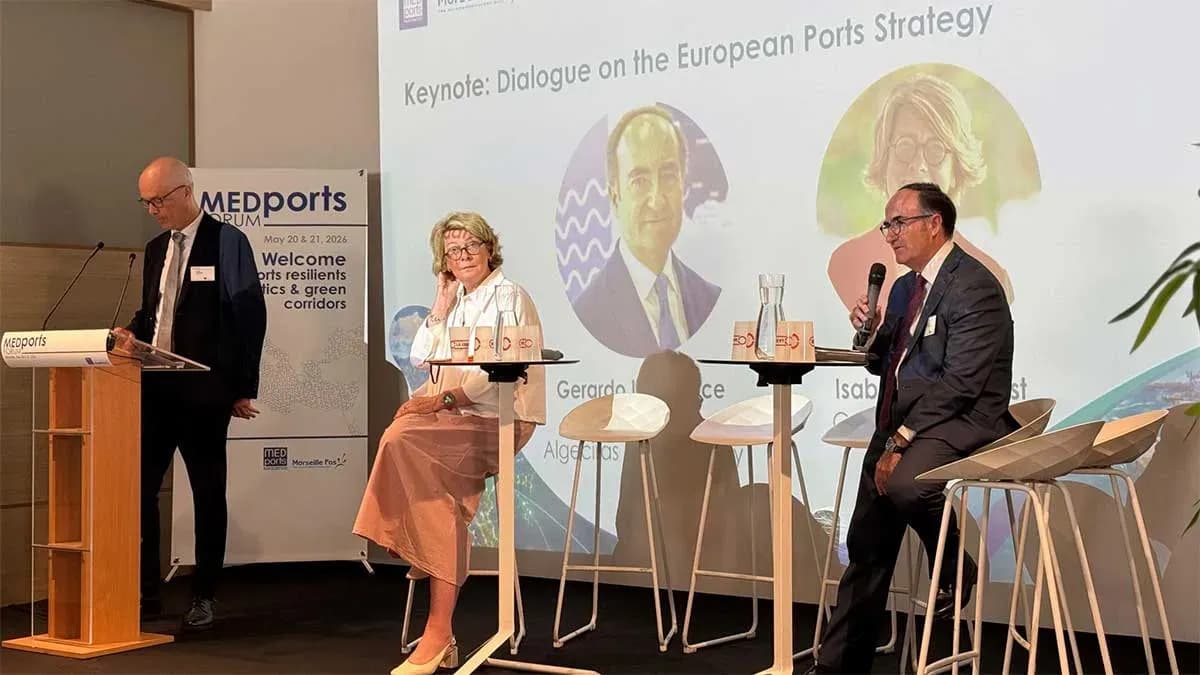
The president of the Port Authority of the Bay of Algeciras (APBA), Gerardo Landaluce, has conveyed to the MEDPorts Forum 2026, held on May 20 and 21 in Marseille with the Port of Marseille Fos.
The president of the Port Authority of the Bay of Algeciras (APBA), Gerardo Landaluce, has conveyed to the MEDPorts Forum 2026, held on May 20 and 21 in Marseille with the Port of Marseille Fos as host, a message focused on the need for Mediterranean ports to have the appropriate conditions to attract private investment as a way to consolidate logistics chains capable of facing the current context of geopolitical uncertainty. Landaluce, who participates in the association as vice president, intervened in a joint dialogue with the Secretary General of the European Sea Ports Organization (ESPO), Isabelle Ryckbost, dedicated to analyzing the new EU Port Strategy adopted by the European Commission on March 4.
«To have resilient logistics chains, ports must be attractive to attract private investments; for this, the implementation of RTE-T projects that improve the land connection of ports with their hinterland is necessary,» Landaluce explained during his intervention. The reference to the Trans-European Transport Network (RTE-T) directly points to one of the deficits that affects several ports in southern Europe, where railway and road connectivity with the major continental markets remains a pending issue.
The forum, organized under the theme «Resilient Logistics and Green Corridors», has brought together representatives from port authorities, international organizations, energy sector companies, and logistics actors from all shores of the Mediterranean. The MEDPorts association, created in 2018, currently groups more than 30 port authorities and four training centers from countries such as Spain, France, Italy, Morocco, Tunisia, Greece, Slovenia, Croatia, Malta, Lebanon, Egypt, and Mauritania, among others. Its members represent approximately 70% of cargo traffic and 90% of passenger traffic in the Mediterranean basin.
During the exchange with Ryckbost, Landaluce addressed several key issues for the European port sector. Among the main messages from the APBA president was the consideration that Mediterranean ports play an essential role in the development of the external policies of the European Union, a function that, in his view, must be accompanied by an appropriate regulatory and financial framework. In this line, the vice president of MEDPorts demanded the need to have the same playing rules for all operators and suggested taking advantage of the review of the EU maritime ETS system to precisely define its scope of application, a request shared by numerous community port authorities concerned about the possible loss of competitiveness against ports in non-EU countries.
Landaluce also pointed out that the path towards decarbonizing maritime transport must not compromise the competitiveness of European ports and emphasized the importance of articulating community financial support. At this point, the data from the ESPO Port Investment Study of 2024, prepared by Professor Peter de Langen, estimates the investment needs of European ports at 80 billion euros for the next decade, a volume that reflects the expansion of the role of these infrastructures, which have transitioned from being logistics nodes to also becoming facilitators of energy transition, circular economy, and geoeconomic resilience.
For his part, Luis Núñez participated in a round table on green and digital maritime corridors in which he defended public-private collaboration as a model for materializing the energy transition of maritime transport. The strategy manager of the APBA cited two concrete initiatives in which the Port of Algeciras is directly involved.
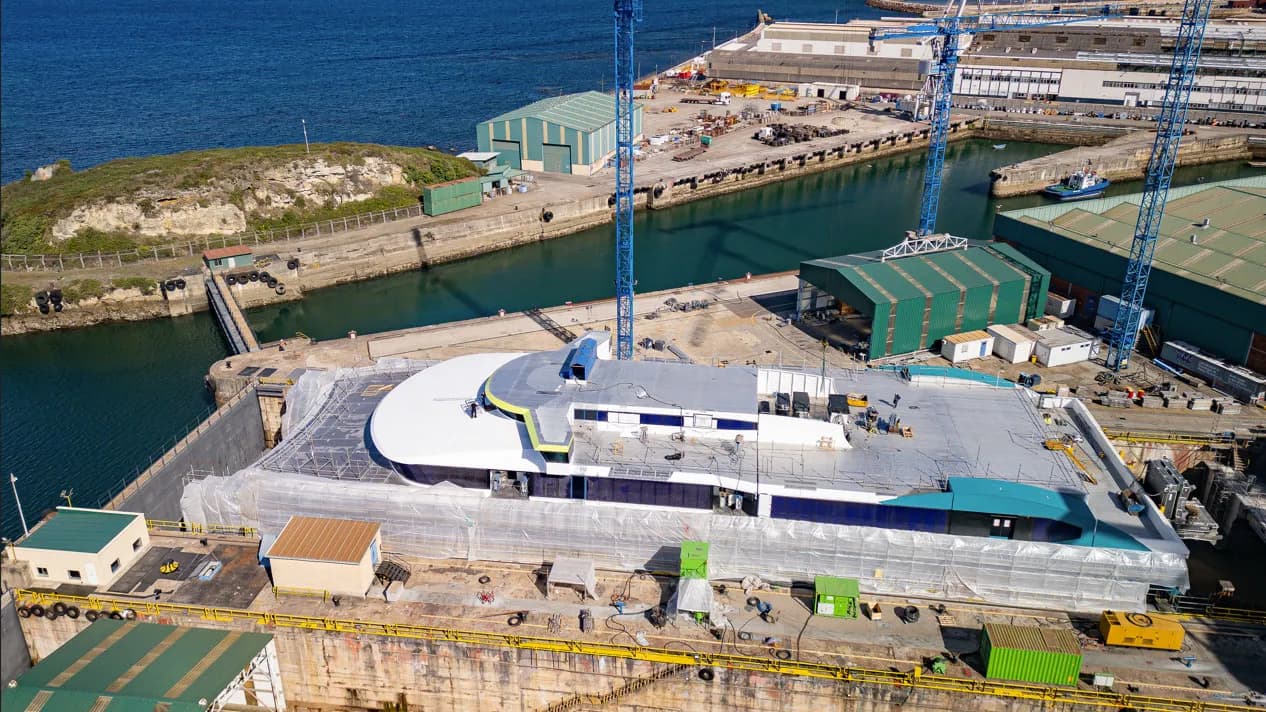
The first is the intercontinental green maritime line between Tarifa and Tangier City, a public-private project awarded to Baleària at the end of 2024 after the competition convened by the APBA, where technical and environmental criteria had more weight than economic ones. Baleària is building two 100% electric fast ferries with zero emissions at Astilleros Armón (Gijón), with a power of 16 MW and 13,000 kWh batteries, capacity for 804 passengers and 225 vehicles, and a maximum speed of 26 knots. The twin catamarans will cover the 18 nautical miles that separate both ports exclusively with electric energy starting in 2027, which will make the route the first green maritime corridor between Europe and Africa. The project also includes the electrification of the ports of Tarifa and Tangier City, with 8 MWh storage batteries and fast charging systems using autonomous robotic arms that will allow charging the batteries in about 40 minutes during stops.
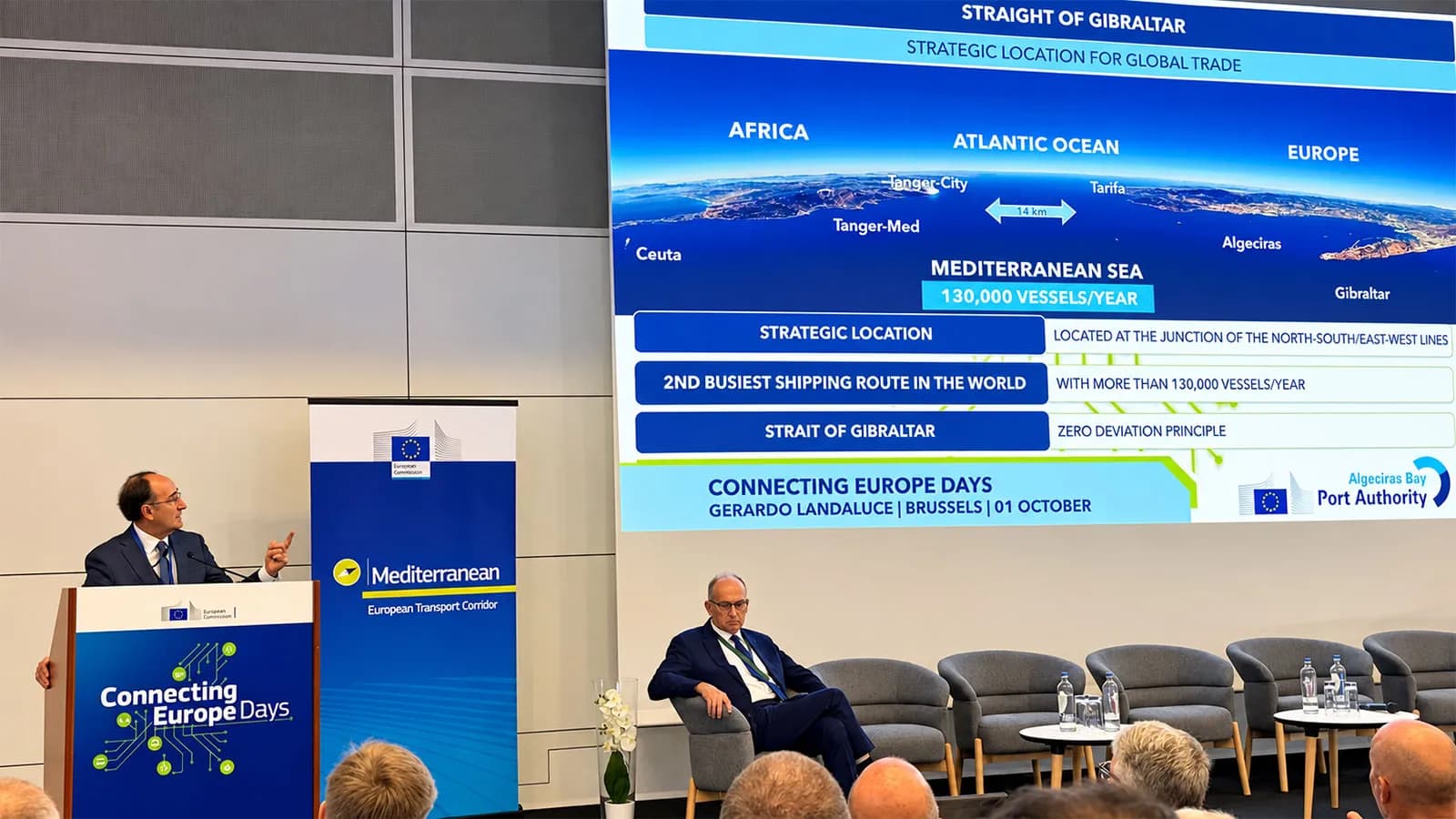
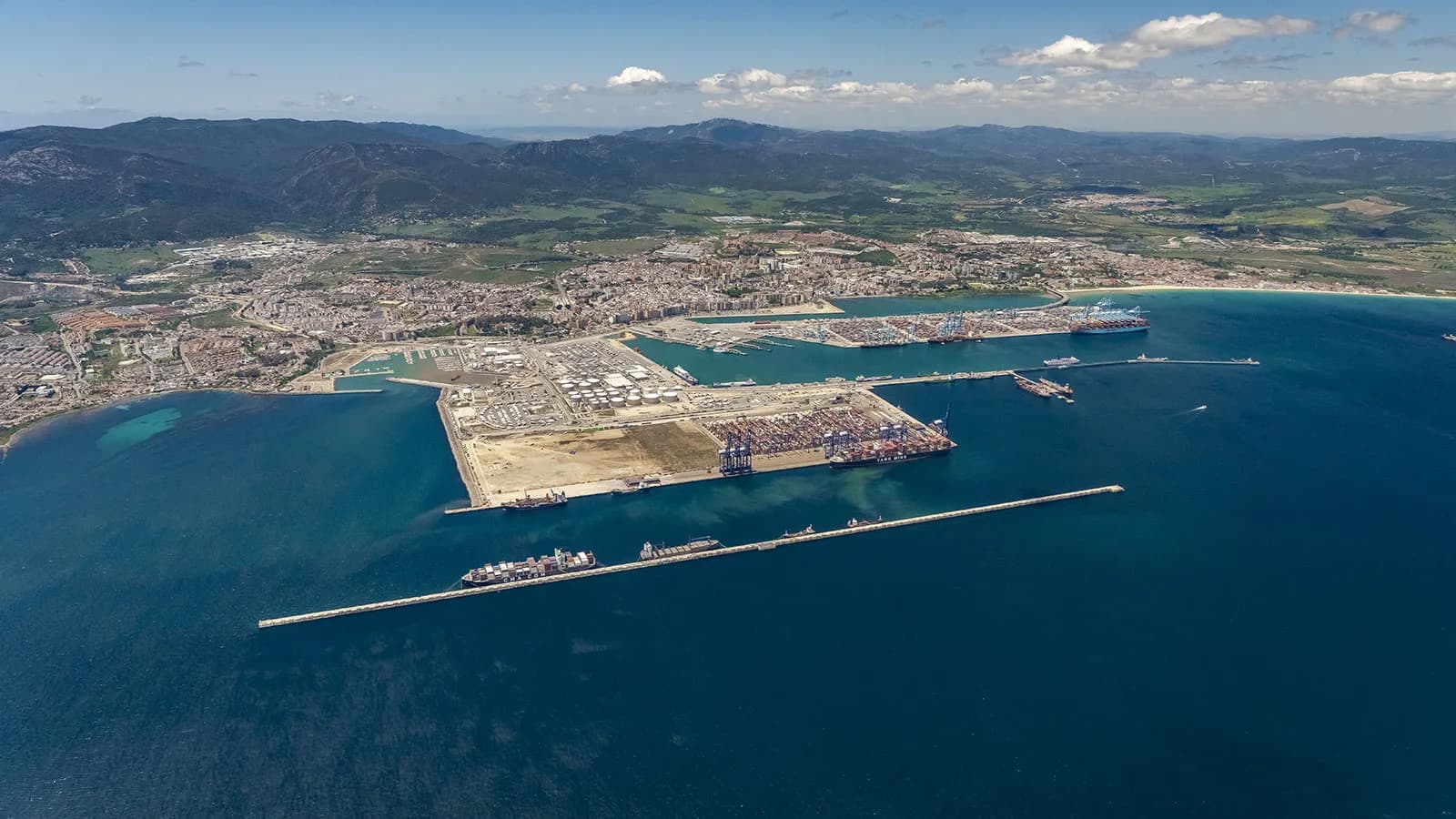
The second initiative presented by Núñez is the Green and Digital Corridor between Panama and the Port of Algeciras, formalized in October 2025 through a Memorandum of Understanding signed in Brussels within the framework of the Global Gateway Forum. The project, which connects two of the most strategic enclaves of global maritime trade —the Panama Canal and the Strait of Gibraltar— aims to decarbonize container traffic on this transoceanic route by implementing alternative fuels such as biofuels, e-methanol, and ammonia, developing electrical connections for vessels (OPS), and digitizing logistics. The feasibility study estimates an annual saving of 800,000 tons of CO₂. The APBA presented advancements of this project at the EU-Central America Forum held in Panama City last March, along with a digital interoperability project between the Central American trade platform and the Port Community System of the Algeciras port.
The participation of the APBA in the MEDPorts Forum occurs in a context of increasing geopolitical uncertainty that has altered maritime routes in the Mediterranean, with the suspension of transits through the Strait of Hormuz and the Red Sea by various shipping companies. The ports integrated into MEDPorts represent 70% of the Mediterranean freight traffic and 90% of passenger traffic in the region. During the two days of the forum, the association's members shared their initiatives, concerns, and opportunities in light of the current geopolitical context, with the aim of strengthening logistics chains and the resilience of Mediterranean ports.
Newsletter
The maritime briefing, every morning at 8:00
Ports, logistics and shipping essentials in your inbox, Monday to Friday, before the day starts.