The average container freight rises by 12% in a week and reaches 2,553 dollars, its highest level since January
The price of container freights in the spot market has recorded a 12% increase in the last week, according to data published this Thursday, May 14, by the British consultancy Drewry. The index.
The price of container freights in the spot market has recorded a 12% increase in the last week, according to data published this Thursday, May 14, by the British consultancy Drewry. The World Container Index (WCI) stands at 2,553 dollars per 40-foot container (feu), a level not seen since early January when demand was constrained by advance bookings for the Chinese Lunar Year. The rise is due to the simultaneous increase in the main trans-Pacific routes and those between Asia and Europe, fueled by the introduction of surcharges by operators, capacity cuts, and a geopolitical context that continues to alter the dynamics of international maritime trade.
This is the first escalation of this magnitude in the average freight price since March 12, when the blockade of the Strait of Hormuz and the crisis in the Middle East caused a similar surge. With the prolongation of the conflict, freights had started to decrease in early April, although they already showed an initial sign of resurgence, more contained, between April 30 and May 7, when they rose from 2,216 dollars to 2,286 dollars per feu.
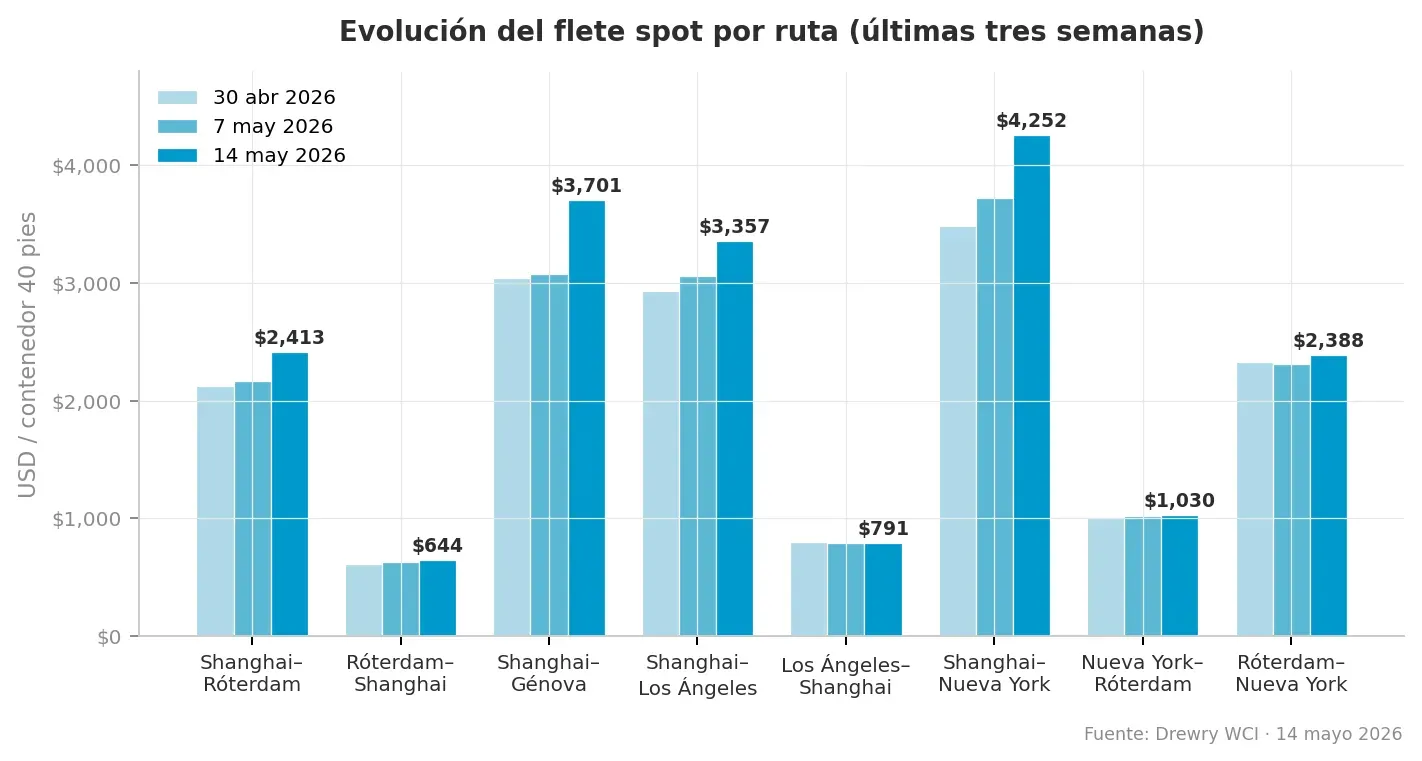
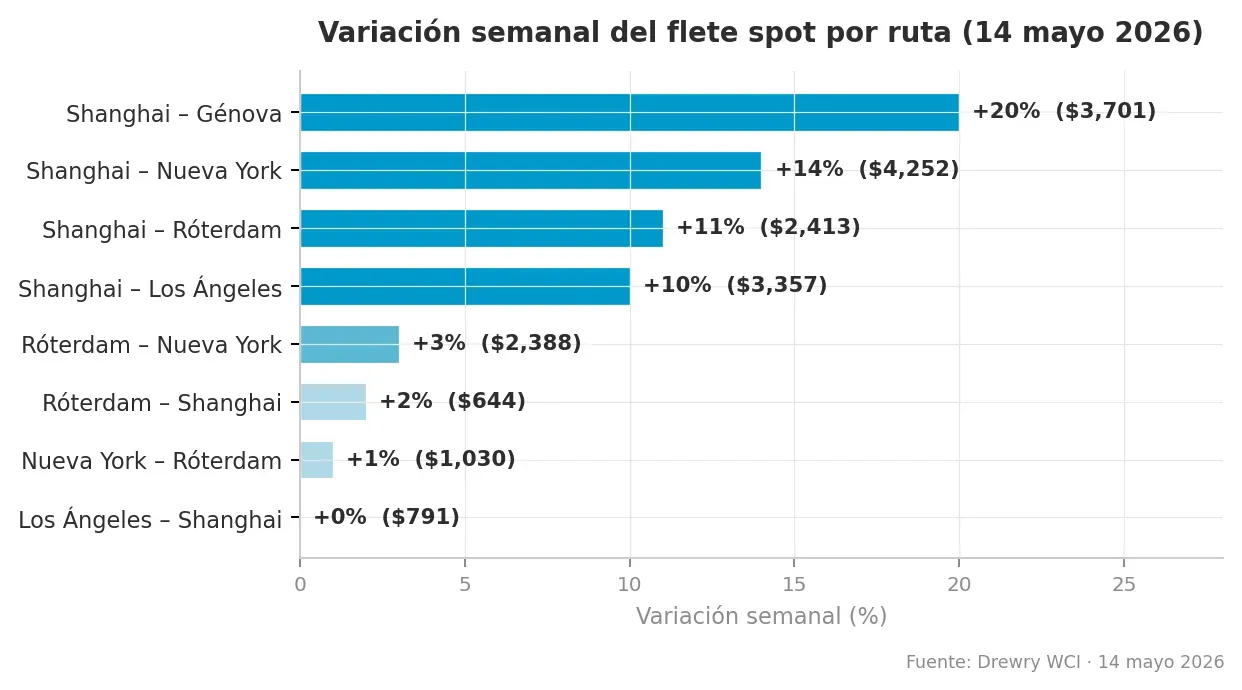
The connection between Asia and the Mediterranean, represented in Drewry's index by the ports of Shanghai (China) and Genoa (Italy), leads the weekly increase with a rise of 20%, reaching 3,701 dollars per 40-foot container. The main reasons for this increase lie in the application of FAK (Freight All Kinds) tariffs and the capacity cuts announced by shipping companies in May. The British consultancy also warns that disruptions and increasing demand for space are advancing the peak shipping season compared to its usual schedule, resulting in additional pressure on prices. A greater volume of cargo bookings, limited space on ships, and disruptions related to the conflict between the United States and Israel with Iran are causing shippers to move their goods in advance.
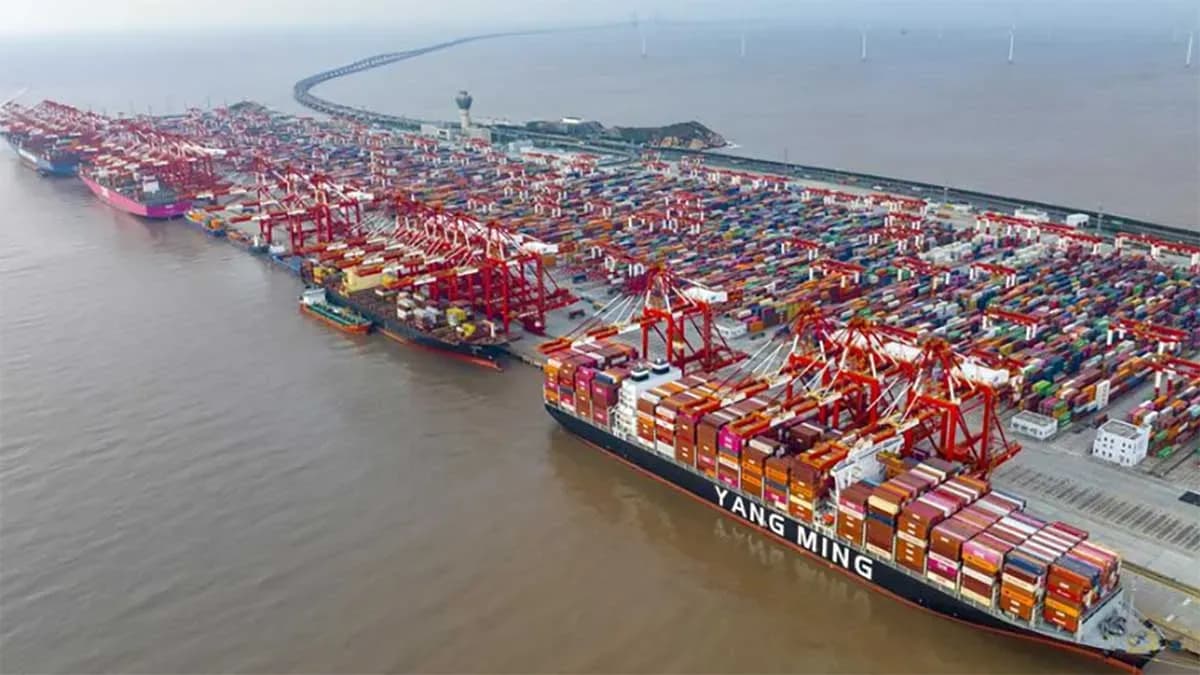
Despite leading the percentage increase for the week, the freight from Shanghai to Genoa is not the highest among those analyzed by Drewry. That position corresponds to the route between Shanghai and New York (United States), which marks 4,252 dollars after a 14% increase in the last seven days. In the trans-Pacific routes, the rise is due to the implementation by shipping companies of emergency fuel surcharges (EFS) and peak season surcharges (PSS). Yang Ming Line, for its part, has announced a general rate increase (GRI) of 2,000 dollars per 40-foot container effective from May 15. According to Drewry's Container Capacity Insight report, seven blank sailings have been announced in the trans-Pacific route for next week, highlighting the capacity management strategy that operators maintain.The other trans-Pacific route analyzed, Shanghai-Los Angeles, records a price of 3,357 dollars and an inter-week increase of 10%. In the corridor between Asia and northern Europe, the Shanghai-Rotterdam connection is affected by the same dynamics: the freight stands at 2,413 dollars after rising 11% in the last week.In the Atlantic, the variations are more moderate. The route between Rotterdam and New York has recorded a 3% increase and stands at 2,388 dollars, while the reverse journey reaches 1,030 dollars after a 1% inter-week increase. The connection from Rotterdam to Shanghai, on the other hand, marks 644 dollars with a 2% rise.
Tensions in the Middle East concerning the Strait of Hormuz and the Red Sea remain under close scrutiny. Shipping companies maintain a cautious position in their routing and operational decisions due to the ongoing conflict between the United States and Israel with Iran. This factor is compounded by the rising cost of fuel and the limited available space on ships, elements that continue to keep freight rates high. Operators are actively adjusting their rates through emergency fuel surcharges, peak season surcharges, general rate increases, and firmer FAK levels, while resorting to blank sailings and flexible capacity management strategies. Drewry forecasts that prices will continue to rise in the coming weeks.