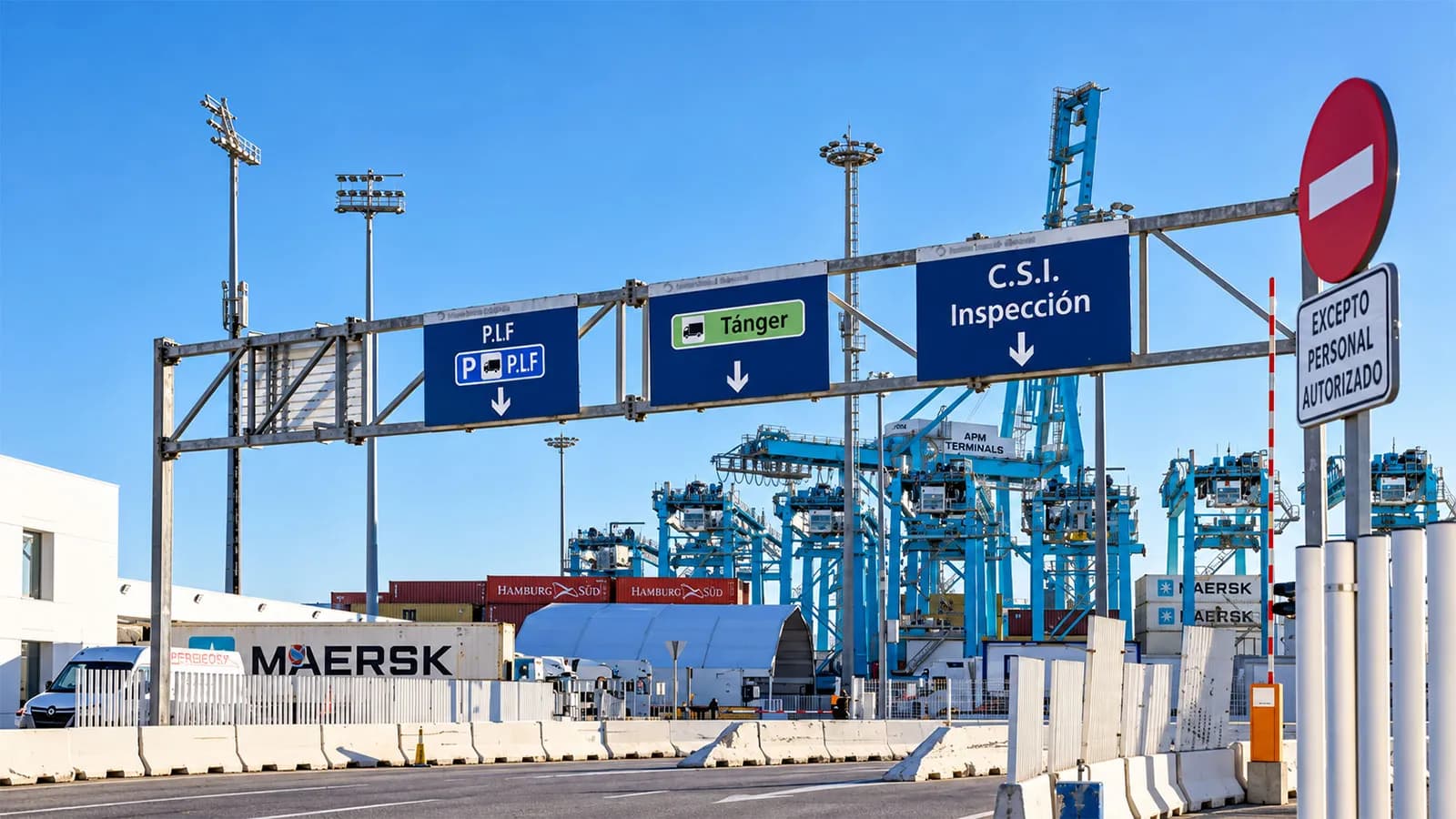
More than 60,000 ships cross each year through the Strait of Gibraltar on their transit between the Atlantic and the Mediterranean. That figure does not include the ferries that cover the connections between Spain and Morocco, nor the whale-watching vessels that operate in the area. Beneath that surface coexists a small population of long-finned pilot whales (Globicephala melas), just 250 individuals categorized as critically endangered, who must navigate through traffic while searching for food, coordinating group movements, finding mates, and raising their young.
An international team led by Milou Hegeman and Frants Jensen from Aarhus University (Denmark), along with researchers from Spain, Portugal, the United Kingdom, and the United States, has documented that the pilot whales in the Strait increase the volume of their vocalizations to be heard above the noise of maritime traffic, but that the most important calls for the survival of the group are already emitted at the maximum of their physiological capacity and cannot be amplified further. The study has been published in the Journal of Experimental Biology.
To conduct the research, the team carried out a campaign aboard the research vessel Elsa between 2012 and 2015. The scientists placed recording devices with suction cups on the backs of 23 pilot whales using a six-meter pole. These sensors recorded movement, depth, and sound underwater. After 24 hours, they detached and floated to be recovered. The result was a file of 1,432 calls analyzed in the laboratory.
The team classified the vocalizations into four types: low-frequency calls, short and pulsed calls, high-frequency calls, and two-component calls. The low-frequency calls and the two-component calls can be heard at greater distances and are believed to be the ones that pilot whales use to locate and reunite with their group members, especially after dives in search of food.
The background noise levels recorded in the Strait ranged between 79 and 144 decibels, approximately equivalent to a noisy restaurant at the lower end of the scale and a vacuum cleaner at the upper end. Against this backdrop, the pilot whales raise the intensity of their calls, which reach between 94 and 160 decibels. However, not all vocalizations can be amplified equally. The softer calls, such as high-frequency and short pulsed calls, can raise their volume enough to overcome the background noise. The low-frequency and two-component calls, on the other hand, are already emitted at the maximum capacity of the animal and cannot be intensified further.
According to the study, the calls that pilot whales cannot amplify are precisely the ones they use to reunite with their group upon returning to the surface after diving. "The increase in noise reduces the effective range of communication," explains Jensen, meaning that these animals need to be closer to each other to be able to hear one another.
Since the population in the Strait has only about 250 individuals, researchers note that this limitation may hinder pilot whales from finding mates in other groups when the breeding season arrives. "Perhaps the time has come to try to reduce the noise so that pilot whales do not have to shout to be heard," Jensen points out.
Michel André, director of the Bioacoustic Applications Laboratory at the Polytechnic University of Catalonia (UPC), points out regarding this issue that "noise in the sea today affects all links in the food chain, from plants to cetaceans, including phytoplankton and invertebrates," and that "the increase in noise levels in some areas where human activities are concentrated implies an adaptation of the species present."