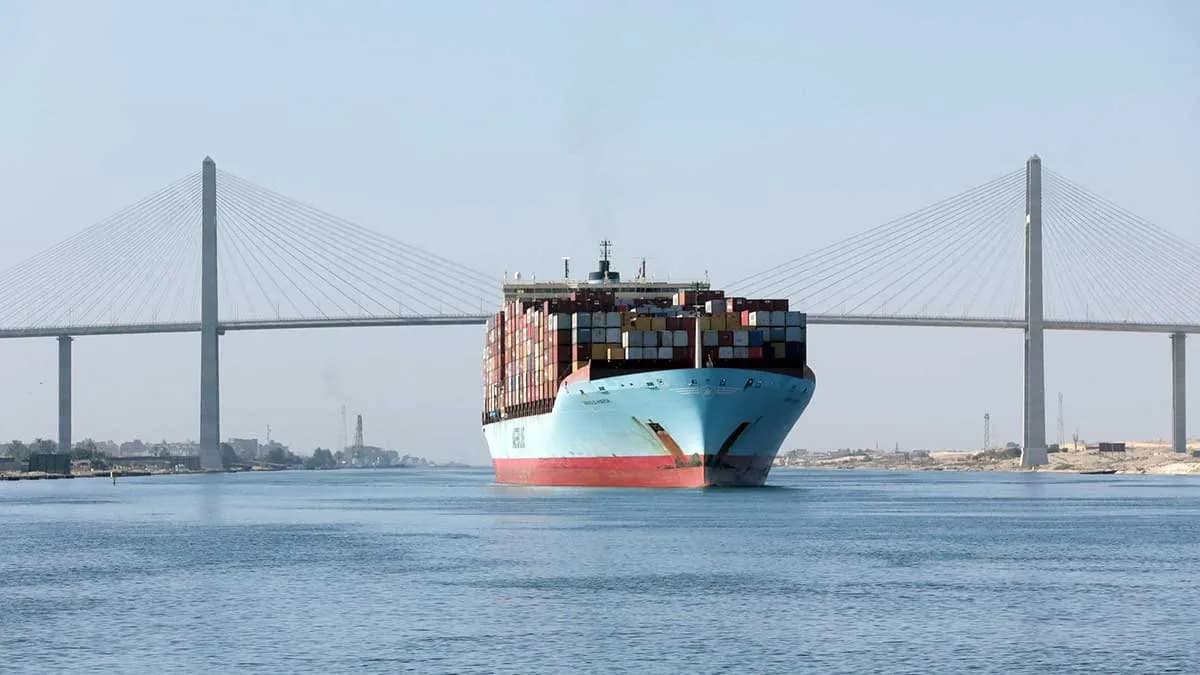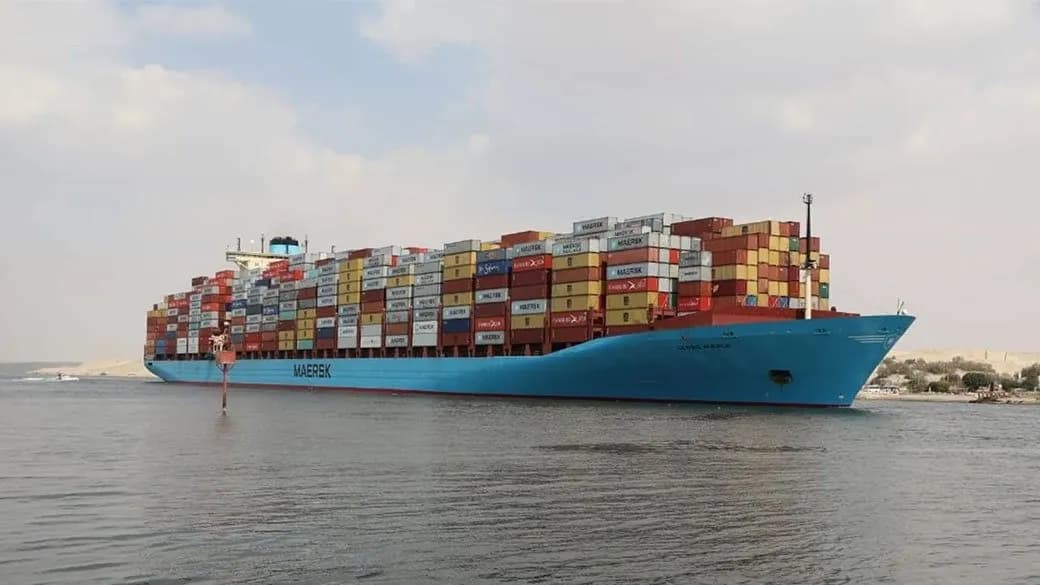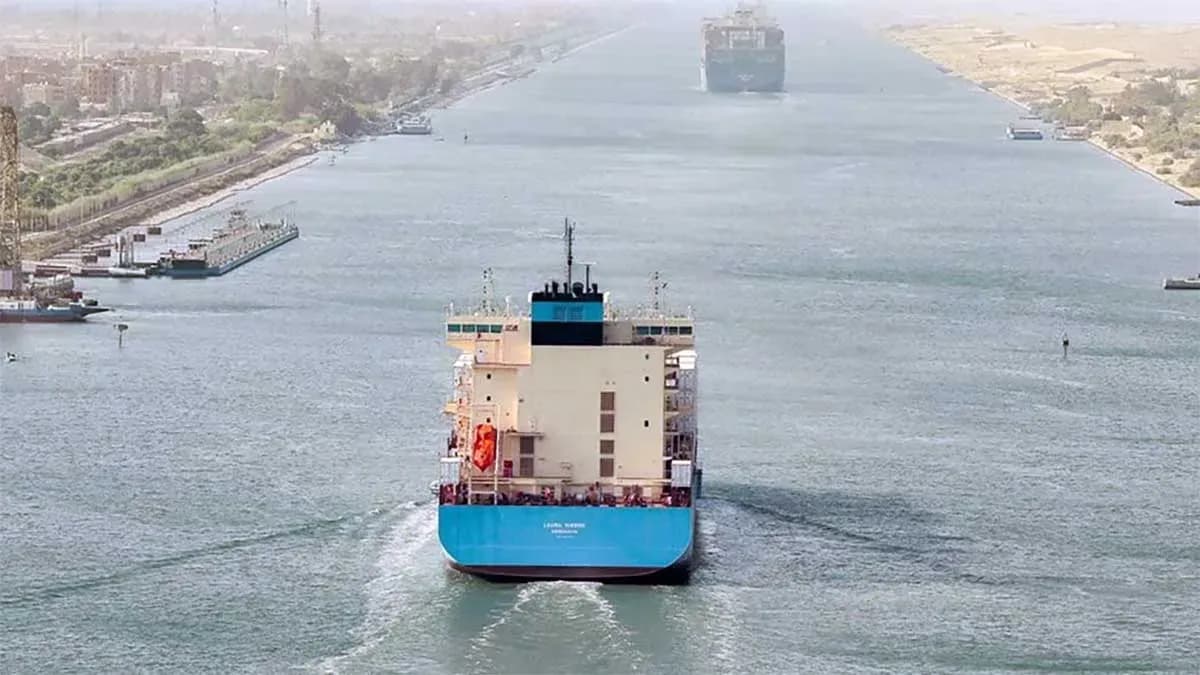
The CEO of Maersk, Vincent Clerc, has confirmed that the Danish shipping company is evaluating the possibility of partially resuming its services through the Red Sea, although it has conditioned any return on a substantial improvement in security conditions in the area. Clerc spoke during the presentation of results for the first quarter of 2026, held on May 7, where he noted that the review takes into account both the negotiations between the United States and Iran and the general security situation in the main maritime corridors, including the Bab el-Mandeb Strait.
Maersk's top executive acknowledged that there have been no recorded attacks in the Red Sea for approximately a year, but emphasized that safety remains "the top priority" for the company. Clerc indicated that Maersk applies a more cautious risk threshold than some competitors operating in the area and recalled recent incidents in the Strait of Hormuz and Bab el-Mandeb. In this regard, MSC has suffered the retention of two vessels while attempting to transit through the Strait of Hormuz, while a CMA CGM container ship was hit on May 4 by an unidentified projectile, causing material damage to the ship and injuries among the crew.
CMA CGM has maintained limited transits through the Suez Canal, although most shipping companies continue to avoid the Red Sea route for safety reasons. The economic impact of this situation is considerable: Egyptian President Abdel Fattah al-Sisi stated that Egypt has lost around 10 billion dollars in Suez Canal revenue as a result of attacks on maritime traffic in the Bab el-Mandeb Strait, which began in November 2023 when Yemen's Houthi group started launching drones and missiles at vessels in the Red Sea in support of the Palestinians.
Clerc noted that it is difficult to establish a timeline for a full return of the industry to the Red Sea, and that any resumption would have to be "gradual and strictly controlled." The main obstacle, according to the CEO, is the availability of naval escorts and surveillance means by European, American, and other countries' forces. "For it to be a complete return, one would have to feel comfortable with the security assessment that navigation can occur without any type of surveillance. And I have no idea, given the volatility of the situation between the United States and Iran, when that will be. It could be very soon or it could take a while," he stated.
An eventual reopening of the Red Sea corridor would have significant implications for the container shipping market. Clerc explained that the return would free up vessel capacity currently occupied on longer routes around the Cape of Good Hope, allowing for the redistribution of tonnage towards slow steaming strategies and other network optimization measures. Given the current fuel price, Clerc described the reopening of the Red Sea as something "extremely positive" and a way to improve the company's cost structure.
The CEO of Maersk also addressed the issue of overcapacity in the sector, estimating a current surplus of approximately 3.5 million TEUs. Deliveries of scheduled newbuilds for 2026 will continue at a good pace and are expected to accelerate in 2027, which will increase pressure on the balance between supply and demand. Clerc considered that the excess capacity is "of a manageable size if there is discipline" from the sector but warned that if the scrapping of vessels that have not been retired in the last seven years is not reactivated, the situation "is going to be extremely bumpy."