Ocean Network Express (ONE) has established a 65% reduction in the intensity of its Scope 1 emissions compared to the 2008 baseline during its latest fiscal year, while its absolute Scope 1 emissions increased to 12.18 million tons of CO2 equivalent. The company includes both indicators in its Sustainability Report 2026, corresponding to the period from April 1, 2025, to March 31, 2026, and published on September 18.
The evolution responds to two different magnitudes. ONE measures emission intensity in grams of CO2 equivalent per TEU-kilometer transported, so the indicator relates emissions to the cargo volume and distance traveled. The shipping company itself specifies that a reduction in this intensity reflects an improvement in efficiency and does not necessarily imply a decrease in absolute emissions. In FY2025, the Scope 1 intensity was set at 35.68 grams of CO2e per TEU-km, compared to 37.21 in FY2024 and 38.63 in FY2023.
ONE keeps as a target to achieve a 70% reduction in the intensity of its Scope 1 emissions per TEU-km by 2030 compared to 2008. The report places the current record five percentage points below that reference and maintains its horizon for 2050 to reach net zero emissions in scopes 1, 2, and 3.
In absolute terms, direct Scope 1 emissions increased from 10,430,487 tons of CO2e in FY2023 to 11,711,820 tons in FY2024 and 12,185,456 tons in FY2025. Scope 2 emissions calculated using the market-based method were at 10,561 tons, while those corresponding to category 3 of Scope 3, associated with fuel and energy-related activities, reached 2,622,837 tons. For the first time, the report also includes 2,165,615 tons in category 4 of Scope 3, corresponding to transport and distributionupstream, although this last data is based solely on information from the global headquarters and does not include consolidated figures for the entire group.
The company links the increase in Scope 1 emissions to higher fuel consumption, which it mainly attributes to the Red Sea crisis. According to the document, the continuity of the detours that avoid the Suez Canal and use the route around the Cape of Good Hope has prolonged voyages and increased consumption. ONE also notes the growth in the number of operational vessels, which increased from 276 units in FY2024 to 312 in FY2025.
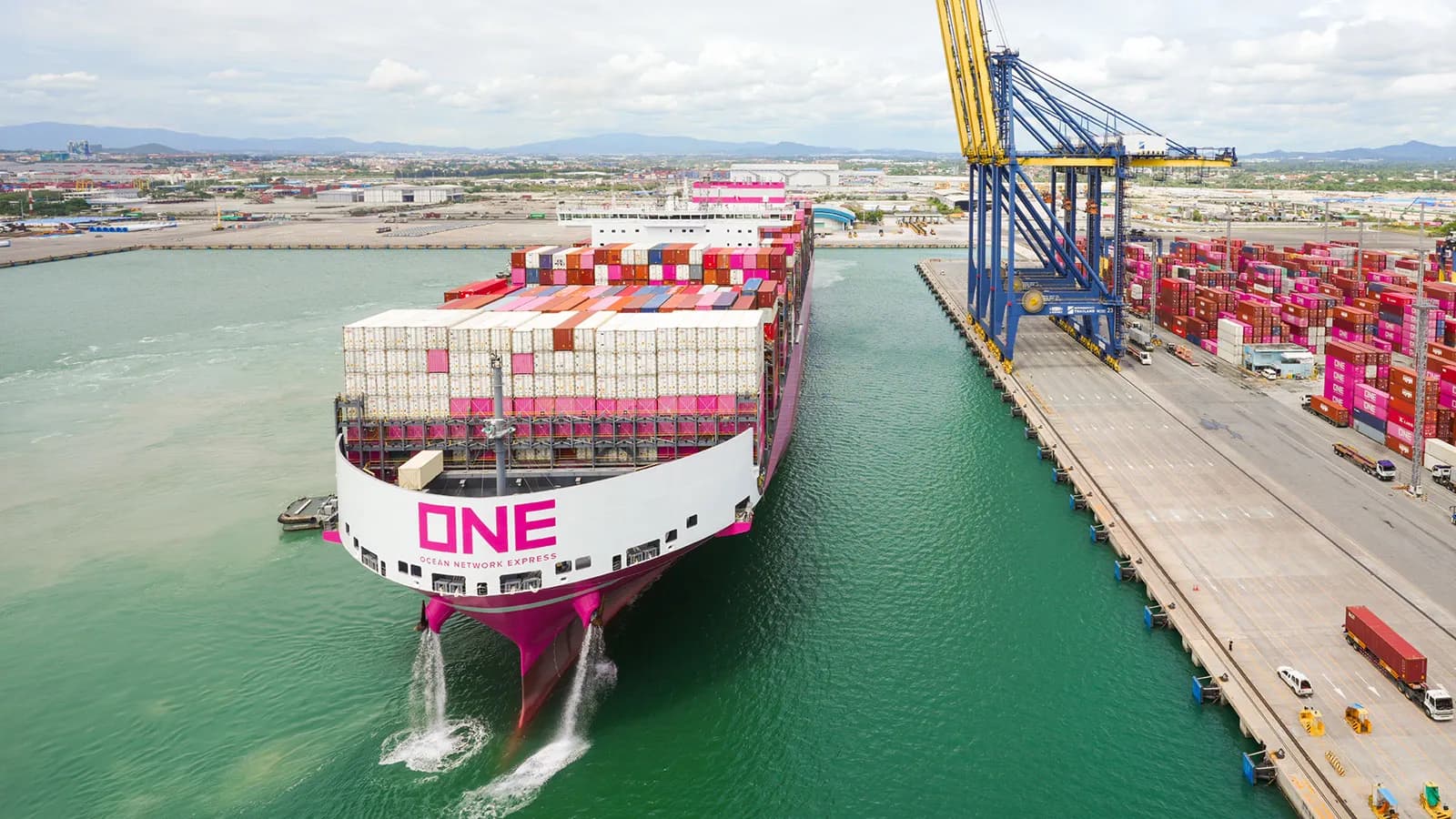
The company's fleet reached a combined capacity of 2.2 million TEUs at the end of the fiscal year, with 312 vessels, including 12 container ships of at least 20,000 TEUs. Its network included more than 240 port calls and 165 services, with operations in over 120 countries.
Energy data also show an increase in consumption. Fuel oil increased from 138,823 terajoules in FY2024 to 143,526 TJ in FY2025, while diesel rose from 11,116 to 11,672 TJ. Meanwhile, energy from biofuel increased from 299 to 2,013 TJ. ONE specifies that this last data corresponds to the pure fraction of biofuel derived from the consumption of B24 and B30 blends.
As part of its fleet renewal program, the shipping company received 14 vessels from the ONE S-Series during 2025. These units incorporate designs aimed at reducing fuel consumption and are prepared for future use of methanol and ammonia, as the report states.
The incorporation of alternative fuels is one of the lines of action included in ONE's decarbonization strategy, alongside carbon management, operational efficiency, investments in fleet and technologies, and collaboration with other stakeholders in the maritime supply chain. The document identifies fuel consumption as the main component of the company's emission footprint and indicates that it continues to work on lower carbon intensity options and the development of its supply chains.
Among the operational measures described are the planning of port calls and reduction of stay times in port, the use of meteorological analysis through artificial intelligence to determine routes, electric supply from shore when infrastructure is available, optimization of stowage and auxiliary machinery, and various interventions in hulls, propellers, and propulsion systems.
The shipping company also maintains ONE LEAF+, its maritime transport service based on the use of UCOME biofuel. The report indicates that this fuel allows for an approximate 84% reduction in CO2 equivalent emissions over the entire lifecycle, from well to wake, compared to conventional fuel. ONE notes that the emission savings associated with the service have independent verification and that the biofuel used is ISCC certified.
The strategy also includes participation in green maritime corridors and studies on emerging fuels. ONE states that it is involved in projects and trials developed through the Global Centre for Maritime Decarbonisation (GCMD) to analyze issues related to safety, operational requirements, and infrastructure necessary for the future implementation of these fuels.
In environmental matters, the report records a 100% compliance with the sulfur limit set by IMO 2020 and notes that during FY2025, there were no significant spills, a category that the company defines as those exceeding 150 liters spilled into the sea per incident.
The report also includes indicators of the digitalization of operations. During the year, 93% of customer reservations were made through ONE's digital platform and the use of electronic bills of lading reached 10%. The company also indicates that the quality of its communications was at 83%.
The document has been prepared in accordance with the standards of the Global Reporting Initiative (GRI). ONE notes that all data has undergone an internal review process and that certain information has external independent assurance in accordance with the applicable assurance standards in Singapore. The scope of the report includes the entities over which ONE has operational control, its line services, and terminal operations, while excluding land services and minority stakes.