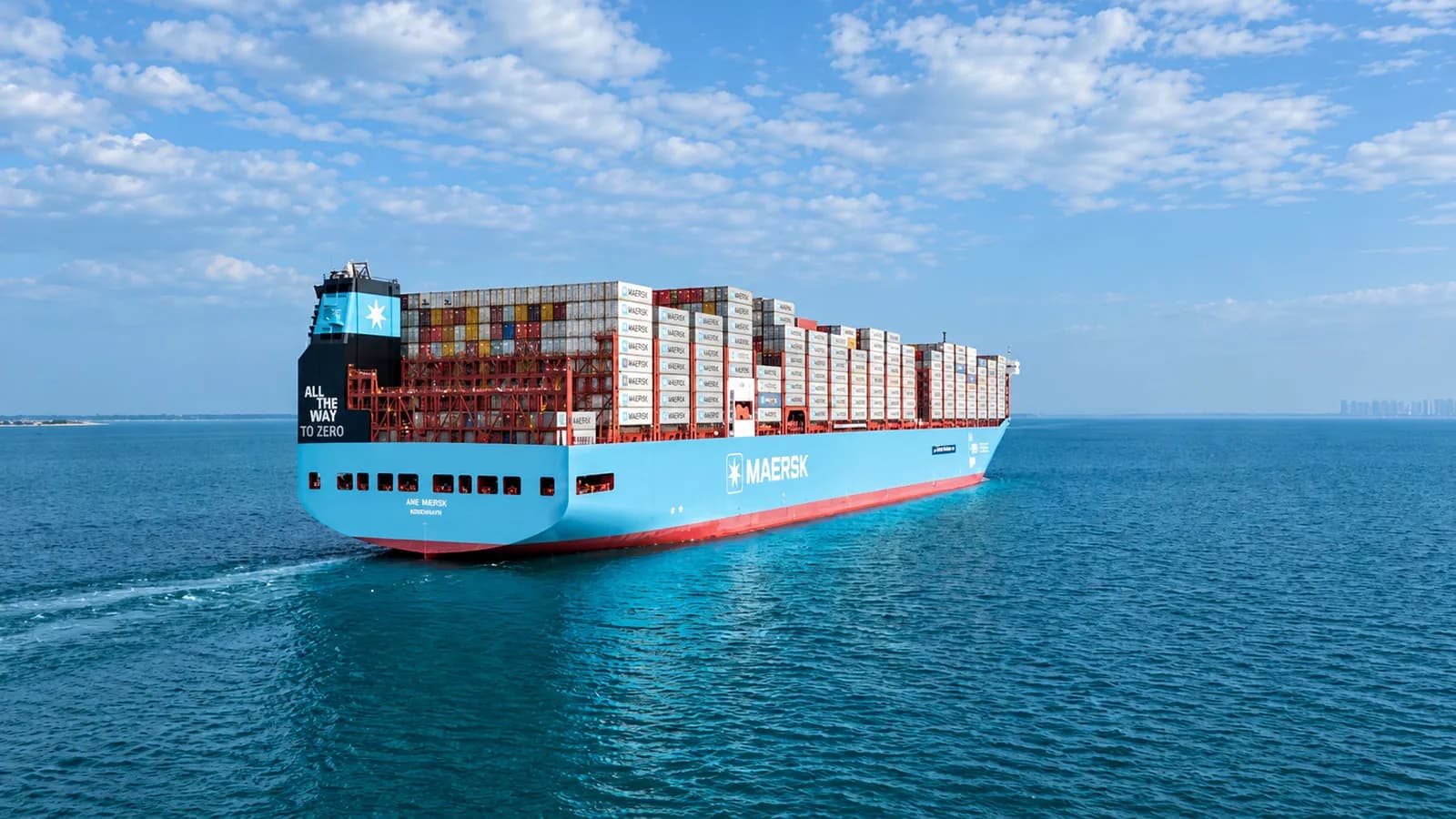
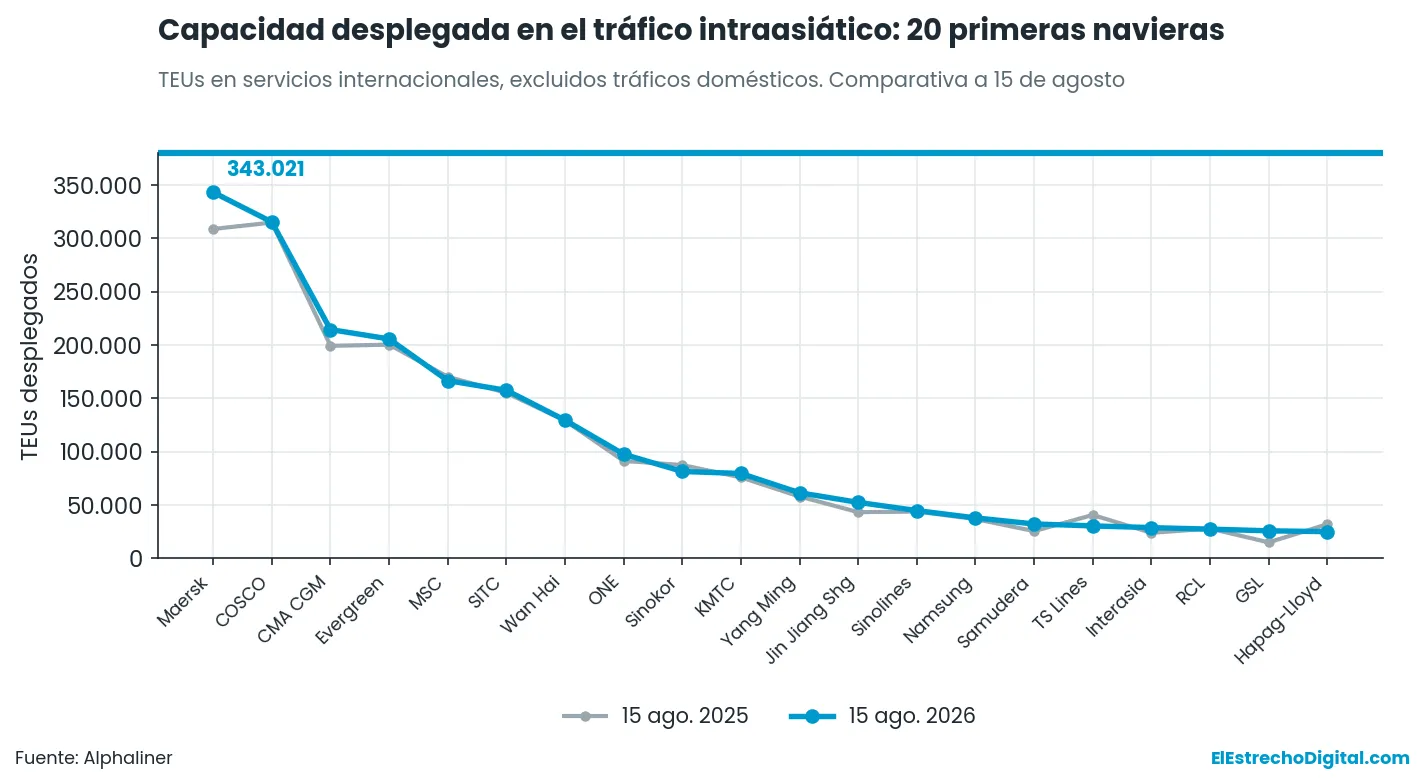
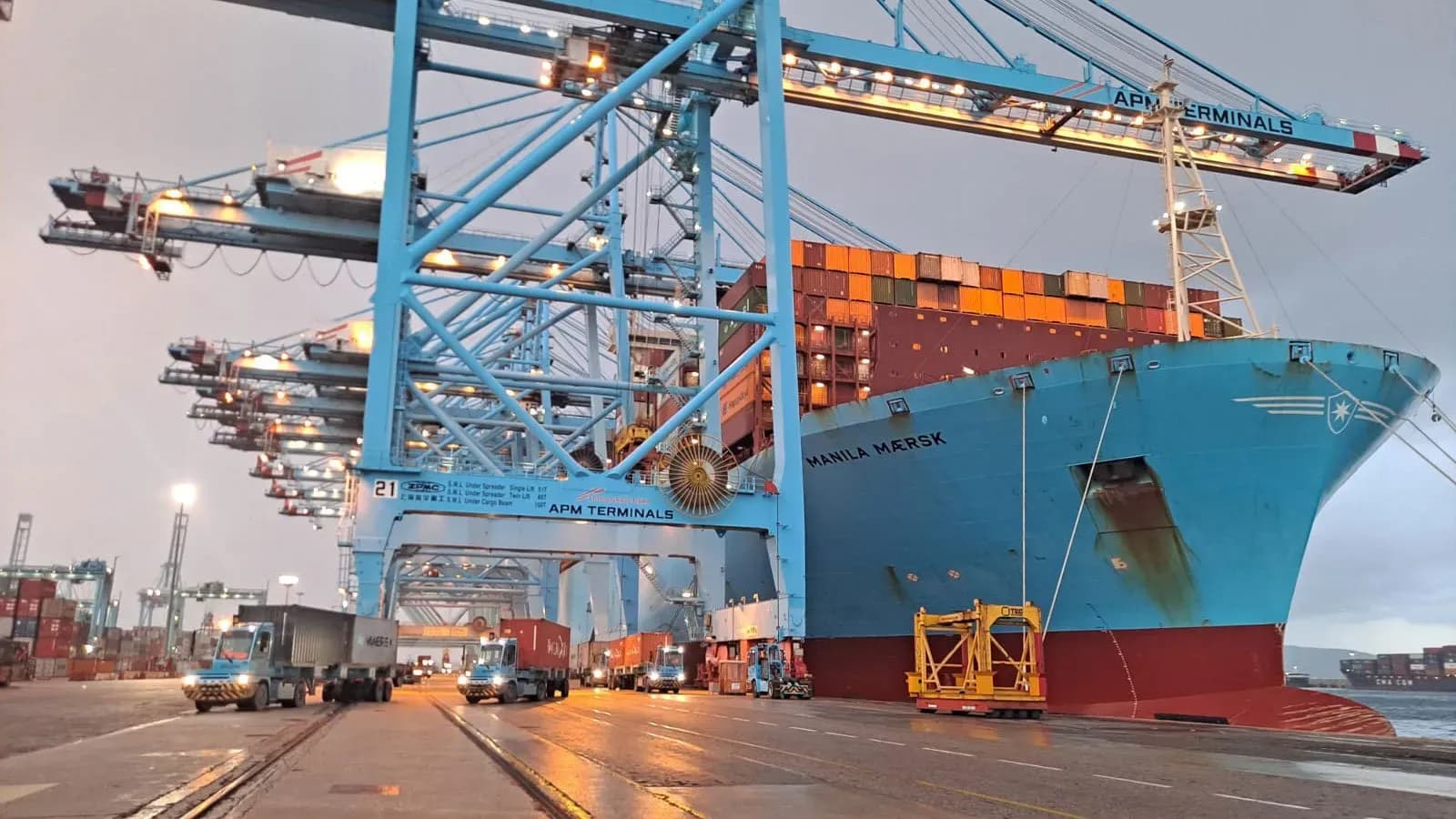
Maersk has surpassed COSCO as the largest operator in intra-Asian container traffic, the largest containerized trade in the world, according to the latest fleet count from Alphaliner as of mid-August. The Danish shipping company had over 340,000 TEUs deployed in intra-Asian services after adding around 34,000 TEUs in a year, the largest nominal increase of any operator in the market.
Maersk's leadership is partly due to Gemini Cooperation's radial model (hub-and-spoke), which relies on a broader network of Asian shuttle services to feed its main east-west routes. Its 108 vessels in the region average 3,176 TEUs, the largest average vessel size among major intra-Asian operators.
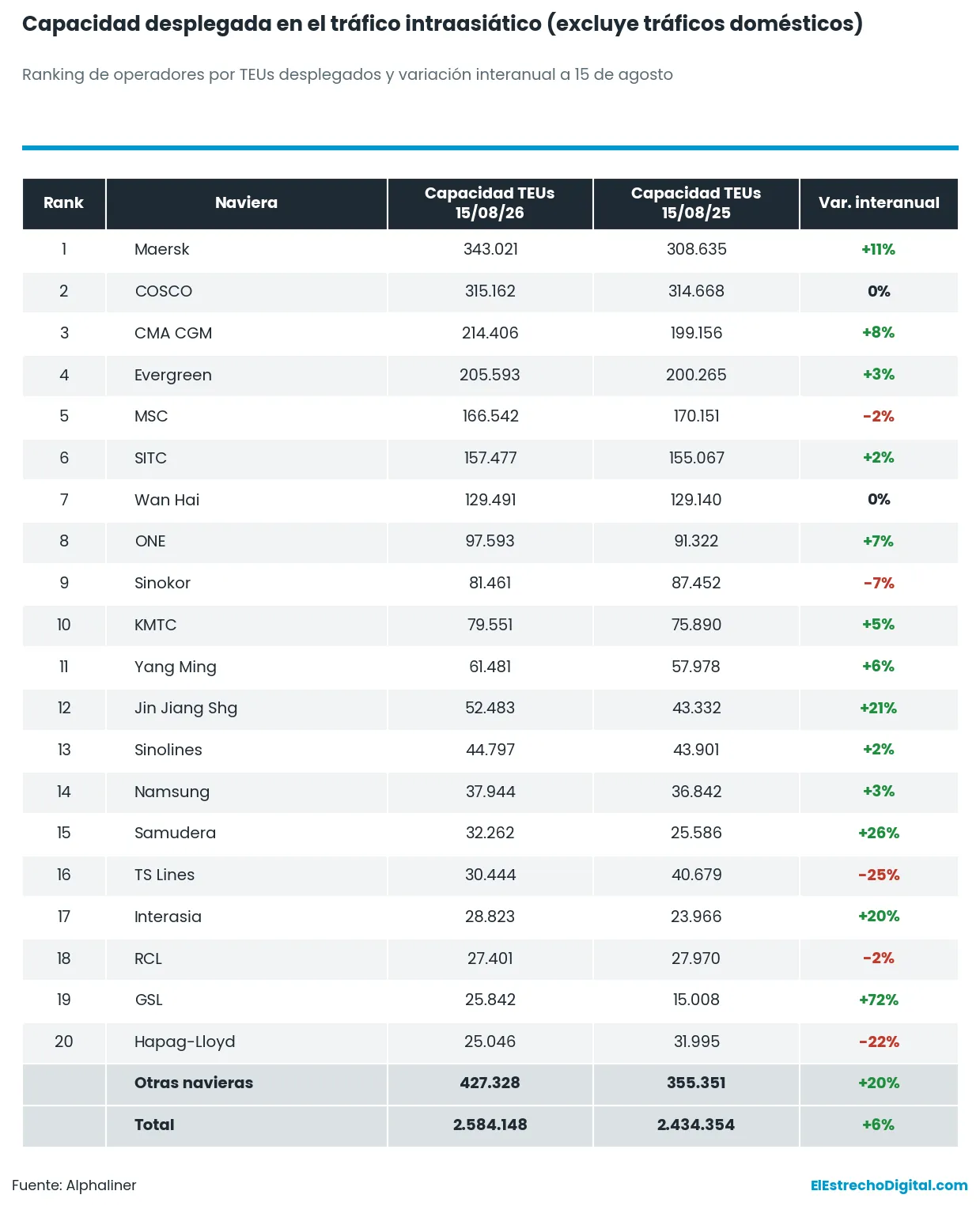
COSCO came in second place despite operating more vessels, over 120, as its deployed capacity barely changed compared to the previous year: 315,162 TEUs versus 314,668. Maersk closed the count with 343,021 TEUs, ahead of the 308,635 from twelve months earlier.
Alphaliner estimates the total deployed capacity in international intra-Asian services, excluding domestic traffic, at just under 2.6 million TEUs, a 6.2% year-on-year increase (2,584,148 TEUs versus 2,434,354). The increase surpasses that of the global container ship fleet, which has over 34 million TEUs and grew by more than 5% in the same period. More than 80 shipping lines operate on the route.
The market remains one of the most competitive in container transport. Most participants are small regional and feeder shipping lines, which only accounted for 37% of the deployed slots. Major line operators (MLOs) control over 63% of capacity despite moving fewer vessels, thanks to an average size of 2,699 TEUs per ship, more than double the 1,338 TEUs average of regional shipping lines.
CMA CGM recorded the second-largest capacity increase, with 15,000 TEUs added, and surpassed Evergreen for third place, reaching 214,406 TEUs. Evergreen came in fourth with 205,593 TEUs, while MSC fell to 166,542 TEUs, a decrease of 2%.
SITC remains the leading regional specialist, with 109 vessels and around 157,000 TEUs, placing it in sixth position. It is the only regional shipping line with more than 100 active vessels in intra-Asian traffic, reflecting its strategy to connect small and niche ports instead of competing for scale. Alongside Maersk (108 vessels) and COSCO (122), it is one of only three operators with fleets exceeding a hundred vessels in the region.
Among the top twenty operators, the highest relative growths were registered by GSL, which increased by 72% to 25,842 TEUs, and Samudera (+26%) and Interasia (+20%). Conversely, TS Lines cut its capacity by 25%, down to 30,444 TEUs, and Hapag-Lloyd by 22%, to 25,046 TEUs. Sinokor decreased by 7% (81,461 TEUs), while ONE (97,593 TEUs) and Yang Ming (61,481 TEUs) saw increases of 7% and 6%, respectively.
The Drewry Intra-Asia Container Index (IACI) rose by 1% last week to $1,323 per feu. Its composite index has been moving at historical highs this month, during a period in which geopolitical disruptions and those associated with typhoons continue to disrupt supply chains and limit available capacity.