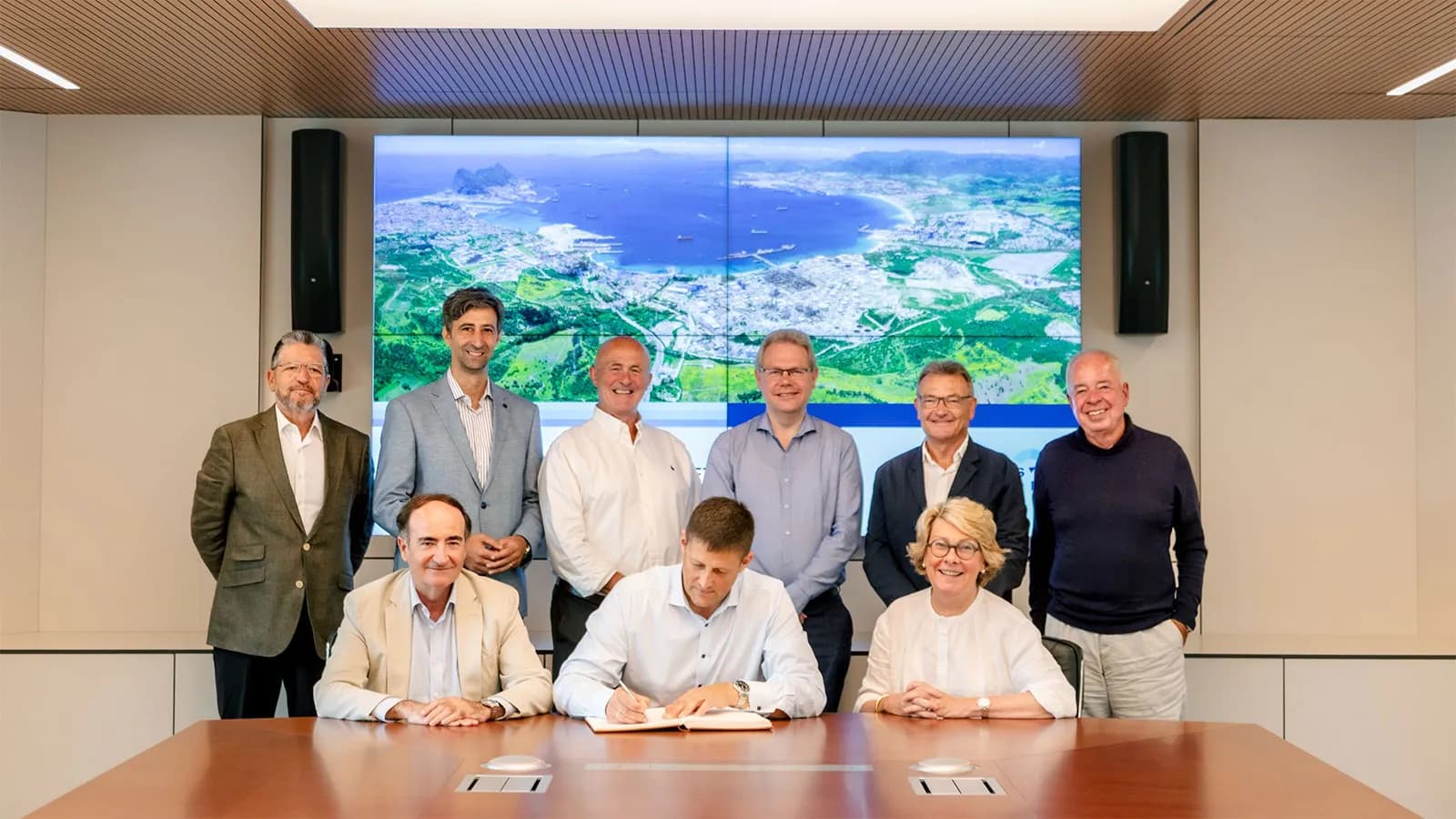
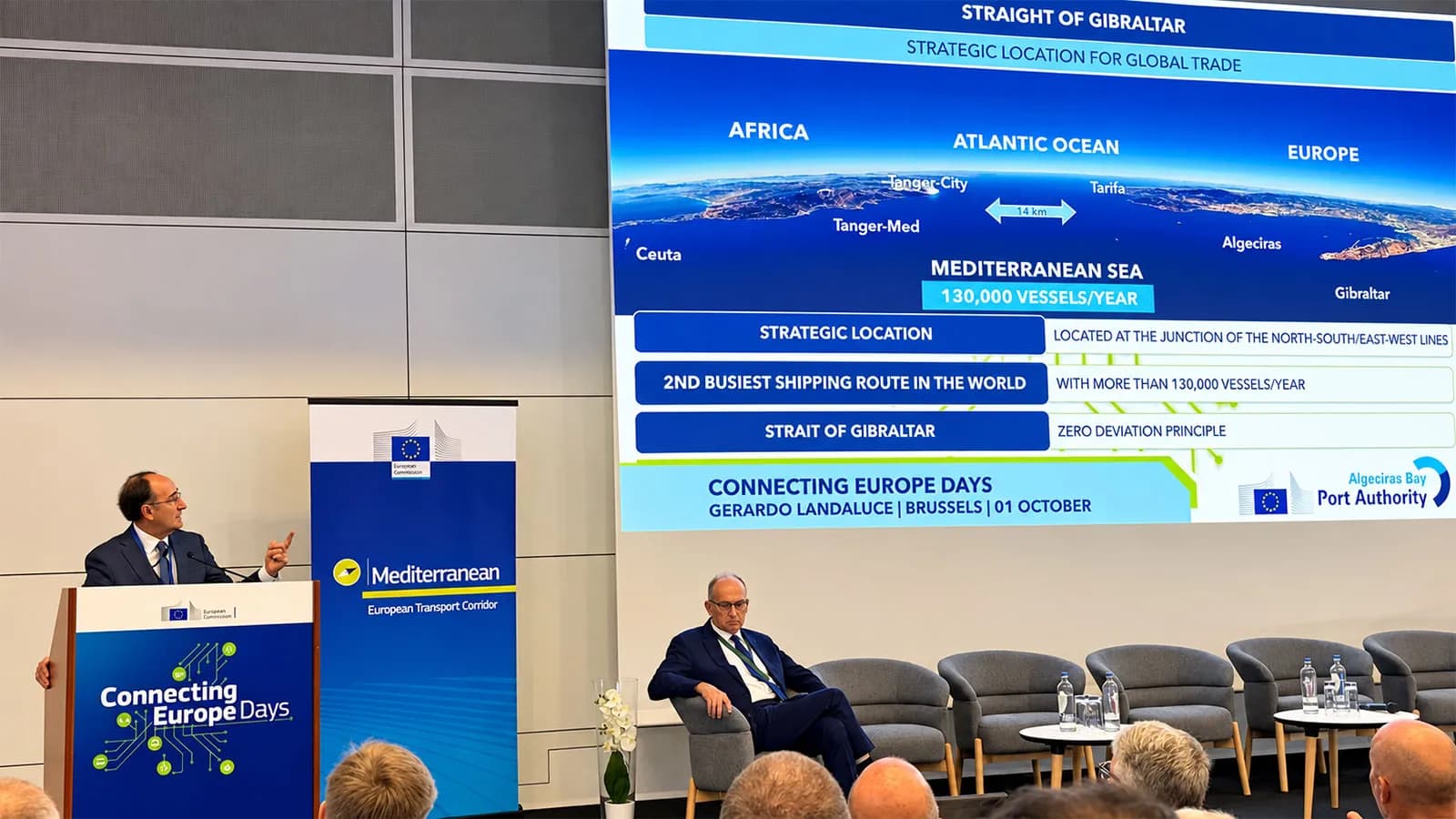
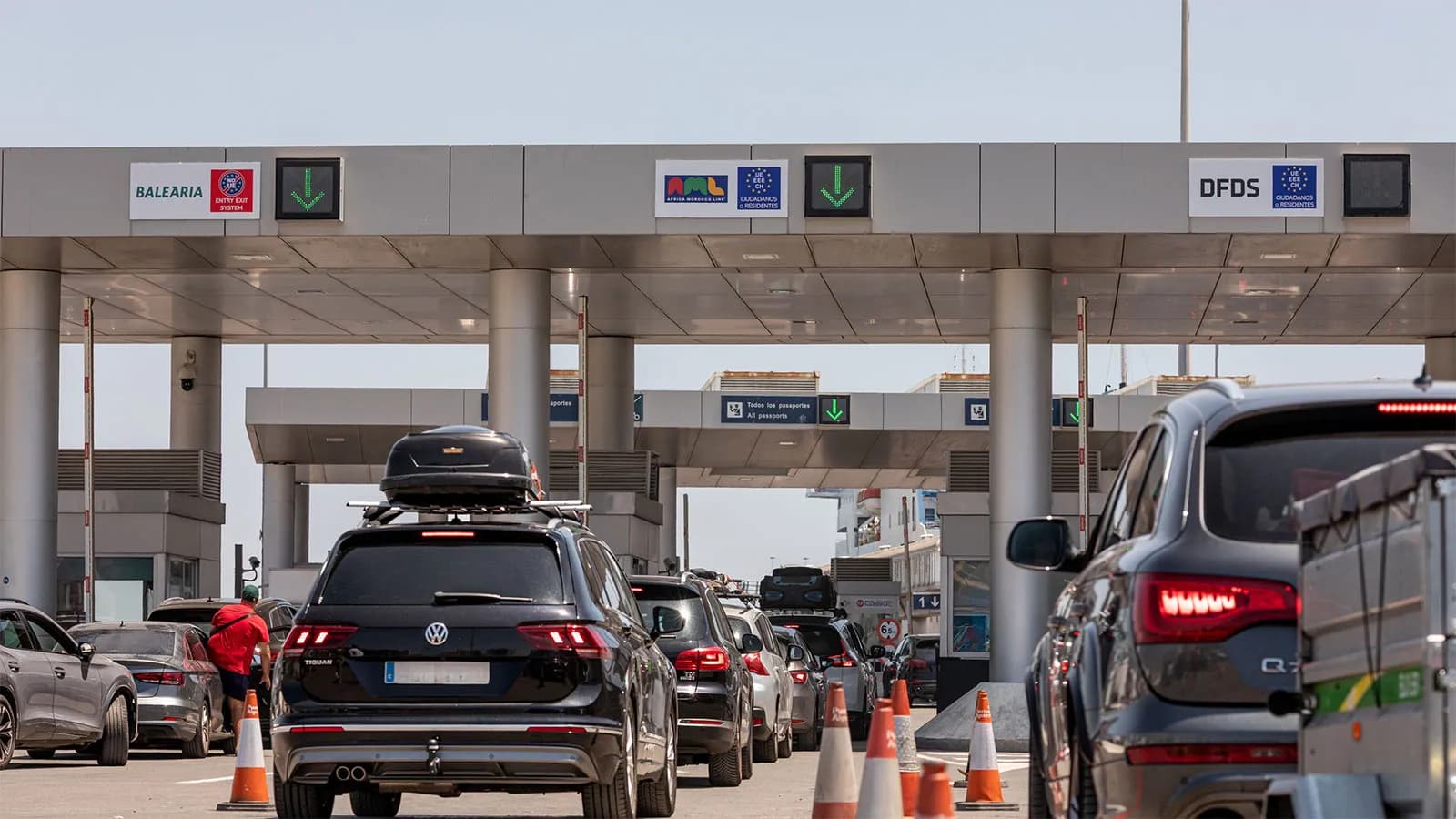
A delegation from the European Sea Ports Organisation (ESPO) has visited the Port of Algeciras to learn about the operational and regulatory conditions affecting the Strait of Gibraltar enclave in light of the application of European decarbonization policies and the changes recorded in international maritime flows.
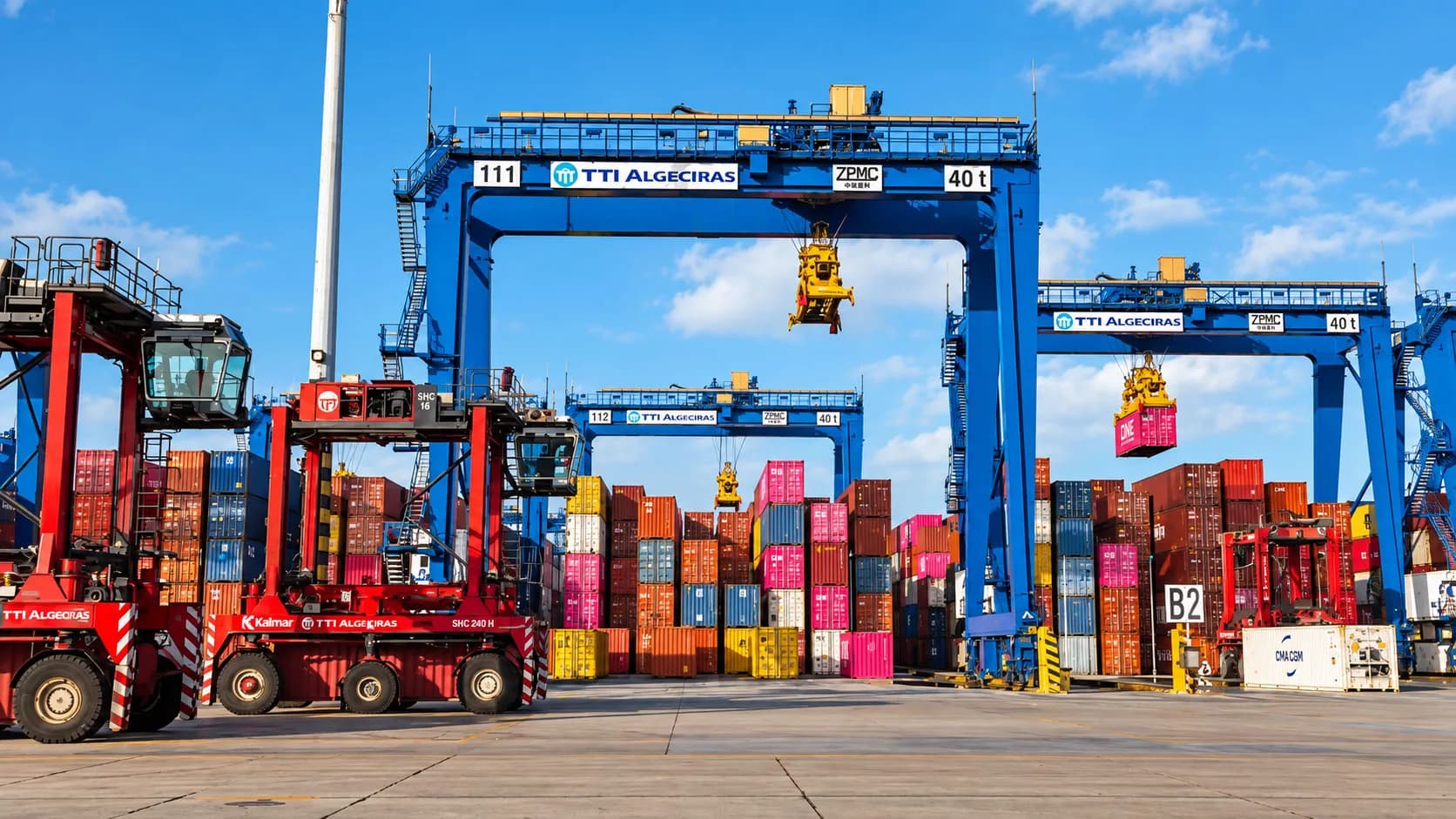
The agenda included a technical visit to the semi-automated terminal of TTI Algeciras, located in Isla Verde Exterior, where its CEO, Alonso Luque, presented to the ESPO representatives the planned growth program for the facilities.
The project includes the incorporation of 16 new hectares to the terminal's surface area. The work related to the superstructure of the expanded area will begin soon and, in a first phase, the actions will allow increasing the annual capacity of TTI Algeciras to 2.1 million TEUs.
During their stay in Algeciras, the ESPO representatives also held meetings with the Port Authority of the Bay of Algeciras (APBA) to analyze the application of the European Union's emissions trading regime, EU ETS, to maritime transport and its consequences on port activity.
The meetings were attended by the president of ESPO, Ansis Zeltiņš; the organization's secretary general, Isabelle Ryckboost; the president of the APBA, Gerardo Landaluce, and the general director of the Port Authority, José Luis Hormaechea.
One of the issues discussed was the competitive situation of the ports of the European Union compared to facilities located in third countries in the Mediterranean region that fall outside the community scope of application of the system.
According to data from the ETS Observatory of Ports of the State presented during the visit, the application of the carbon emissions pricing system is already associated with modifications in the scheduling of shipping alliances' services and the diversion of investments toward terminals located outside the European Union, particularly in North Africa.
This situation especially affects transshipment activity, one of the traffics that are part of the operation of Algeciras and other port facilities competing for the slots of international maritime services.
The visit also included a working session on the geopolitical factors that are modifying international supply chains and the configuration of maritime routes. The meeting featured Professor and international relations analyst David Criekemans along with representatives from ESPO and the APBA.
During this session, the effects of regional armed conflicts, unilateral trade measures, and changes in shipping companies' strategies on ship movements in the Mediterranean were examined.
The analysis has positioned these factors within the international scenario in which ports and shipping companies currently operate, with changes in itineraries and service organization affecting the trade flows crossing the Mediterranean and the Strait of Gibraltar.