WEC Lines will renew its weekly short-sea shipping service ISS starting September 10, which will be renamed ISS-PT and will allow connections from the Andalusian ports of Almería, Málaga, Huelva, and Cádiz to different locations in the northwest of Europe via a transshipment link in Setúbal (Portugal).
The reorganization of the service incorporates these four Andalusian ports into a rotation that also includes Valencia, Alicante, and Cartagena, in addition to Gibraltar, Nador (Morocco), and the Portuguese ports of Setúbal and Sines. From Setúbal, goods will be able to connect with the WEC Lines network to Thamesport, Liverpool, Dublin, Montoir, Antwerp, Moerdijk, Rotterdam, and Hamburg.
The company proposes this configuration to meet the demand for short-sea shipping between the Iberian Peninsula and northern Europe, using Setúbal as a connection point between services. The operation allows for the channeling of both export and import flows from the ports included in the rotation.
The new scheme offers different transit times from the Andalusian ports. From Almería, the connection to Setúbal is made in four days and to Sines in five, while from Málaga the times are reduced to two and three days, respectively. In the case of Huelva, Setúbal is one day away and Sines two days, while from Cádiz the transit to Setúbal is two days.
Subsequent connections to northwest Europe also present different times depending on the originating Andalusian port. From Almería, WEC Lines establishes transit times of eight days to Liverpool and Montoir, nine to Dublin, ten to Thamesport, eleven to Moerdijk, twelve to Rotterdam, and thirteen to Antwerp and Hamburg.
For goods loaded in Málaga, the expected times are six days to Liverpool and Montoir, seven to Dublin, eight to Thamesport, nine to Moerdijk, ten to Rotterdam, and eleven to Antwerp and Hamburg.
Huelva presents the shortest times among the Andalusian ports included in the connection table to northern Europe. The service provides four days to Liverpool and Montoir, five to Dublin, six to Thamesport, seven to Moerdijk, eight to Rotterdam, and nine to Antwerp and Hamburg. The times published by the company include the average stay at the transshipment port.
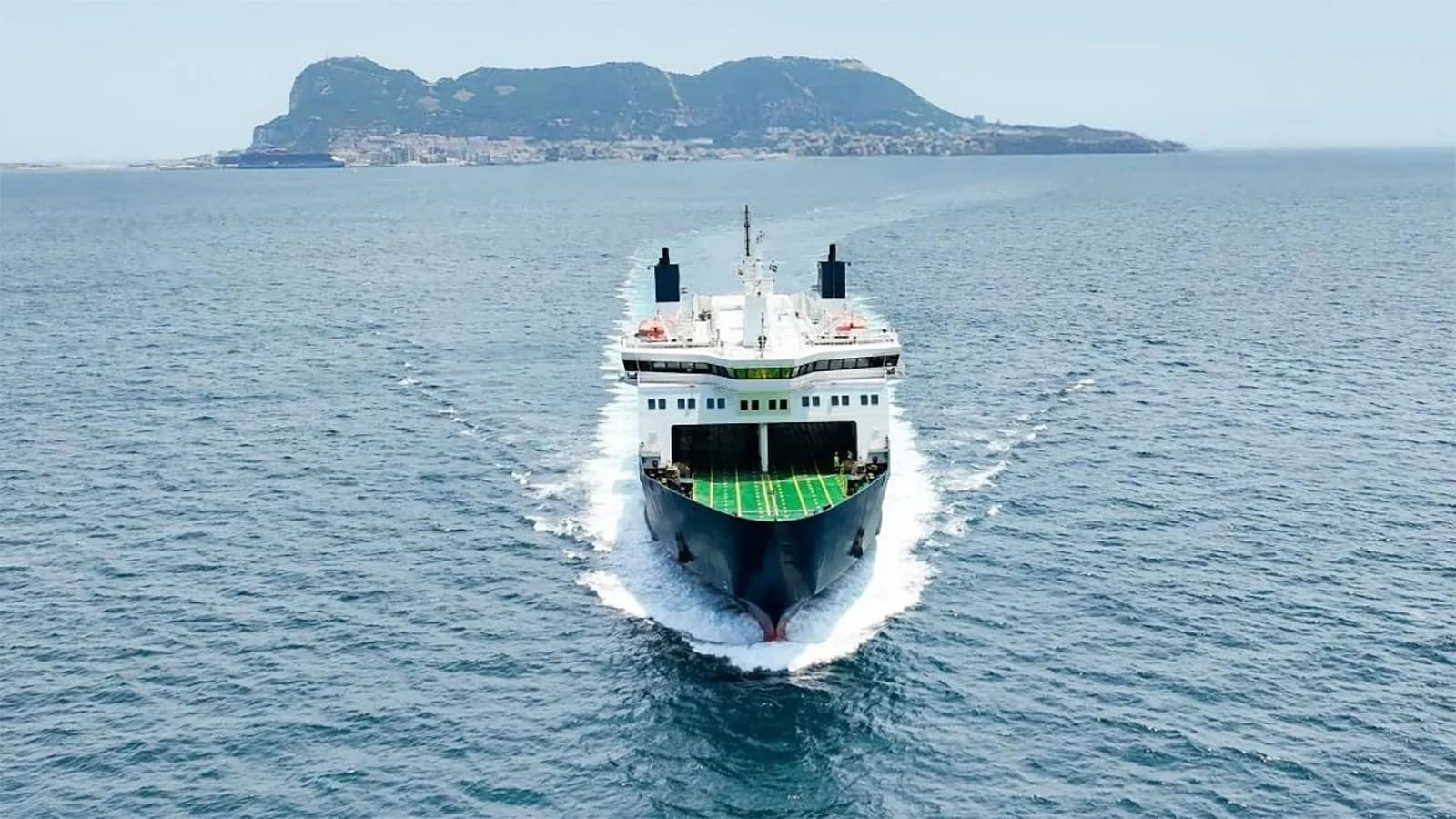
The ISS-PT will be operated by two dedicated vessels with a capacity of 868 TEUs each, integrated into a 14-day rotation. The configuration allows WEC Lines to maintain a weekly frequency within this corridor and handle different types of goods.
The shipping company will also have specific equipment for the needs of shippers, including 45-foot HCPW containers, as well as 40 and 45-foot refrigerated containers intended for the transport of frozen and perishable products. This availability expands the possibilities for using the service for different exporting and importing sectors.
Marc Gnurlandino, Head of Line Management at WEC Lines, has explained that Spain and Portugal occupy a central position within the company's network and has related the expansion of ISS-PT to the growth of demand for transport between the Peninsula and northwest Europe. According to the executive, the use of Setúbal as a gateway allows for completing the connection with the company's European network and maintaining options tailored to customer needs.
The service configuration places Almería, Málaga, Huelva, and Cádiz within a weekly maritime corridor with connections to some of the main port markets in northern and western Europe. Through transshipment in Portugal, loads coming from these ports will be able to continue to the United Kingdom, Ireland, France, Belgium, the Netherlands, and Germany.
The proposal is part of the development of shortsea shipping solutions as an alternative for certain flows of goods that currently use long-distance land transport. The incorporation of four Andalusian ports into the network provides different entry and exit points for the logistical chains linked to the northwest European markets.