The European Alliance corREDores.eu has called for a joint planning of the Spanish railway system that allows managing high-speed lines, the conventional network, and freight corridors as an integrated infrastructure. The organization believes that the current distribution of competencies, investments, and projects hinders interoperability and reduces responsiveness to works, incidents, and traffic restrictions.
The entity links the temporary speed limits on high-performance lines, the prolonged interruptions of the conventional network, and the difficulties in freight transport to a single cause: the absence, in its view, of a rail governance based on common criteria for the entire General Interest Railway Network.
corREDores.eu argues that decisions made over the last few decades have prioritized the construction of new high-speed lines, while part of the conventional network still faces capacity, electrification, maintenance, and compatibility issues between different track gauges.
According to data provided by the organization, the network managed by the Ministry of Transport totals 15,652 kilometers, of which 11,211 correspond to the Iberian gauge and nearly 4,000 to high-speed lines. The alliance compares this configuration to the networks of France and Germany, which have greater total lengths and, according to its analysis, a structure more oriented towards freight traffic and the continuity of conventional lines.
The entity proposes to review the relationship between the cost of new high-speed infrastructure and the progressive conversion of the Iberian gauge to the European standard. In its opinion, a single gauge would reduce the need for interconnections, mixed-gauge tracks, and variable-gauge rolling stock, in addition to facilitating the circulation of trains between Spain, Portugal, and the rest of Europe.
This proposal is part of a position defended by the alliance and would require technical, economic, and operational studies to determine its costs, timelines, and effects on existing services. The organization estimates that the transformation of the conventional network could be carried out with an investment lower than that allocated so far to high speed, which it estimates at around 70 billion euros.
corREDores.eu also relates the coexistence of different gauges to the difficulties in rerouting traffic when a line is affected by maintenance work or an incident. The entity points out that this situation limits the available alternatives for passengers and freight and increases dependence on certain itineraries.
Among the cases used to support its diagnosis is the Zaragoza-Teruel-Sagunto-Valencia axis, included in the Trans-European Transport Network. This connection links the logistics area of Zaragoza and the Ebro Valley with the ports of the Mediterranean coast and allows continuity to the Atlantic Corridor and the ports of the Cantabrian Sea.
The line remains affected by modernization, electrification, and infrastructure adaptation works. The alliance claims that the traffic closure initiated in February 2025 could extend its operational consequences until 2029 due to the different administrative and construction status of the sections that make up the itinerary.
The organization also questions the scope of the informative study of the railway corridor between Sagunto and Teruel, submitted for public information in July 2026. It believes that the solutions presented do not correspond to the conditions that, in its opinion, a priority European corridor should meet for both passengers and freight.
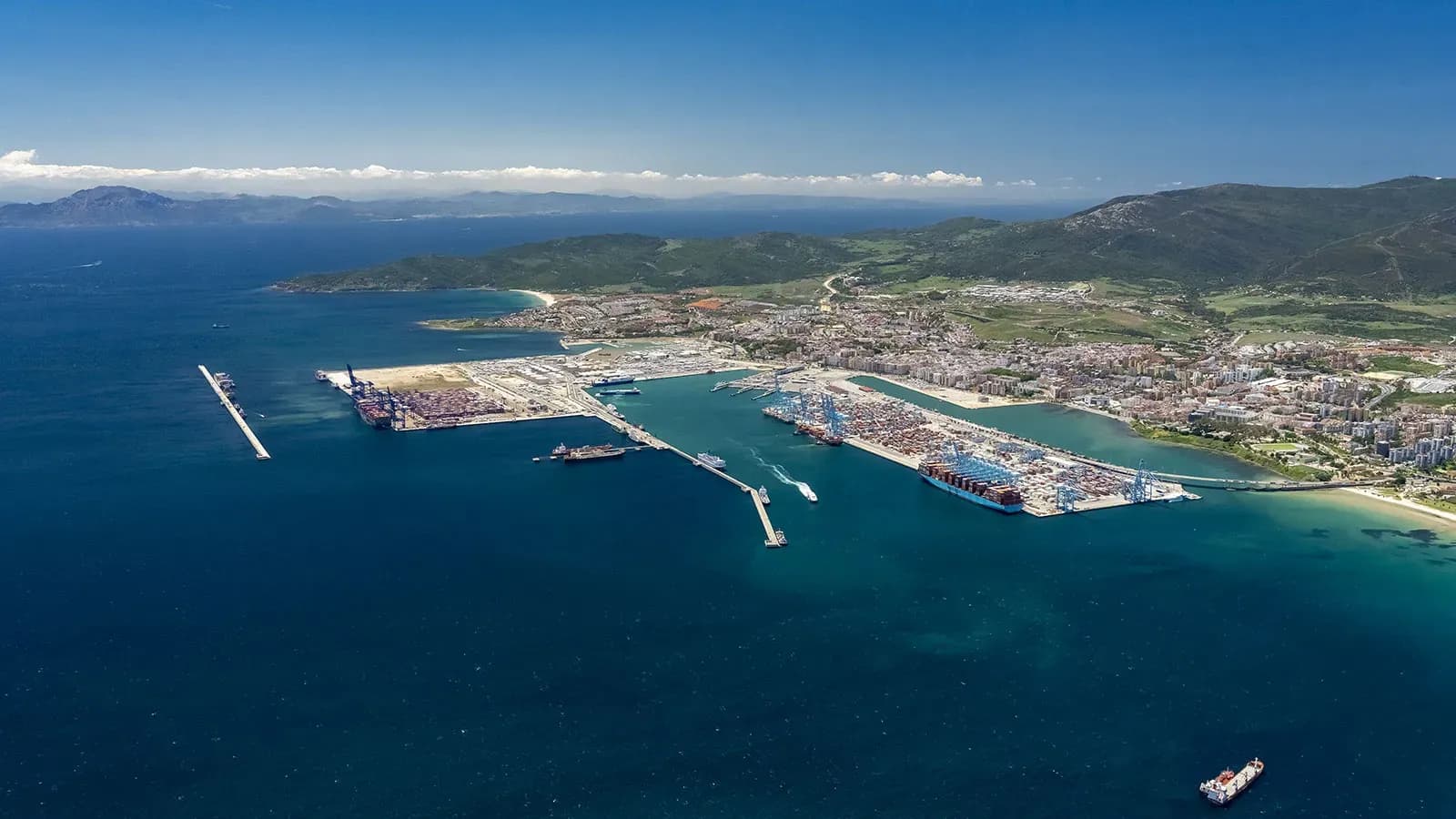
Another of the analyzed axes is the Algeciras-Bobadilla line, which is part of the Mediterranean and Atlantic corridors of the Trans-European Transport Network. The connection constitutes the rail access to the Port of Algeciras and channels freight between the Strait of Gibraltar, the interior of the peninsula, and other European markets.
The alliance points out that the infrastructure continues to be conditioned by the single track, the lack of complete electrification, and modernization actions developed in phases. Adif is executing and contracting various track renewal projects, installation of electric traction, gauge adaptation, and expansion of sidings.
corREDores.eu considers that the planning of this section must respond to its status as the head of two European corridors and to the logistics function of the Port of Algeciras. The entity demands that the works provide sufficient capacity for the growth of freight rail transport and for future rail highway services.
The statement also mentions connections with Galicia and Portugal through Extremadura and Castilla y León. The alliance takes as a reference the interruption of the direct rail link between Madrid and Lisbon in March 2020 to advocate for a common strategy between Spain and Portugal.
In relation to the Mediterranean Corridor, the organization points out that debates continue on the track gauge, the exploitation model, and the distribution of capacity between passengers and freight. In its view, these issues should be addressed from a network perspective and not through isolated decisions for each section.
The European Alliance proposes to concentrate railway policy on three lines of action: a coordinated technical direction for the infrastructure and the main operator, the planning of the state network as a single system, and the priority execution of the corridors included in the Trans-European Transport Network.
It also proposes to study a high-capacity rail crossing through a low-level tunnel through the Pyrenees. The organization argues that the current connections with France present limitations in absorbing substantial growth in freight transport and in contributing to European decarbonization goals.
The spokesperson for the alliance, Salvador Galve, believes that the railway debate should focus on the management model, the objectives of the network, and the criteria used to order investments, beyond the selection of the sections executed in each period.