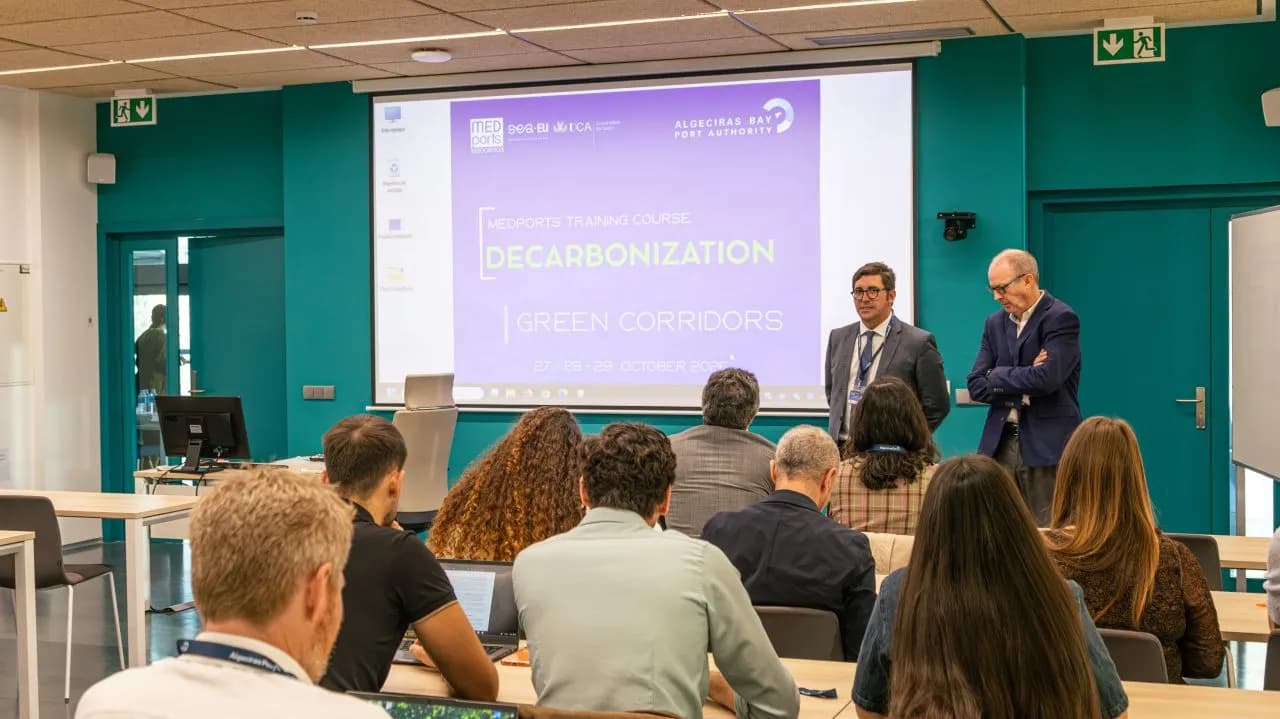
The Port of Algeciras has brought together around twenty national and international professionals for the second edition of the Decarbonization. Green Corridors. MEDPorts Training Course, a training program dedicated to decarbonizing maritime transport and developing green corridors. The program, which began on Wednesday and will run for three days, involves representatives of international organizations, port institutions and entities specializing in the energy transition.
The initiative is organized by the Port Authority of the Bay of Algeciras (APBA), the Association of Mediterranean Ports (MEDPorts), the University of Cádiz (UCA) and the European university alliance SEA-EU. The course is being held at the UCA SEA Innovation Center, located in Algeciras’s Maritime Lake district, and is designed as a university microcredential combining academic content with professional experience from the maritime-port sector.
The opening session was led by Luis Núñez, head of the APBA’s Department of Strategy and European Projects, and David Magro, president of MEDPorts. They discussed the importance of cooperation among ports, shipping companies, businesses and institutions in developing projects to reduce emissions across maritime transport chains.
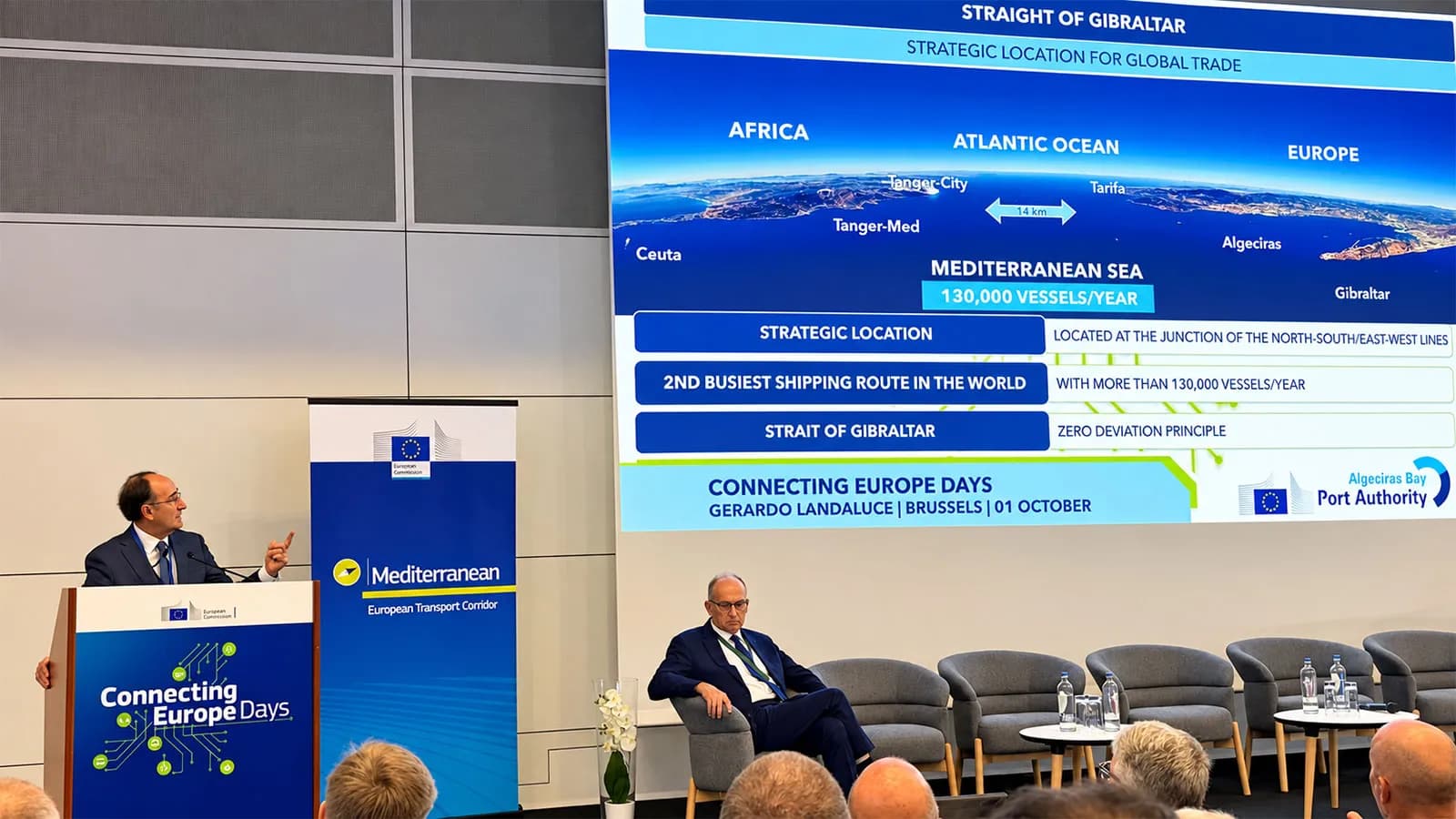
The opening session examined the Mediterranean’s role as a link between the main international shipping routes, as well as the distinctive features of a region where ports belonging to both the European Union and non-EU countries operate.
The heads of both institutions highlighted the need to coordinate the actions of different industry stakeholders to facilitate the energy transition in maritime transport, taking into account the regulatory, technological and operational differences among Mediterranean ports.
One of the first presentations was given by Juan Pablo Pérez, head of Planning at the APBA, who presented the Green Energy Hub project and explained the role the Port of Algeciras is expected to play in developing green shipping corridors.
The session provided an overview of the Port Authority’s work on the energy transformation of its facilities and its participation in initiatives aimed at reducing emissions associated with maritime transport.
International experience was represented by Lilian Ayala Luque of the Panama Canal, who outlined the sustainability measures implemented by the waterway and the adoption of green corridors as tools for cooperation among the various participants in logistics chains.
The presentation addressed the relationship between the sustainability strategies of maritime infrastructure and the coordination of initiatives aimed at reducing the environmental impact of international transport.
International maritime regulation was another topic covered during the first day. Miguel J. N. examined the frameworks established by the International Maritime Organization (IMO) for decarbonizing the sector and its role in defining common criteria for reducing emissions from ships.
The session examined the importance of having international regulatory instruments that enable the actions of different maritime stakeholders to be coordinated in a sector characterized by the involvement of operators and authorities from numerous countries.
Pablo Mendoza Villafuerte spoke on behalf of the European Commission, presenting the Global Gateway strategy and its contribution to the development of green shipping corridors.
This presentation focused on international cooperation mechanisms related to transport infrastructure and European initiatives designed to facilitate logistics connections compatible with decarbonization goals.
The program also featured Reuben Carey, a representative of the Mærsk Mc-Kinney Møller Center for Zero Carbon Shipping, who discussed the regulatory challenges facing international shipping as it seeks to reduce its carbon emissions.
His presentation covered possible approaches to the transition to zero-emission maritime transport and the regulatory requirements that shape the implementation of new energy solutions in the sector.
The first sessions have thus combined content on port planning, cooperation strategies between regions, international regulations and projects aimed at developing lower-emission shipping routes.
The course is part of the collaborative initiatives undertaken by the APBA, MEDPorts, the University of Cádiz and SEA-EU to provide maritime-port professionals with training in areas related to the energy transition.
The Association of Mediterranean Ports brings together port authorities from various countries in the Mediterranean basin and conducts knowledge-sharing and technical cooperation activities in different areas of port management.
The course will continue with further training sessions on green shipping corridors and the technical, regulatory and business tools needed to develop decarbonization projects across international transport chains.