Exolum has reached a preliminary agreement to acquire a minority stake in SeaSeaS Amsterdam, the project that develops a multimodal CO2 export terminal at the port of Amsterdam. The operation expands the Spanish company's investments in Europe and adds to its previous presence in another similar project in the United Kingdom.
According to the company in a statement, the agreement will accelerate the development of an infrastructure designed to connect industrial emitters in the Amsterdam area and other regions of the Netherlands and Germany with permanent geological storage sites located beneath the North Sea bed.
CO2 capture is one of the available ways to reduce emissions from industrial sectors that are difficult to decarbonize, such as cement, steel, or chemicals. However, its large-scale implementation requires infrastructures capable of collecting the captured CO2, aggregating volumes from different emitters, and transporting them to their final storage destinations. Major European ports, with direct access to shipping routes and land transport networks, are emerging as natural sites for this type of installation, as they allow the concentration of reception, temporary storage, and loading of CO2 destined for its final sites.
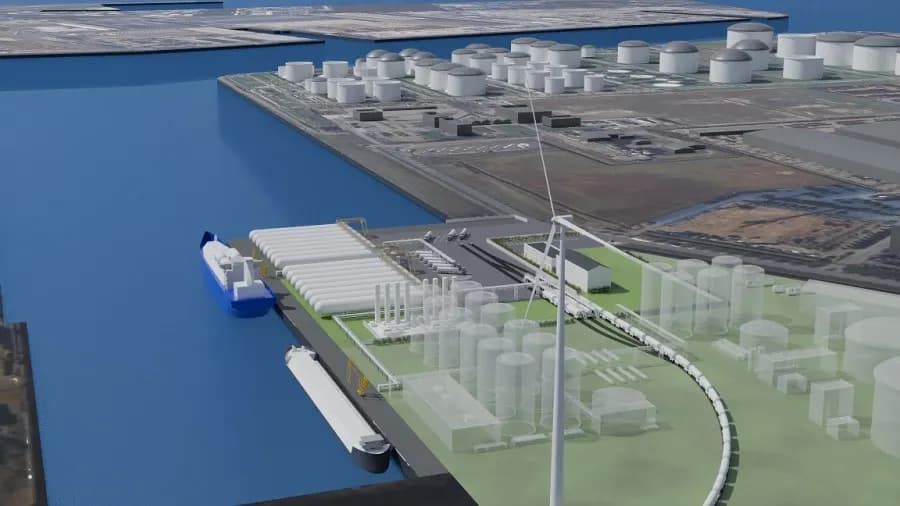
SeaSeaS Amsterdam aims to become the first open-access CO2 export terminal in Western Europe. The open nature of the facility means that it is not reserved for a single emitter or a single shipping company, but that different companies can use the same infrastructure to channel their captured CO2 volumes. Its design contemplates a management capacity of up to 3.5 million tons annually and the reception of CO2 by ship, rail, truck, or pipeline, a combination of transport modes that is unusual for this type of installations, generally designed for a single mode of access. From Amsterdam, CO2 will be transported by sea to different permanent storage sites in the North Sea, where former natural gas fields beneath the seabed are used as geological deposits.
This multimodal model will facilitate access to the carbon capture and storage chain for companies of different sizes, including those that do not have direct pipeline connections to storage points and have, until now, depended on individual agreements with logistics operators. The terminal is expected to start operations in 2030.
The company stated that its participation will contribute its experience in the development and operation of large logistics infrastructures, as well as its knowledge in the transportation and storage of liquid products.
Exolum Global Energy Logistics senior vice president, Nacho Casajús, explained that "CO2 capture can only be deployed at scale if there are infrastructures capable of efficiently connecting industrial emitters with different permanent storage destinations." The executive considered that SeaSeaS Amsterdam "has the potential to become a relevant piece of that chain in northern Europe" and asserted that the project "fits fully" into the group's strategy of developing infrastructures that facilitate industrial decarbonization.
Casajús also indicated that the operation complements Exolum's participation in 7CO2, another CO2 export terminal project the company is developing at the port of Bristol, in the United Kingdom.
The port of Amsterdam offers, according to the company, a strategic location for the development of this logistics chain due to its connection with the main industrial areas of the Netherlands and Germany. The terminal will initially allow the CO2 to be sent to permanent storage sites and may facilitate in the future its use as raw material in projects developed within the port environment itself, a pathway that different operators are exploring as a complement to definitive storage.
With this operation, Exolum adds a second participation in CO2 export infrastructures in northern European ports, after its previous entry into the Bristol project. Both initiatives share the same approach: open-access terminals, capable of receiving CO2 by different means of transport and connecting industrial emitters with permanent geological storage sites beneath the North Sea bed, whether British or Dutch.