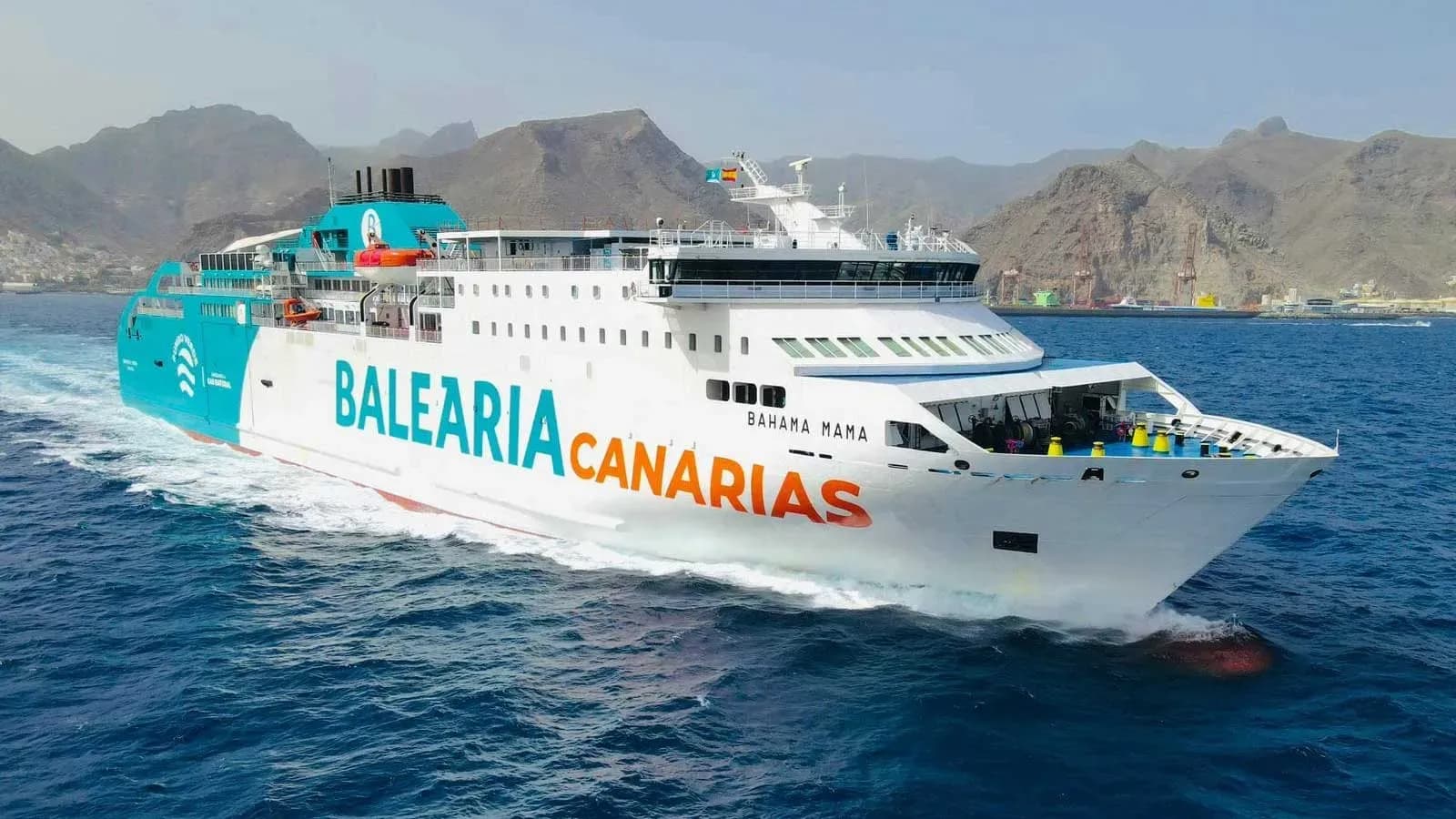
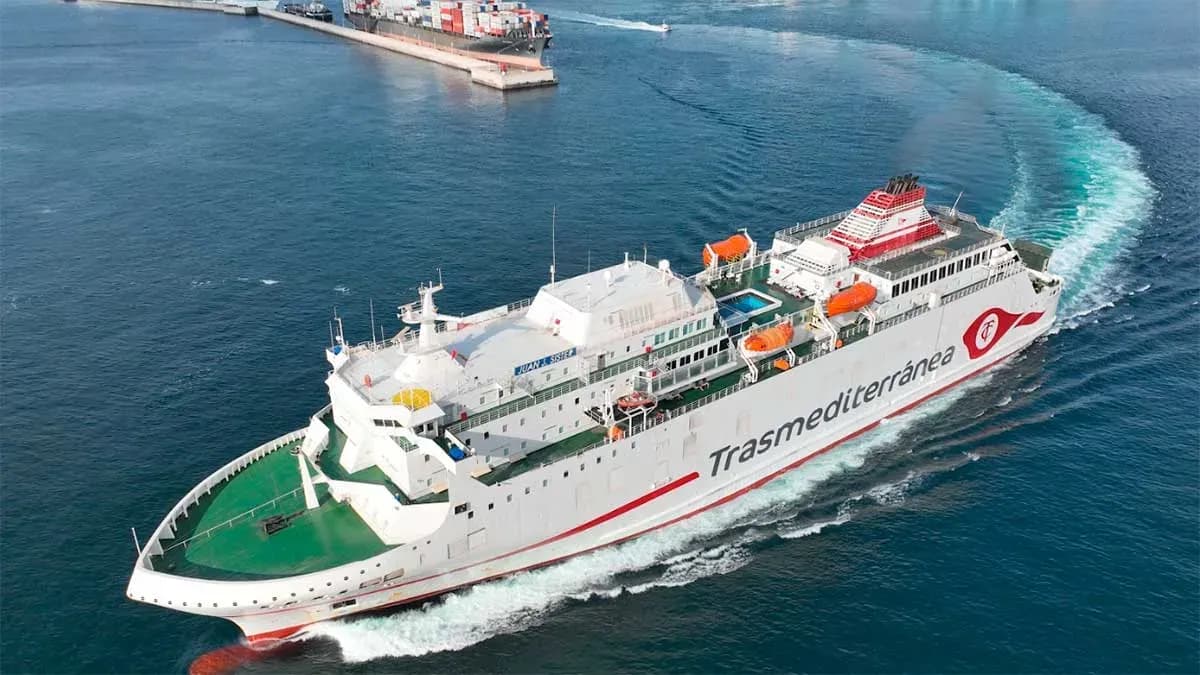
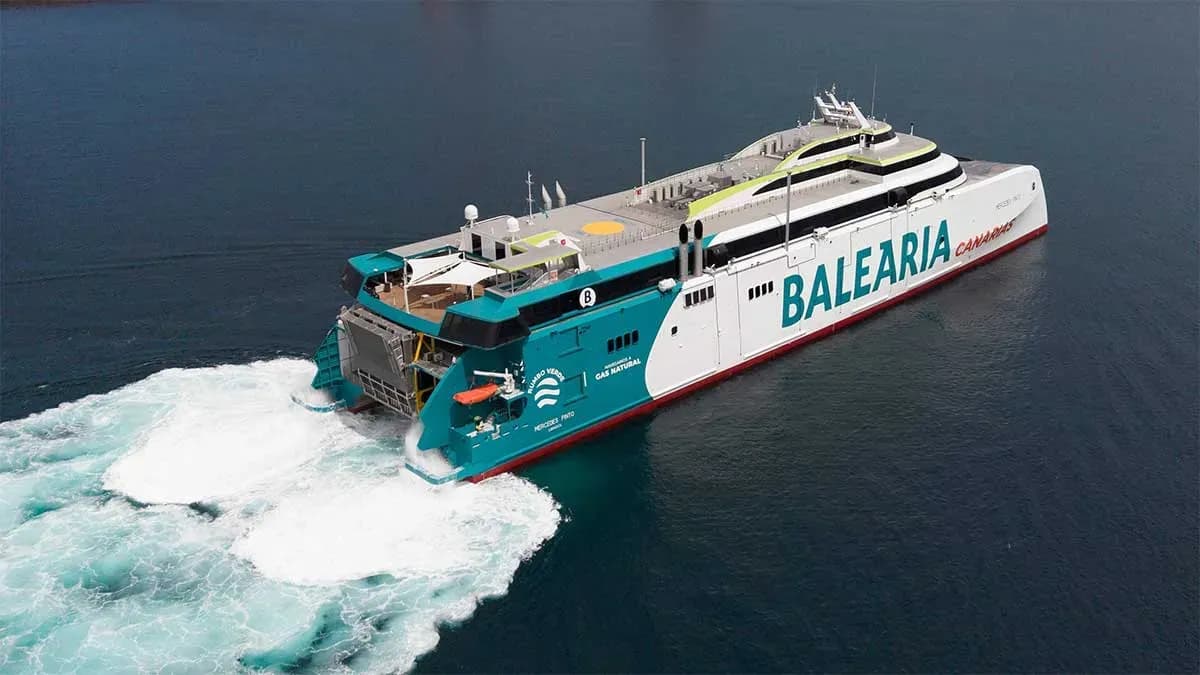
Baleària has completed the effective takeover of the assets of Armas Trasmediterránea in the Canary Islands, thus concluding the first phase of an operation that was announced in August of last year and in which the Valencian shipping company invested 215 million euros. From now on, the company led by Adolfo Utor will manage both the inter-island routes in the Canaries and the maritime connections between the Iberian Peninsula and the archipelago, making it the largest regular maritime passenger and freight transport operator in Spain and one of the main ferry operators in Europe.
The resulting group from the integration will have about 4,500 employees and a fleet that exceeds 50 ships. In terms of traffic, the joint annual volume will be above 8 million passengers and 11 million linear meters of cargo. The projected consolidated revenue will exceed 1 billion euros per year, a significant jump compared to the 801 million euros that Baleària recorded in its accounts for the previous year, before incorporating the business from Armas Trasmediterránea.
The operation has a historical dimension for the Spanish maritime sector, as it represents the convergence of three trajectories that have marked passenger navigation in the country: Trasmediterránea, founded in 1916; Naviera Armas, in 1941; and Baleària, in 1998. Three companies that, with distinct origins and business cultures, now converge under the umbrella of the same national capital shipping company.
As part of this integration, Baleària has created the Baleària Canarias brand, under which the acquired assets in the archipelago will progressively operate. During a transitional period, this new brand will coexist with that of Armas Trasmediterránea on the vessels of the fleet, until the transition is fully completed. The company has indicated that the goal is to consolidate a sustainable, reliable maritime transport model in the Canaries, rooted in the territory and oriented towards customer service.
The shipping company has committed to an investment of 45 million euros over the next three years aimed at enhancing the quality, digitalization, and comfort of the ships incorporated with the operation. Additionally, Baleària plans to renew part of the fleet with new units. These investments are in addition to the commitment to maintain the entire land and fleet workforce coming from Armas Trasmediterránea, both in the archipelago and in other affected areas by the acquisition.
The company has also committed to working closely with the Canarian institutions, port authorities, and the whole set of social and economic agents of the islands, aware that inter-island maritime transport constitutes an essential infrastructure for daily life, the economy, and the territorial integration of the Canaries.
The president of Baleària, Adolfo Utor, has valued the operation as a decisive moment for Spanish maritime transport. "The new Baleària is prepared to guarantee the efficiency of the entire national maritime transport network in all its territories," Utor stated. "We are talking about an essential infrastructure for territorial cohesion with the Canary and Balearic archipelagos, and with the autonomous cities of Ceuta and Melilla, as well as a key bridge for political and commercial relations with Morocco and Algeria," he added.
Utor has emphasized the significance that it is a Spanish capital company that assumes this role in an increasingly globalized context. "We are a national capital company capable of guaranteeing sovereignty in a strategic sector for the country," declared the president of the shipping company. In his assessment of the day on which the takeover was formalized, Utor highlighted that the operation is also good news for the staff and teams of both companies, and especially for the citizens who depend on maritime connections for the economic development of their territories. "The maritime transport sector is a strategic sector, and for a Spanish company to be capable of competing comprehensively across all territories is very relevant news," he pointed out.
With this operation, Baleària will operate in the public interest lines throughout the national territory, while maintaining its leadership position in traffic between Spain and North Africa, with regular connections to Morocco and Algeria.
The global acquisition of the assets of Armas Trasmediterránea was structured in three differentiated geographical areas. With the execution of the Canary phase already formalized, the procedures related to the Strait of Gibraltar and the Alboran Sea remain to be completed, which include routes from Algeciras and connections with Algeria, as well as operations and structure within the Iberian Peninsula. These movements are parallel to the agreement that Armas Trasmediterránea signed with the Danish operator DFDS for the sale of the bulk of its business in the Strait of Gibraltar, which outlines a new map of operators on the main maritime routes in southern Spain.