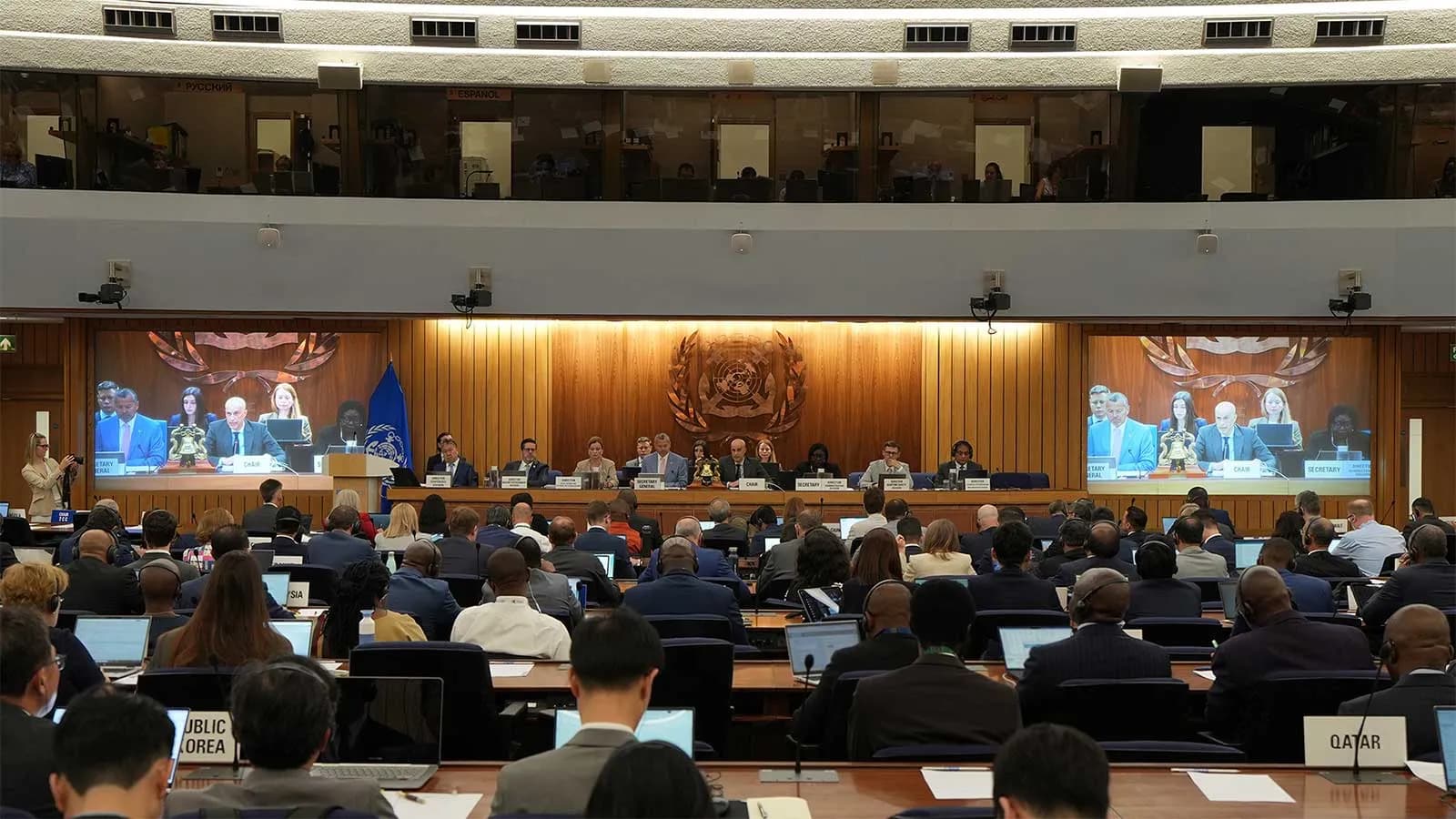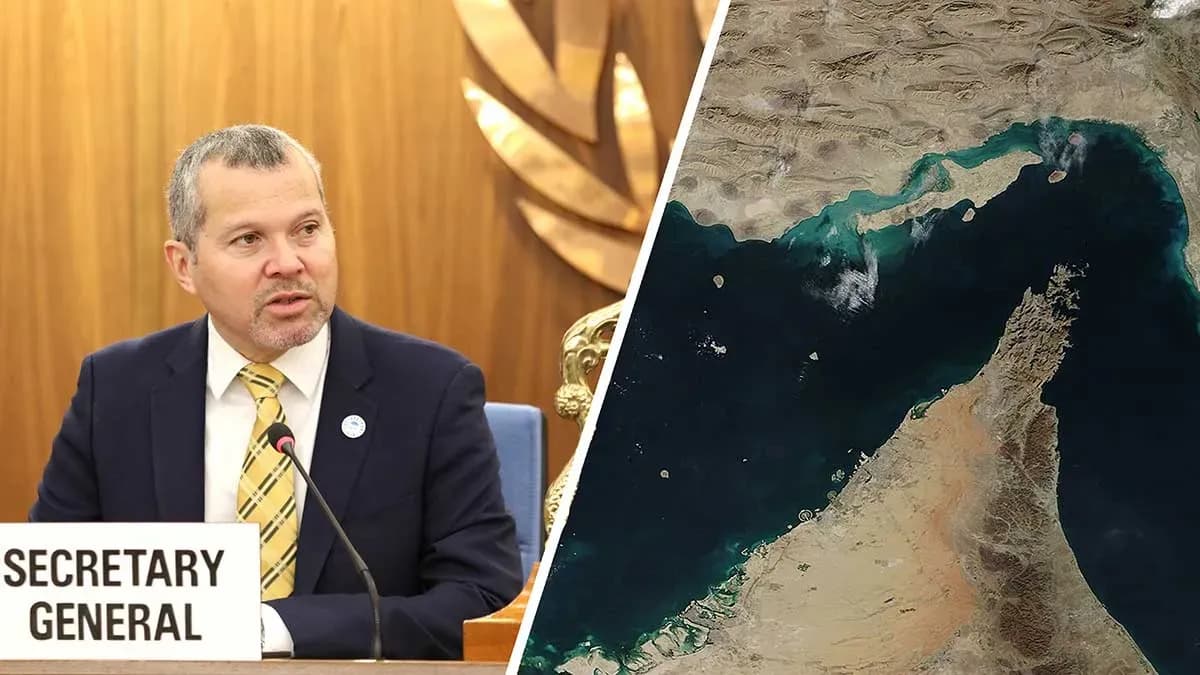
The Secretary-General of the International Maritime Organization (IMO), Arsenio Domínguez, has issued an official statement regarding the situation in the Strait of Hormuz in which he condemns the attacks against merchant vessels that have occurred in recent days in this strategic trade route of global commerce. The head of the United Nations agency expressed his deep concern about reports confirming at least one fatality and several injured sailors as a result of these incidents.
In his statement, Domínguez has been categorical in stating that no attack against innocent sailors or against civil navigation is justified. The Secretary-General emphasized that the crews of merchant vessels are simply doing their job and must therefore be protected from the effects of the geopolitical tensions developing in the region. The statement comes at a time of heightened tension in the Persian Gulf, following the military escalation between the United States, Israel, and Iran, which has led to an unprecedented situation for international maritime transport.
Domínguez has reaffirmed that freedom of navigation is a fundamental principle of international maritime law and has demanded its enforcement by all parties without exception. In this regard, the Secretary-General has urged all shipping companies to act with maximum caution and has recommended that, as much as possible, vessels avoid transiting through the affected region until security conditions improve. Additionally, he has called on all involved actors to remain vigilant against misinformation and to rely solely on verified and authorized sources when making navigation decisions.
The statement from the IMO is framed within a context of accelerated deterioration of maritime security in the Strait of Hormuz, a corridor of just 33 kilometers wide at its narrowest point through which approximately 20% of the world's oil production transits. Since last Saturday, March 1, when the Iranian Revolutionary Guard issued radio transmissions warning that transit through the strait was prohibited, several attacks on merchant vessels in the area have been recorded.
Among the most serious incidents is the attack on the oil tanker Skylight, flagged from Palau and with a deadweight tonnage of 11,000 tons, which was hit off the Omani coast. Its 20 crew members — 15 of Indian nationality and five Iranians — were evacuated, although four of them were injured. Subsequently, the tanker MKD VYOM, carrying about 59,463 metric tons of cargo, suffered an attack that caused an explosion in the engine room and a subsequent fire. Of the 21 crew members on board, one worker of Indian nationality lost his life. An attack with drones has also been reported against the tanker Athe Nova, flagged from Honduras, which Iranian authorities identified as linked to the United States.
The reaction of the world's major shipping companies has been immediate. MSC (Mediterranean Shipping Company) has suspended all cargo bookings destined for the Middle East until further notice and has ordered its vessels in the Gulf region to head to safe refuge areas. Maersk, for its part, has halted all transit of its vessels through the Strait of Hormuz and the Suez Canal, redirecting its vessels around the Cape of Good Hope. Hapag-Lloyd has made a similar decision, as has CMA CGM, which has ordered its ships to seek refuge. Japanese shipping companies NYK, Mitsui O.S.K. Lines, and Kawasaki Kisen have also halted all operations in the area.
This operational halt is compounded by the withdrawal of coverage by maritime insurers, which have canceled war risk insurance for vessels intending to cross the strait. Companies such as Gard, Skuld, NorthStandard, London P&I Club, and American Club have announced cancellations that will take effect from March 5. Satellite tracking data of vessels indicates a drop of approximately 70% in maritime traffic in the area, with more than 150 oil and LNG tankers anchored in open waters of the Gulf awaiting clarity on the situation.
The IMO has confirmed that it continues to monitor events in coordination with member states and its partners in the international maritime sector. The Secretary-General has expressed his solidarity with the injured sailors and their families, while reiterating that the safety and well-being of seafarers are the organization's top priority.
The situation in the Strait of Hormuz has direct implications for global energy markets, shipping costs, and international logistics chains, given that millions of barrels of oil transit daily through this corridor, primarily destined for Asian markets, with China, India, Japan, and South Korea as the main recipients.