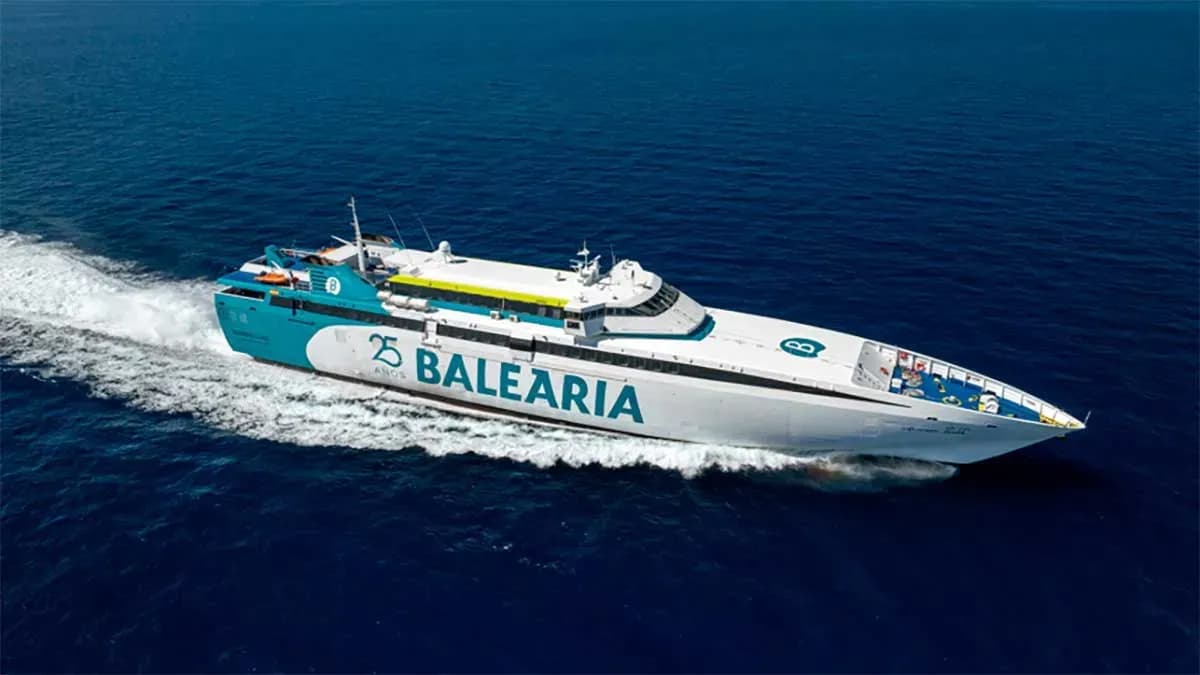
Baleària has presented to the Formentera Council a proposal for the implementation of a single, global, and shared quota of vehicles on the island that does not establish differences between those accessing by sea and those coming from the rental sector. According to the shipping company, the initiative aims to correct what the company refers to as discrimination against maritime transport within the current regulatory system, while also seeking to ensure a model aligned with the principles of sustainability, free competition, and equity.
The company maintains that the saturation of the roads in Formentera does not depend on the access channel of the vehicle to the island. In Baleària's view, a car occupies the same space and generates the same impact on the road network regardless of whether it arrives onboard with its owner or is rented by a passenger accessing by air. Based on this, the shipping company considers that the current system of differentiated quotas does not respond to real criteria of load capacity or sustainability.
Baleària points out that the current model generates distortions in practice, as the quotas assigned to vehicles accessing by maritime transport are recurrently exhausted, while rental vehicles continue to join the circulation without the same limitation. This dynamic causes, according to the company, that numerous maritime transport clients face the daily impossibility of boarding their vehicle, even though the total number of cars in circulation on the island continues to rise.
The shipping company argues that this segmentation penalizes maritime connectivity, restricts the freedom of citizens to choose their mode of transport, and shifts the cost of regulation to a single economic segment. Furthermore, according to Baleària, it constitutes discrimination against other modes of access and discourages a means of transport that the company considers more sustainable and less polluting.