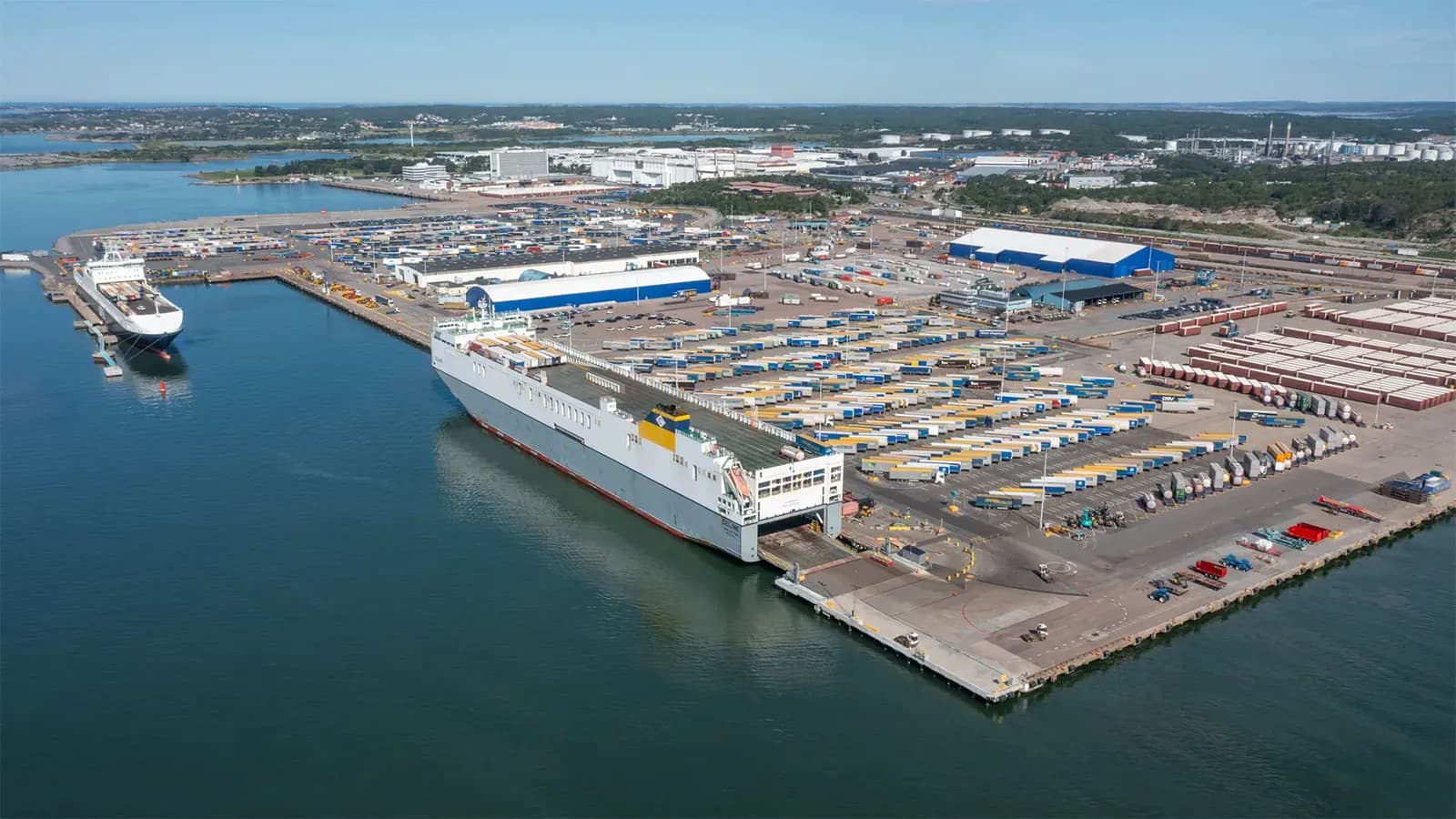
Gothenburg RoRo Terminal, located in the Swedish port of Gothenburg, has undergone a transformation of its facilities over the past three years through various expansion and modernization projects. The work has increased operating areas, added new rail connections, improved cargo transfer facilities, and adapted berths to accommodate larger vessels. This process coincided with a 5% increase in the volume of cargo handled at its quays during the first half of 2026, compared with the same period in the previous year.
The facility is one of the port of Gothenburg’s main maritime connections for wheeled cargo, with regular services transporting semi-trailers and other wheeled units to logistics hubs in the United Kingdom and central Europe. Cargo passing through the facility includes food products, forestry products, steel, electronic equipment, industrial components, and materials for the automotive and engineering industries.
One of the largest projects was completed in 2024, when an additional 144,000 square meters of operating area came into service in the outer port area. The project created a larger, more continuous space, with improved access to the areas behind berths 712 and 713. According to the Gothenburg Port Authority, this was the largest expansion of the facilities since the RoRo terminal opened in the late 1970s.
Integrating rail transport has been another key focus of the investments. In 2023, Gothenburg RoRo Terminal took over operation of the Arken intermodal terminal, adding 65,000 square meters of space and seven railway tracks to its operations. This infrastructure enables direct transfers of semi-trailers between trains and ships, facilitating connections between maritime transport and inland rail networks.
Cargo-handling facilities have also been expanded. In 2025, an 11,000-square-meter building called The Steel Tent was constructed for transferring steel products arriving by rail from inland areas and continuing by sea to continental Europe. This facility is complemented by The Paper Roll, a covered 6,000-square-meter facility that entered service in 2024 for handling and transferring forestry products.
Maritime works have included dredging and upgrading the channel leading to the quays during the 2022–2023 campaign. The work increased its width and depth, making it easier for larger vessels to enter and removing certain operational restrictions related to weather and wind conditions.
Work to adapt berth 710 was also completed in 2026, including the extension of an projecting section of the quay and the installation of a new ramp. These modifications enable the terminal to serve larger vessels and increase loading and unloading capacity. The terminal is also planning to modernize its eastern quay to accommodate the characteristics of new generations of RoRo vessels.
The development of port infrastructure has taken place alongside the renewal of the fleets of shipping companies CLdN and DFDS, the two companies with the most calls at the terminal. Both have added larger, more modern vessels to their services to Gothenburg.
Initiatives related to alternative fuels include the installation in 2024 of a green hydrogen fueling station next to the terminal, intended to supply trucks and vehicles used in port operations.
Jacob Minnhagen, the Port of Gothenburg’s Senior Market Development Manager, said that investments in quays, rail connections, operating areas, and equipment have improved the terminal’s operating conditions and its ability to handle traffic growth.
For her part, Maria Franksen, CEO of Gothenburg RoRo Terminal, linked the change in volumes to the investment strategy pursued in recent years. She explained that the company is continuing to adapt its facilities to meet the current and future needs of Swedish industry.
The Port of Gothenburg also views these developments in the context of growing business interest in intra-European maritime transport, amid geopolitical uncertainty, tariff disputes, and disruptions to international supply chains. These factors are compounded by capacity constraints and recurring disruptions affecting certain European land corridors, which are drawing greater attention to short-sea shipping connections and RoRo services.