The entry into force in 2027 of the new Spanish obligations for the decarbonization of fuels used in cabotage navigation has opened a debate on its possible effects in the bunker market. The company specializing in port emissions data, PortXchange, has warned of the possibility that regulatory differences between countries could lead to shifts in supplies to ports subject to lower obligations, referencing the evolution recorded this year in Rotterdam.
The new Spanish framework is included in Royal Decree 611/2026, of July 22, promoting the decarbonization of the transport sector and fostering renewable fuels. The consolidated text establishes its entry into force on January 1, 2027, and incorporates specific objectives for cabotage navigation.
The regulation stipulates that obligated subjects must progressively reduce the intensity of greenhouse gas emissions associated with fuels intended for cabotage. The path begins with a 6.5% reduction in 2027, increasing to 7% in 2028, 8% in 2029, and 9% in 2030. The percentages will continue to increase over the next decade until reaching 33% in 2040.
The obligations fall, among other agents, on wholesale operators of petroleum products for their annual domestic sales intended for cabotage navigation, retailers for supplies not derived from wholesalers, and certain direct consumers. The regime also includes operators and marketers of liquefied petroleum gases and natural gas.
The Royal Decree also includes a specific sub-target for renewable fuels in cabotage. This will start at 2% of energy content in 2027 and will progressively increase to reach 20% by 2040. The regulation allows providers supplying renewable fuels for international navigation to account for them in meeting certain objectives established for cabotage.
PortXchange has linked the activation of the Spanish model to the experiences observed in the Netherlands after the implementation of the European RED III Directive. According to the company, maritime fuel sales in Rotterdam decreased by 648,399 tons during the first quarter of 2026, and the price difference arising from regulatory compliance relative to other nearby markets reached between 20 and 25 dollars per ton in September. These figures are part of the analysis released by the company itself.
The data published directly by the Port Authority of Rotterdam confirm a reduction of nearly 25% in bunker volume during the first quarter of 2026 compared to the same period the previous year. The decrease particularly affected fossil fuels: VLSFO fell by 44%, HSFO by 25%, and ULSFO by 13%, while MGO decreased by 7% and MDO by 11%.
The Dutch Port Authority itself noted then that the evolution could be partially explained by the implementation of RED III in the Netherlands, which had raised prices compared to neighboring countries. The agency also mentioned other factors, such as regulatory and operational changes, price volatility, and market uncertainty, and therefore did not attribute the decrease exclusively to the new regulatory framework.
The trend continued during the second quarter. Rotterdam reported in July that the fuel volume supplied during the first half had dropped by 25.1% year-on-year. Fossil fuel oil fell by 28.3%, while alternative fuel sales increased by 28%. The port authority indicated that there was a visible shift of volumes towards other ports and cited the implementation of RED III among the factors influencing this evolution.
PortXchange holds that differences in the pace of implementation of obligations among European countries may influence the choice of supply ports. The company cites the situation in Belgium and Germany to argue that a non-homogeneous application may alter the trade flows of bunkering. This is an interpretation made by the company based on data from the Dutch market and not an official forecast on the evolution of Spanish ports.
The Spanish Royal Decree also incorporates new information obligations for the port system. From January 1, 2027, Ports of the State must annually report the electricity supplied to certain types of vessels and the fuels delivered across the ports of general interest, broken down by product groups. The Port Authorities must collect this data from the service providers and relay it to Ports of the State.
The information must differentiate between renewable fuels, hydrocarbons, recycled carbon, and fossil fuels. The report will have annual periodicity and must be submitted before February 15 of the following fiscal year to the Secretary of State for Energy.
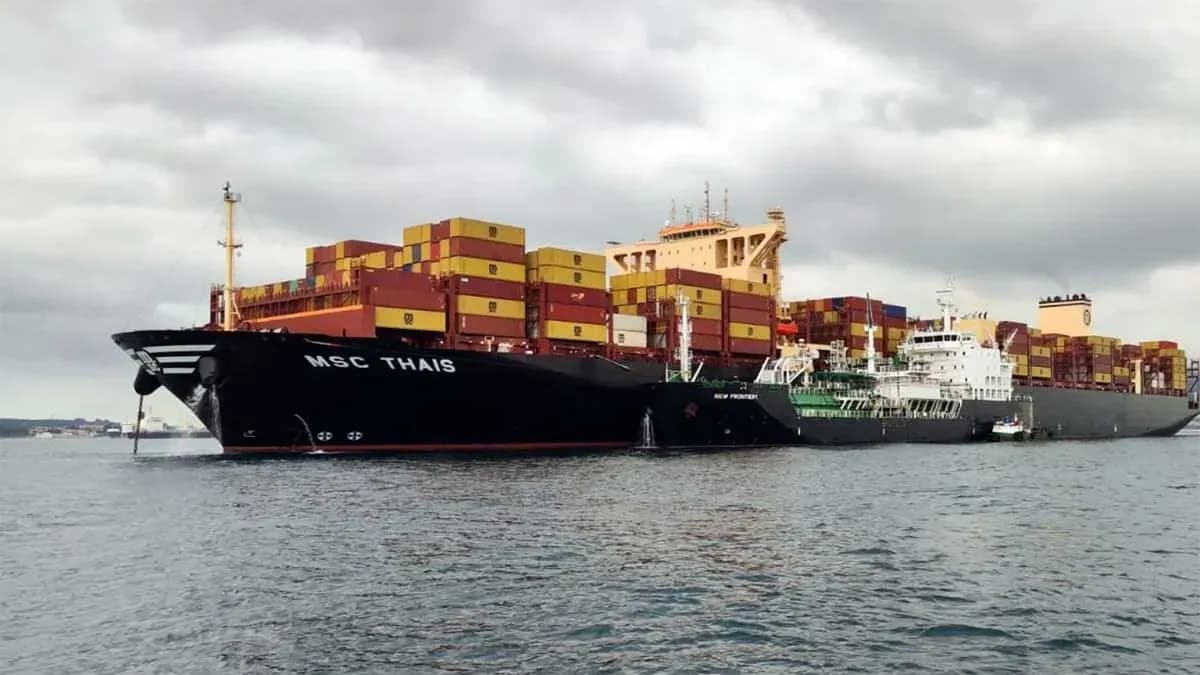
The evolution of this regulatory framework affects a market with significant activity at the Port of Algeciras. According to the latest management report published by the Port Authority of the Bay of Algeciras, during 2024, 3,269,420 tons of fuel, oil, and water were supplied to vessels, of which 2,414,953 tons corresponded to operations of bunkering carried out at anchor, in addition to the supplies made at berthing.
The Spanish regulation, however, limits the mandatory emissions reduction targets to the computable fuel in cabotage navigation. The Directorate General for Energy Policy and Mines must establish, prior to a report by the Ministry of Transport and Sustainable Mobility, the criteria and routes for vessels whose fuel may be counted within this target.