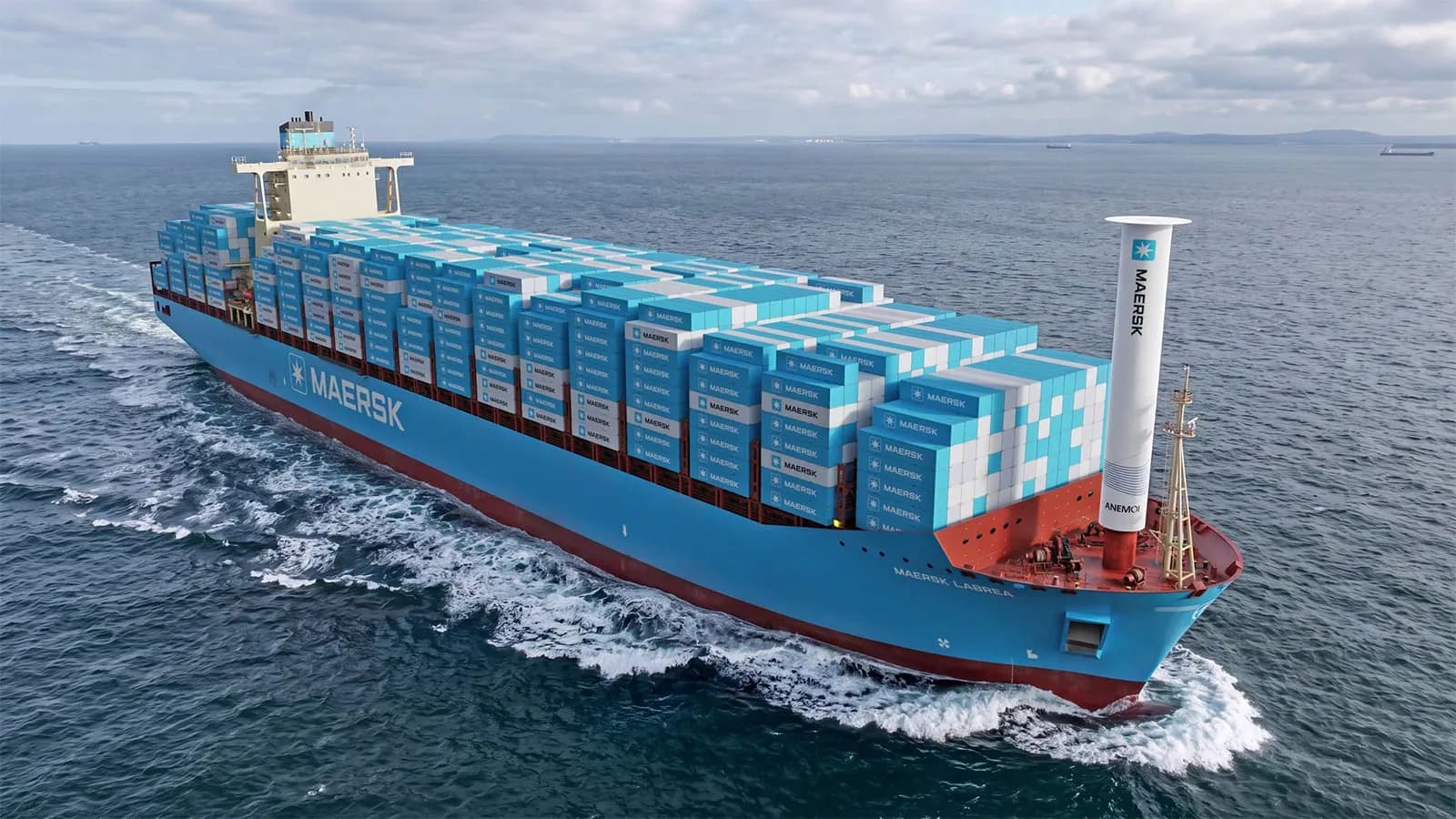
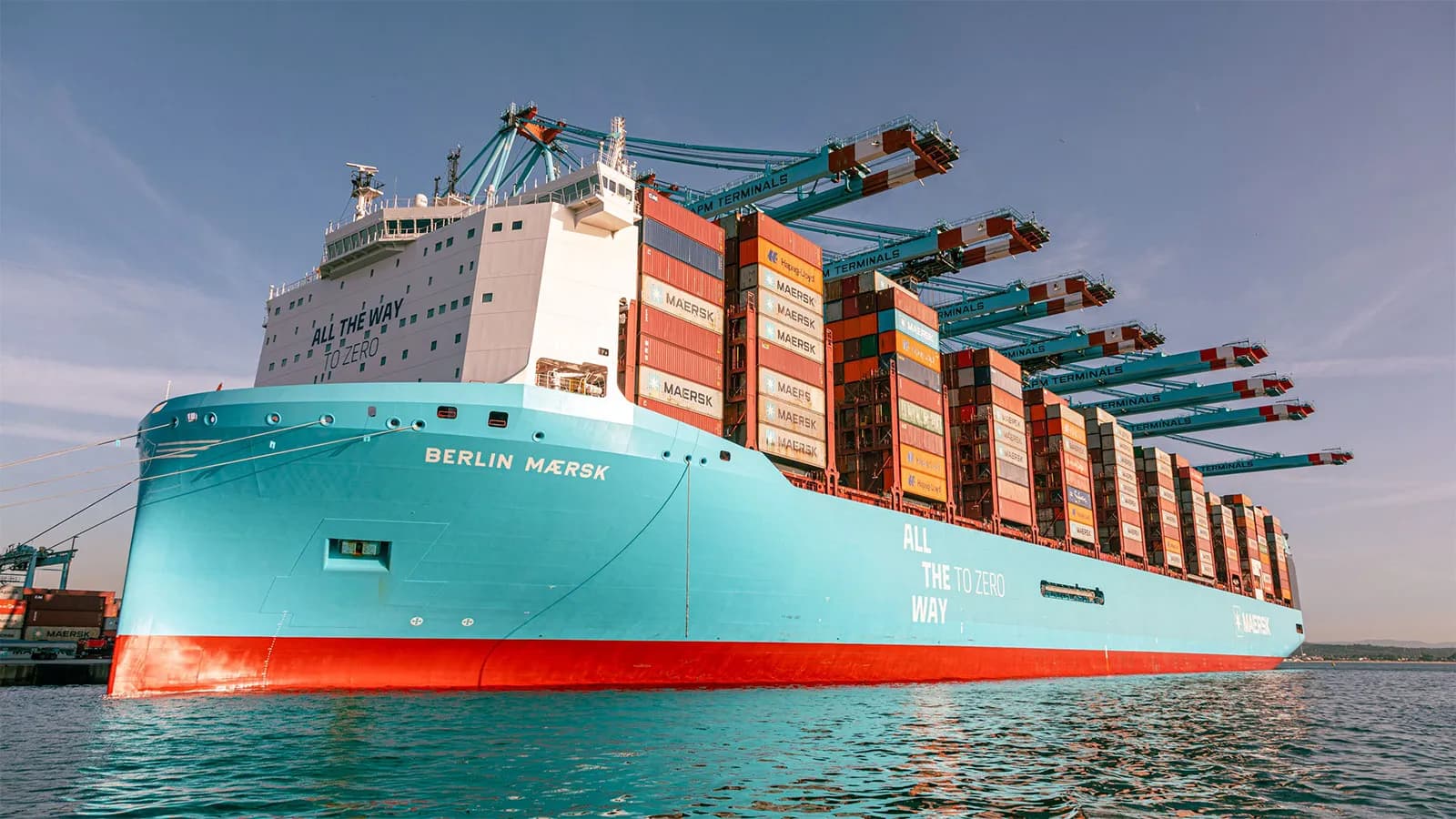
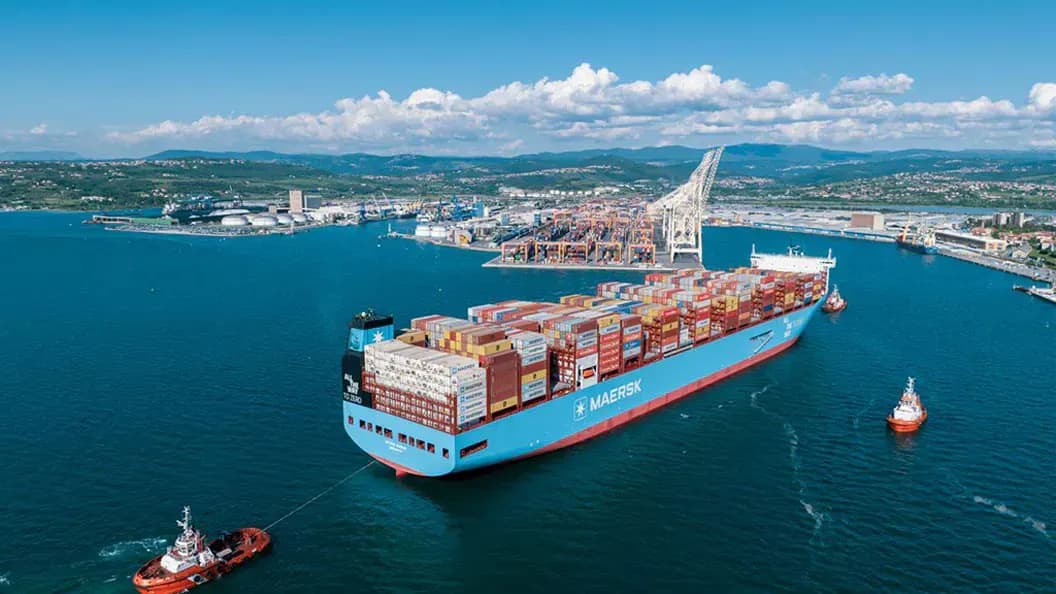
A.P. Moller-Maersk will incorporate a wind propulsion system using a rotating sail on one of its 8,700 TEU container ships of the Maersk Lima class. The Danish shipping company has selected the British company Anemoi Marine Technologies to design, manufacture, and supply the equipment, which is expected to be installed by mid-2027.
The project includes the installation of a fixed rotating sail with a diameter of five meters and a height of 35 meters. Once integrated into the ship, Maersk will use the system during its normal commercial operations to collect data on its performance and evaluate the potential of this technology in container shipping. During the trial phase, the container ship is expected to operate on North and South Atlantic routes.
The so-called Rotor Sails or Flettner rotors are vertical cylinders that rotate using electric power and take advantage of the Magnus effect to generate aerodynamic lift. This force can provide additional thrust to the ship when wind conditions are favorable, thereby reducing the power required from the main engine and, consequently, fuel consumption and associated emissions.
Anemoi has already installed this type of system in other segments of the merchant fleet, primarily on bulk carriers. The company has developed different configurations of its rotating sails and has experience with units of five meters in diameter and 35 meters in height, like those previously installed on large bulk carriers.
According to calculations provided by Anemoi, each of these sails can achieve an approximate saving of one ton of fuel and around three tons of CO₂ emissions per day, although performance depends on navigation conditions and the available wind during each route. The installation planned for Maersk will initially use a single sail, compared to other configurations developed by the company that incorporate multiple units.
The technology head of Maersk's fleet, Ole Graa Jakobsen, has stated that wind-assisted propulsion is part of the solutions the company is studying to improve the efficiency of its ships and reduce emissions. The trial with Anemoi will allow the shipping company to gain operational experience and analyze its potential application both in its own fleet and in container shipping.
For its part, Anemoi will be responsible for the engineering, manufacturing, and supply of the sail, as well as providing assistance during its integration with the existing systems on board. The British company, established in 2015, has so far developed most of its commercial wind propulsion projects in segments such as bulk transport.
The chosen container ship belongs to the Maersk Lima class, consisting of units with a nominal capacity of 8,700 TEU. Maersk plans to keep the ship within its commercial operations during the trial to evaluate the system's performance under real navigation conditions and determine its efficiency before considering a wider application of this technology.