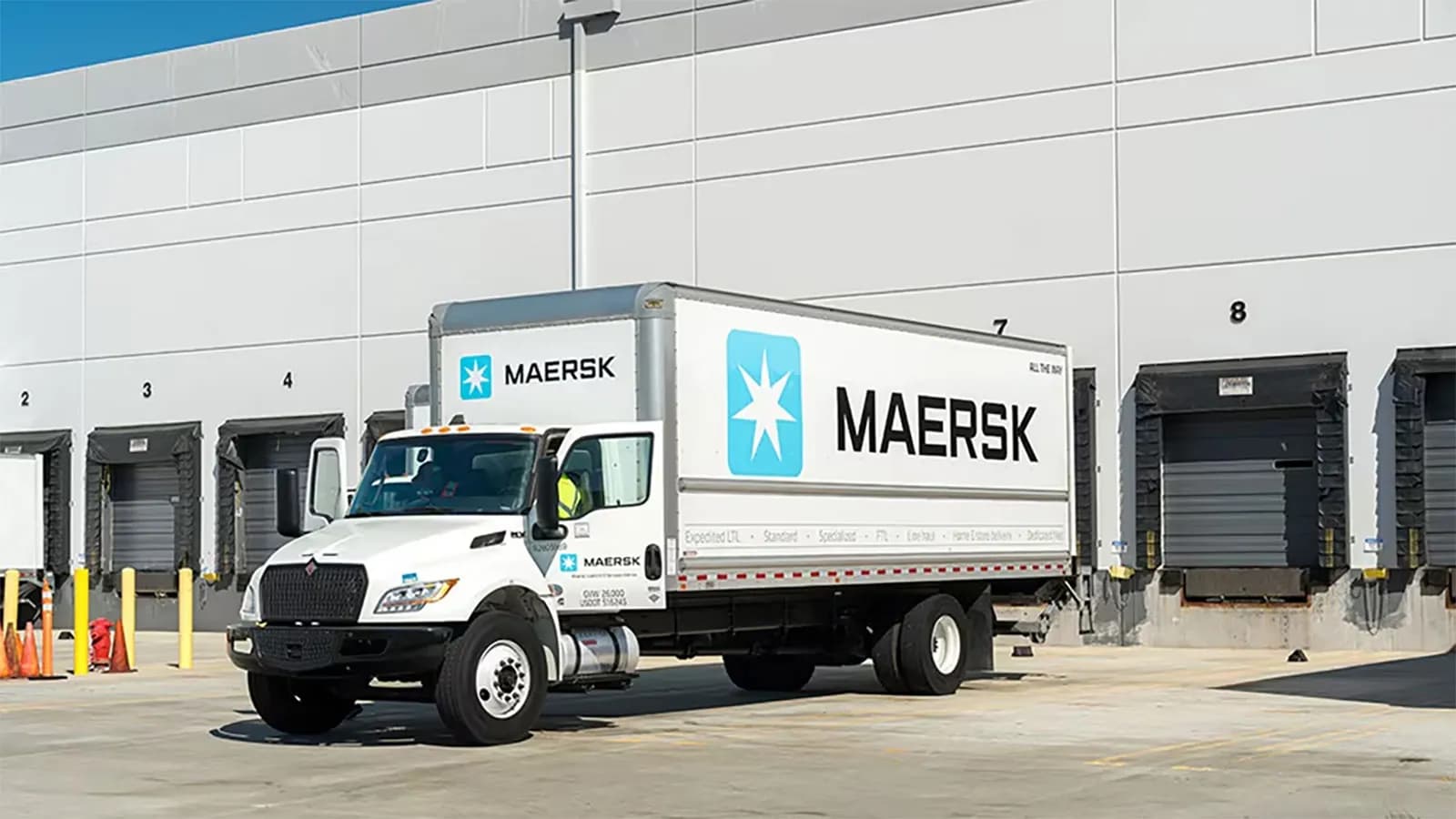
A.P. Moller - Maersk has launched a specialized land transport service for lithium batteries within its road freight network in North America, Maersk Ground Freight. The new service is designed to meet the growing demand for safe, compliant, and reliable transport of batteries classified as hazardous goods of Class 9 across the continent.
According to an analysis by Dataintelo on the global logistics market for lithium batteries in 2026, spending on the transport of this type of batteries in the United States is between $2.4 billion and $3 billion, in a market where North America accounts for 27.3% of the regional share. The new capacity positions Maersk to meet a critical and rapidly expanding segment of the supply chain for energy transition, particularly for clients in the automotive, electric vehicle, and advanced manufacturing sectors.
The electrification of transport is one of the industrial changes defining this decade, but the batteries that support it do not move on their own: they require secure, specialized, and scalable logistics infrastructure. Maersk Ground Freight's new service represents a direct investment in that infrastructure, extending Maersk's expertise in dangerous goods from maritime and air transport to road transport, and building the connection needed for the electric vehicle supply chain in North America.
"The energy transition is not just about what makes a vehicle function, but about the entire supply chain that exists behind it. Moving lithium batteries safely and at scale requires logistics infrastructure designed specifically for that, and that is exactly what we have created," explained Bob Livingston, head of Operations for Maersk Ground Freight in the United States.
The program is based on strict admission and documentation standards. Only new batteries are accepted, with damaged, defective, recalled, returned, or considered waste units excluded. The state of charge (SOC) must be maintained between 10% and 60% for all outgoing shipments. Each shipment must be accompanied by complete documentation: safety data sheet (SDS), declaration of hazardous goods, UN 38.3 test summary, state of charge declaration, and classification in watt-hours. The network includes drivers trained in handling hazardous materials (hazmat), without the U.S. Department of Transportation (DOT) regulations requiring DOT placards or specific CDL certification for hazardous materials for this service. The service additionally offers cross-border capacity between the United States, Canada, and Mexico, with compliance protocols tailored to each jurisdiction.
Maersk Ground Freight provides non-containerized land transport throughout North America, with full truckload (FTL), less-than-truckload (LTL), specialized LTL, cross-border transport, and freight brokerage services. The network includes more than 65 stations and seven regional centers, and its coverage reaches over 42,000 U.S. ZIP codes. In the United States, the service is provided by Maersk Logistics & Services USA Inc.
The new service adds to the major shipping lines' efforts to diversify their logistics capabilities beyond maritime transport, in a context where the supply chain for batteries and electric vehicles is gaining importance within the operations of companies like Maersk in North America.